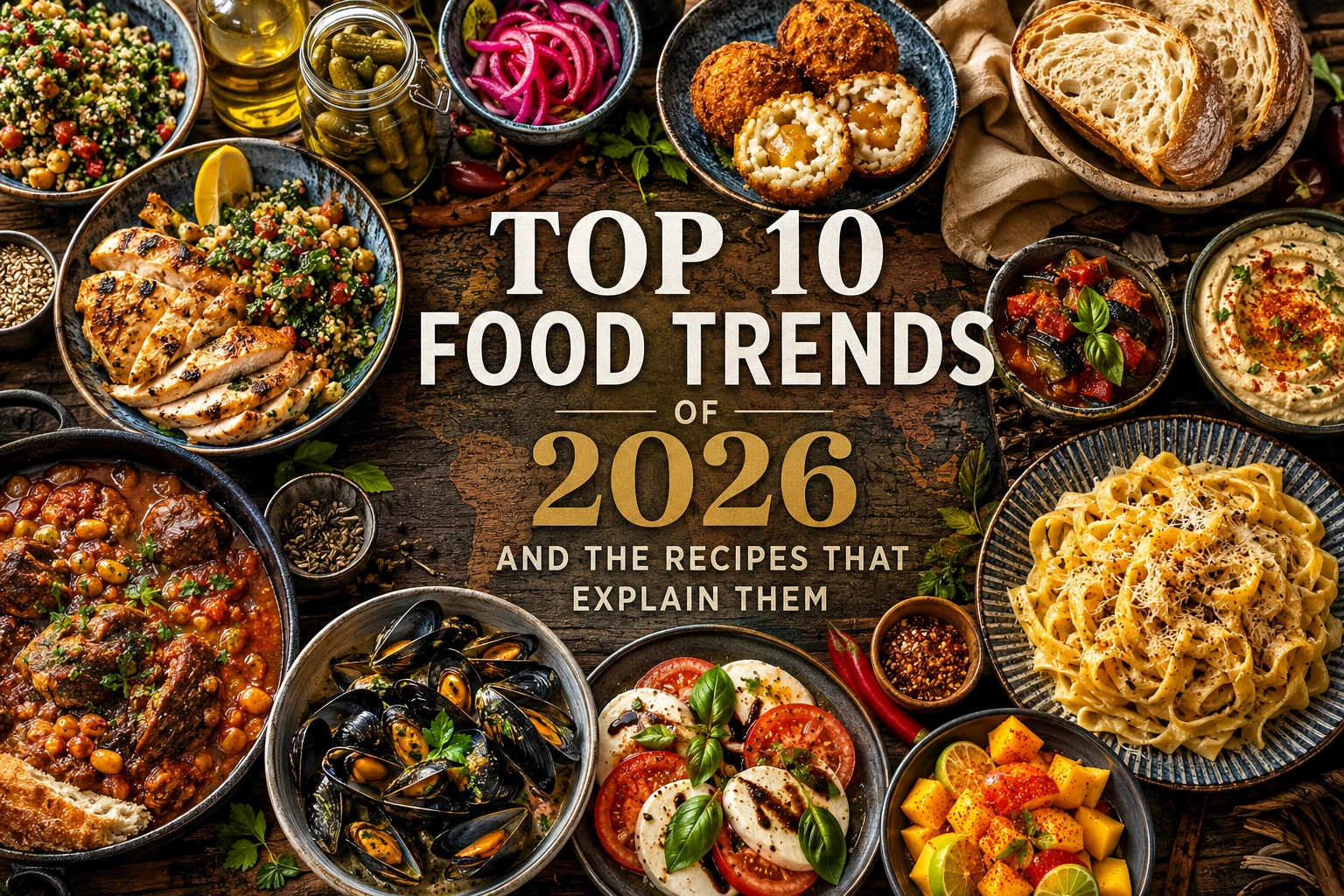
French and Italian classics keep surviving food trends because they already know what modern diners want. They offer freshness, comfort, acidity, technique, seasonality, sharing and meals that feel worth slowing down for.
This article is part of our 2026 food trends series. Start with the full guide: Top 10 Food Trends of 2026 and the Recipes That Explain Them.
Why old classics can feel more modern than new inventions
A recipe does not need to be new to feel relevant. In 2026, many of the strongest trends point back to older cooking: protein-rich mains, fibre-rich vegetables, sharp dressings, small plates, freezer-friendly stews, global comfort and value-led meals. French and Italian food fit this moment because both cuisines have spent centuries turning ordinary ingredients into memorable dishes.
Italy often feels modern because it knows how to make food fresh without making it thin. France often feels modern because it knows how to make food comforting without making it careless. Together they explain why the best food trends are not about novelty. They are about usefulness, pleasure and story.
What Italy gives: freshness with substance
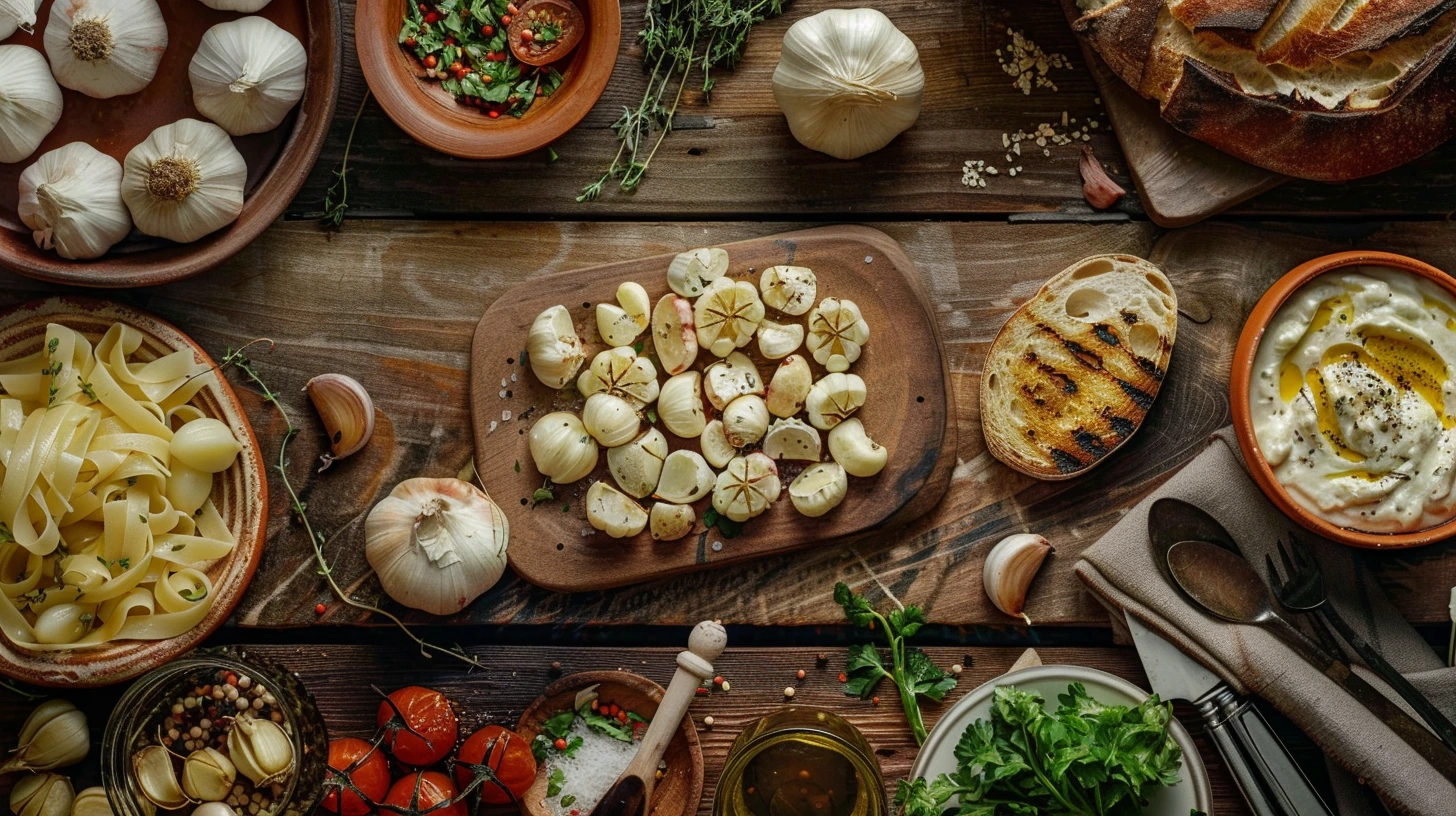
Italian freshness is not just a few basil leaves on top. It comes from ingredients that carry flavour clearly. Tomatoes bring sweetness, acidity and juice. Olive oil brings richness and perfume. Basil and parsley bring scent. Garlic brings heat. Bread brings texture. Mozzarella brings cool softness. Lemon and vinegar bring lift. Salad becomes satisfying when it has chew, fat, acid and aroma.
Bruschetta is a small lesson in freshness. Toasted bread gives crunch. Tomato gives juice. Garlic gives bite. Olive oil makes it generous. Caprese Salad is even more restrained, but it works because ripe tomatoes, mozzarella and basil make each other better.
Panzanella is perhaps the most 2026 of the Italian classics because it combines fibre, freshness, thrift and flavour. Stale bread is not wasted. Tomatoes are allowed to shine. Vinegar sharpens everything. It is a dish that understands value without feeling poor.
Mediterranean ingredients make simple food feel alive
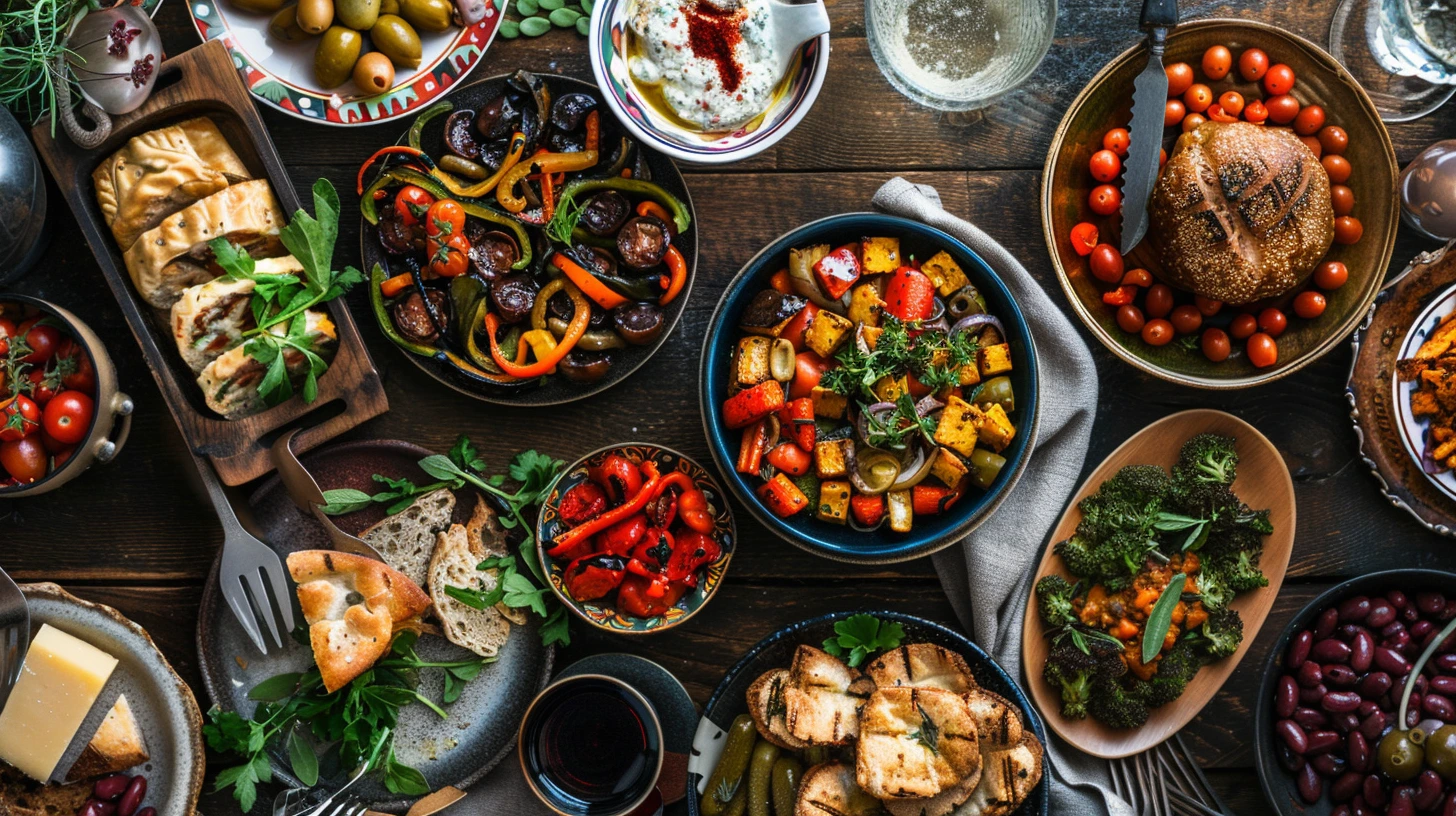
The Mediterranean table is powerful because it uses ingredients that bring their own energy: tomatoes, peppers, courgettes, aubergines, lemons, herbs, beans, grains, olives, seafood and bread. These ingredients support the trends of 2026 naturally. They are colourful, plant-forward, fibre-rich, bright and flexible.
Focaccia shows how bread can be a centrepiece when olive oil, salt and texture are right. Arancini di Riso shows the comforting side of Italian cooking, using rice and filling to create something crisp, social and satisfying. Italian food is not only light. It moves between freshness and indulgence easily.
What France gives: patience, technique and depth
French food feels modern in a different way. It reminds people that dinner can still have ceremony. Boeuf Bourguignon takes beef, wine, onions and mushrooms and turns them into depth. Coq au Vin gives chicken the same serious treatment. Cassoulet stretches meat with beans, making a dish that is both generous and practical.
France also understands balance. Sole Meunière needs lemon to control butter. Moules Marinières uses white wine and herbs to keep seafood bright. Ratatouille turns vegetables into comfort rather than treating them as decoration.
Why both cuisines fit 2026 trends
Italian classics fit the fibre, acidity, small-plates and freshness trends. French classics fit the protein, freezer-friendly, value and comfort trends. Both cuisines offer recipes that can be cooked at home, shared at a table and linked to a place.
That sense of place matters. Readers are not only looking for ingredients. They want a reason to care. A tomato salad is more interesting when it belongs to a Mediterranean table. A stew is more compelling when it belongs to Burgundy, a farmhouse or a winter kitchen. Story turns recipes into experiences.
A collection of French and Italian classics that still feel current
- Bruschetta for tomato, garlic, basil and bread.
- Caprese Salad for clean ingredient-led freshness.
- Panzanella for bread, tomato, vinegar and thrift.
- Focaccia for olive oil, salt and texture.
- Arancini di Riso for crisp comfort and rice culture.
- Boeuf Bourguignon for slow protein-rich comfort.
- Coq au Vin for chicken, wine and technique.
- Ratatouille for vegetable comfort.
- Tarte Tatin for caramelised fruit and pastry.
- Crème Brûlée for a classic dessert built on contrast.
Interesting facts behind the French and Italian classics
- Italian freshness depends on ripeness. Simple dishes only work when tomatoes, herbs, oil and cheese are good enough to stand alone.
- French comfort often began as practical cooking. Stews, beans and braises made tougher cuts and seasonal ingredients more rewarding.
- Both cuisines use acidity carefully. Vinegar, lemon, tomato and wine stop rich food feeling heavy.
- Bread is central to both tables. It is not just a side. It carries sauce, oil, cheese and salad juices.
- The classics survive because they are flexible. They can be served as small plates, family meals, weekend projects or elegant dinners.
What to cook first
Cook Panzanella if you want the Italian freshness story in one bowl. Cook Boeuf Bourguignon if you want the French depth story in one pot. Put Focaccia, Bruschetta and Ratatouille around them and the point becomes obvious: French and Italian food still feel modern because they make ingredients feel cared for.