Ethiopian Main

Kitfo

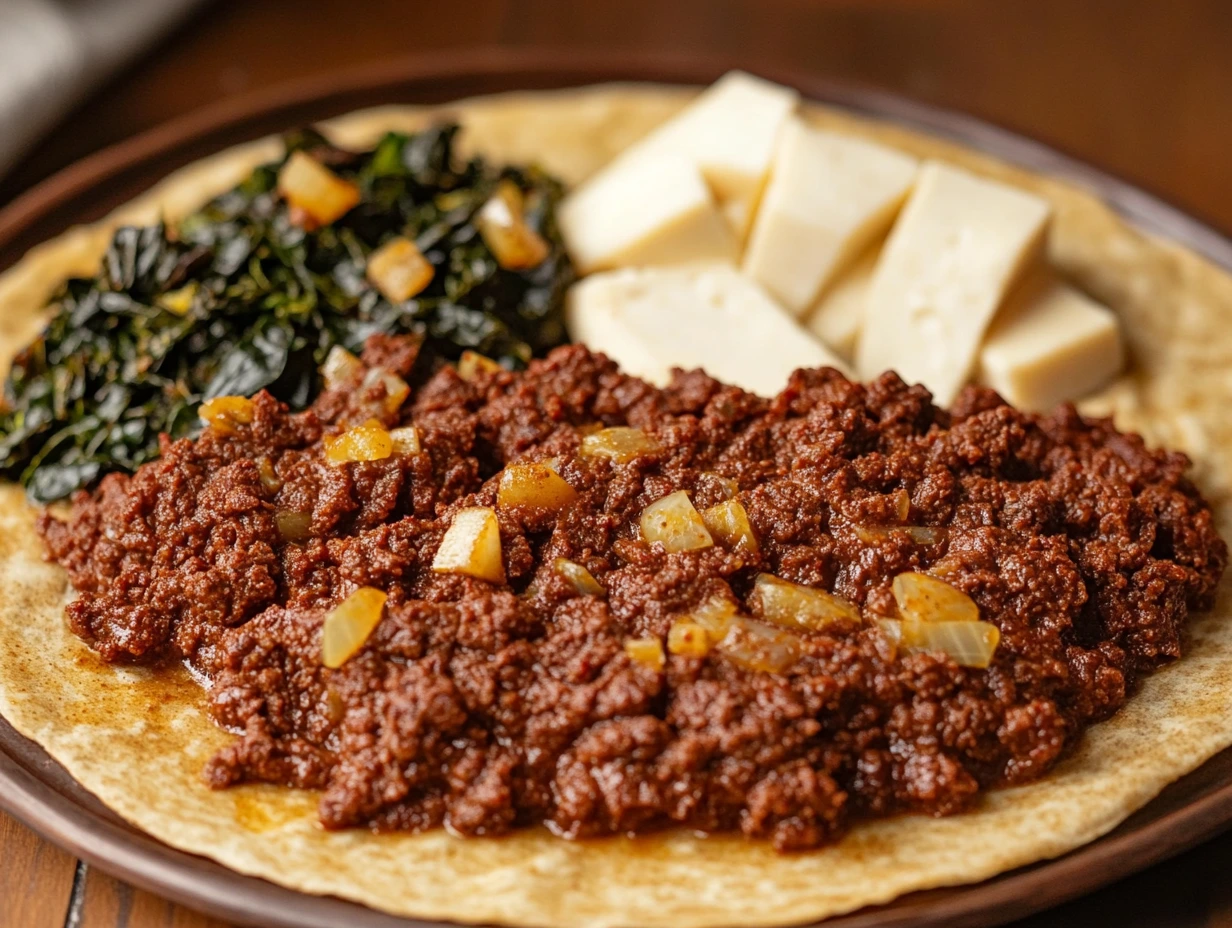
Kitfo is finely minced Ethiopian beef seasoned with mitmita and warm niter kibbeh, traditionally served raw or lightly warmed. This version uses measured ingredients, clear visual cues and the traditional flavour balance that makes the dish distinctive.

25 minsPrep time
5 minsCook time
Serves 4Servings
MediumDifficulty
Kitfo
About this dish

Kitfo: the story on the plate

Kitfo is a Ethiopian main with a clear sense of place. Kitfo is particularly associated with the Gurage people of Ethiopia and has become a nationally celebrated beef dish. It is traditionally made with exceptionally fresh raw minced beef mixed with spiced clarified butter and mitmita. The recipe below keeps the defining ingredients and technique intact while giving practical metric quantities and enough detail for a home cook to judge texture, seasoning and doneness rather than simply follow a timer.

Historical background

Kitfo is particularly associated with the Gurage people of Ethiopia and has become a nationally celebrated beef dish. It is traditionally made with exceptionally fresh raw minced beef mixed with spiced clarified butter and mitmita.

Why it is famous

The level of cooking is part of the ordering language: tere is raw, leb leb is lightly warmed and fully cooked versions are also common.


Cultural significance

The level of cooking is part of the ordering language: tere is raw, leb leb is lightly warmed and fully cooked versions are also common.
Nutrition

Estimated nutrition per serving

These figures are estimates per serving. Actual nutrition can vary with the brands and exact amounts you use, how much oil, dressing or sauce is absorbed, any substitutions or added extras, and the portion size served.

A practical guide for comparing recipes and planning meals.

570Calories
44gProtein
4gCarbs
42gFat
Ingredients

What you need

  • 600 very fresh lean beef tenderloin, trimmed and finely hand-minced
  • 70 niter kibbeh, warm, not hot
  • 2 mitmita
  • 0.5 ground korarima or cardamom
  • 1 fine salt
  • 250 ayib or mild cottage cheese, to serve
  • 300 collard greens, cooked, to serve
Method

Step-by-step method

Follow the recipe in order, tasting and adjusting seasoning where needed.

  1. Keep the beef very cold while trimming away every visible piece of sinew and fat. Finely hand-chop with a sharp knife until evenly minced rather than pulped.
  2. Warm the niter kibbeh only until fluid. Mix in mitmita, korarima and salt so the spices bloom gently without frying.
  3. For traditional raw kitfo, combine the chilled beef with the warm seasoned butter immediately before serving and mix until glossy. Use only beef of a quality suitable for raw consumption and follow local food-safety guidance.
  4. For leb leb kitfo, place the mixed beef in a warm pan and stir over low heat for 1–2 minutes so the exterior just loses its raw colour while the centre remains rare. For fully cooked kitfo, continue until done.
  5. Taste a small cooked sample of the seasoning if you are serving raw and need to adjust salt or spice without tasting uncooked beef.
  6. Serve at once with ayib and cooked greens, traditionally alongside injera or kocho where available.
Cook smarter

Tips, storage and serving advice

Shopping tips

Good berbere should smell layered rather than simply hot. If you cannot find niter kibbeh, make a small batch of spiced clarified butter. For injera, buy authentic teff-based injera from an Ethiopian bakery if you are not fermenting your own. Check labels on compound ingredients such as sauces, spice blends, stocks, kimchi, fermented pastes and prepared breads when cooking for allergies.

Ingredient quality

For Kitfo, prioritise fresh or properly stored versions of very fresh lean beef tenderloin, niter kibbeh, mitmita, ground korarima or cardamom; speciality seasonings should smell vivid rather than stale.

Common mistakes

Using ordinary mince loses the texture; hot butter cooks the beef unevenly; raw service carries genuine food-safety risk if sourcing and handling are not impeccable.

Chef’s tips

Hand-chop cold tender beef and decide the cooking level before mixing. If raw beef is not appropriate for your setting, choose leb leb or fully cooked.

How to know it is cooked

For cooked versions, the chosen doneness is even throughout; for raw traditional service, beef remains cold-fresh in aroma with no oxidised grey colour.

Plating advice

Serve as a compact mound with ayib and greens in separate adjacent sections.

Make ahead

Prepare spice pastes, sauces, fillings and desserts ahead where useful, but fry, grill, steam or dress fresh elements close to serving.

Storage and reheating

Cool quickly and store covered in the fridge for up to 2 days. Rice, seafood and dairy desserts should be handled especially carefully. Reheat gently with a splash of stock, water or milk as suitable. Crisp fried starters and delicate fish are best freshly cooked.

Wine pairing

What to drink with Kitfo

These are wine-style pairings, so you can choose any bottle in that style rather than needing one exact producer. Look for the grape, region or style name on the label.

Pairings are chosen around the dish’s flavour, texture, richness, acidity and cooking style, not just the country it comes from.

Off-Dry Riesling wine pairing
#1 Excellent match White

Off-Dry Riesling

Why it works:

Off-Dry Riesling is an excellent partner for Kitfo: aromatic fruit and freshness soften the perception of chilli and spice, while restrained tannin avoids making heat feel harsher.

Slightly sweet, high-acid Riesling that balances spice, salt, smoked pork and sweet-sour sauces without tasting heavy.

GrapeRiesling
RegionMosel, Pfalz, Alsace, Austria
Wine flavourlime, peach, apricot, honey, slate
Serve at7-9°C
  • Flavour bridge: aromatic fruit connects with spice while a cool, fresh finish resets the palate
  • Acidity: High freshness cuts through oil and rich spice pastes
  • Body: Enough flavour intensity for spice without excessive weight
  • Tannin: Low tannin avoids exaggerating bitterness and heat
  • Sweetness: A dry-to-off-dry profile can cushion chilli heat
  • Best for: Dinner, entertaining or recipe pairing
View wine guide
Gewürztraminer wine pairing
#2 Great match White

Gewürztraminer

Why it works:

Gewürztraminer offers a compelling alternative for Kitfo: aromatic fruit and freshness soften the perception of chilli and spice, while restrained tannin avoids making heat feel harsher.

Highly aromatic white with lychee, rose, ginger and spice. Works with fragrant dishes, rich cheese and lightly sweet desserts.

GrapeGewürztraminer
RegionAlsace, Alto Adige, Germany
Wine flavourlychee, rose, ginger, peach, spice
Serve at8-10°C
  • Flavour bridge: aromatic fruit connects with spice while a cool, fresh finish resets the palate
  • Acidity: High freshness cuts through oil and rich spice pastes
  • Body: Enough flavour intensity for spice without excessive weight
  • Tannin: Low tannin avoids exaggerating bitterness and heat
  • Sweetness: A dry-to-off-dry profile can cushion chilli heat
  • Best for: Dinner, entertaining or recipe pairing
View wine guide
Dry Riesling wine pairing
#3 Interesting match White

Dry Riesling

Why it works:

For a more adventurous pairing, dry Riesling is an excellent partner for Kitfo: aromatic fruit and freshness soften the perception of chilli and spice, while restrained tannin avoids making heat feel harsher.

A precise, high-acid white with lime, green apple, blossom and mineral tension. It loves pork, fish, cabbage, spice and rich sauces.

GrapeRiesling
RegionMosel, Rheingau, Alsace, Clare Valley
Wine flavourlime, green apple, petrol, slate, blossom
Serve at8-10°C
  • Flavour bridge: aromatic fruit connects with spice while a cool, fresh finish resets the palate
  • Acidity: High freshness cuts through oil and rich spice pastes
  • Body: Enough flavour intensity for spice without excessive weight
  • Tannin: Low tannin avoids exaggerating bitterness and heat
  • Sweetness: A dry-to-off-dry profile can cushion chilli heat
  • Best for: Dinner, entertaining or recipe pairing
View wine guide
Bottle suggestions

Specific wines to try

These are named bottles or regional wine examples already linked to this recipe. Each card opens the relevant wine-style guide because individual bottle pages are not currently published.