Ethiopian Bread

Himbasha

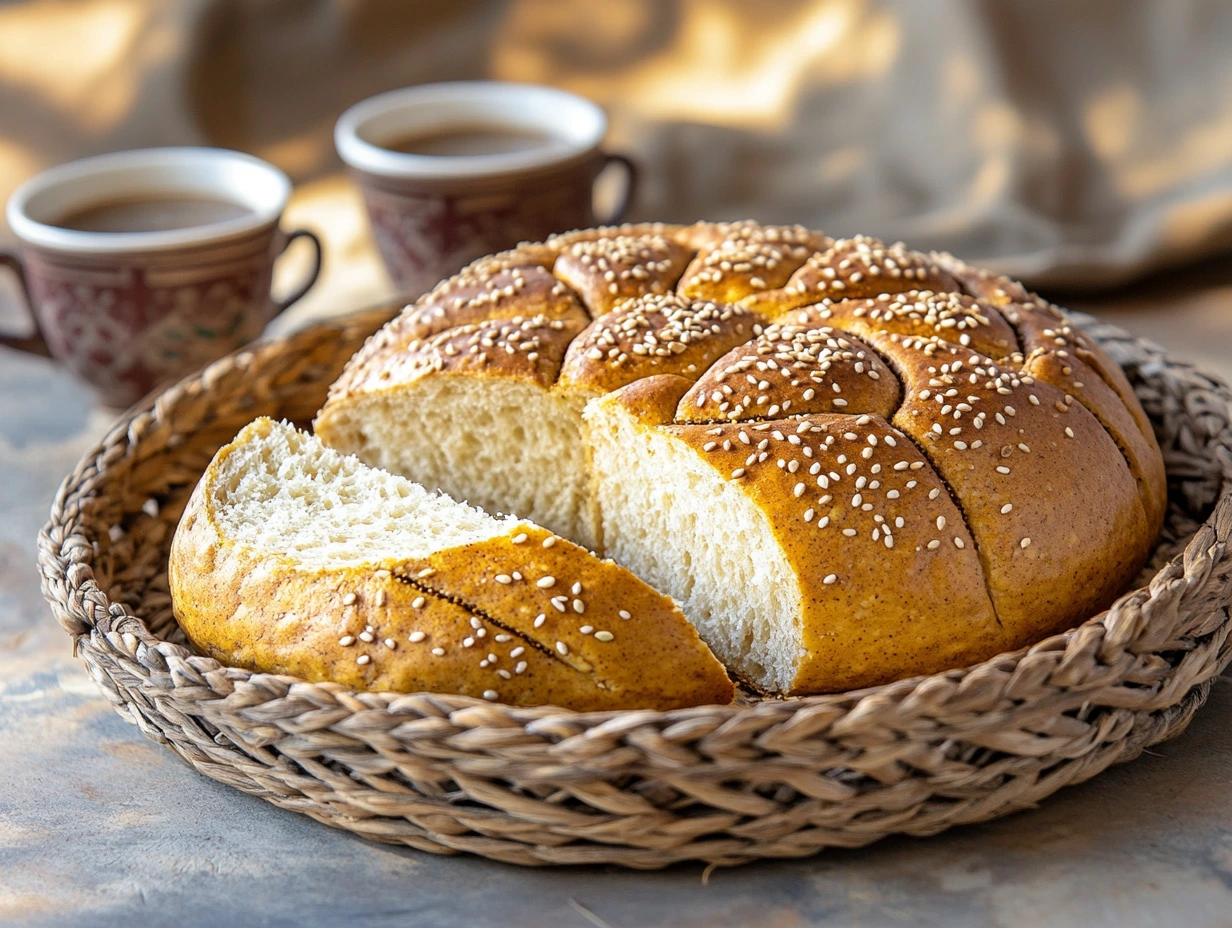
Himbasha is a lightly sweet Ethiopian celebration bread scented with cardamom and marked with a traditional decorative pattern before baking. This version uses measured ingredients, clear visual cues and the traditional flavour balance that makes the dish distinctive.

25 minsPrep time
30 minsCook time
Serves 10Servings
MediumDifficulty
Himbasha
About this dish

Himbasha: the story on the plate

Himbasha is a Ethiopian dessert with a clear sense of place. Himbasha, also called ambasha, is a celebratory Ethiopian and Eritrean bread, often mildly sweet and aromatic with cardamom. Decorative scoring makes the loaf immediately recognisable. The recipe below keeps the defining ingredients and technique intact while giving practical metric quantities and enough detail for a home cook to judge texture, seasoning and doneness rather than simply follow a timer.

Historical background

Himbasha, also called ambasha, is a celebratory Ethiopian and Eritrean bread, often mildly sweet and aromatic with cardamom. Decorative scoring makes the loaf immediately recognisable.

Why it is famous

It may appear around celebrations, hospitality and coffee service. In this site taxonomy it is placed in desserts because it functions as a sweet bread rather than because Ethiopia traditionally structures meals around a Western dessert course.
Cultural significance

It may appear around celebrations, hospitality and coffee service. In this site taxonomy it is placed in desserts because it functions as a sweet bread rather than because Ethiopia traditionally structures meals around a Western dessert course.
Nutrition

Estimated nutrition per serving

These figures are estimates per serving. Actual nutrition can vary with the brands and exact amounts you use, how much oil, dressing or sauce is absorbed, any substitutions or added extras, and the portion size served.

A practical guide for comparing recipes and planning meals.

235Calories
6gProtein
38gCarbs
7gFat
Ingredients

What you need

  • 500 strong white flour
  • 7 instant yeast
  • 65 caster sugar
  • 1.5 ground cardamom
  • 8 fine salt
  • 290 warm water
  • 45 neutral oil
  • 20 sesame seeds, optional
Method

Step-by-step method

Follow the recipe in order, tasting and adjusting seasoning where needed.

  1. Mix flour, yeast, sugar, cardamom and salt. Add warm water and oil and knead 8–10 minutes until the dough is smooth and elastic.
  2. Cover and rise for 60–75 minutes until nearly doubled. Knock back gently and shape into one thick round about 25 cm wide.
  3. Transfer to a lined tray and flatten evenly to about 2.5 cm. Use a blunt knife to score a wheel or lattice pattern deeply enough to remain visible after proofing but not through the dough.
  4. Cover loosely and prove another 25–30 minutes. Heat the oven to 190°C. Brush the surface lightly with water or oil and scatter sesame seeds if using.
  5. Bake 25–30 minutes until deep golden and the underside sounds hollow when tapped. If colouring too quickly, reduce the oven to 180°C for the final 10 minutes.
  6. Cool on a rack before tearing or slicing. The crumb sets as steam escapes and the cardamom becomes more fragrant as the bread cools.
Cook smarter

Tips, storage and serving advice

Shopping tips

Good berbere should smell layered rather than simply hot. If you cannot find niter kibbeh, make a small batch of spiced clarified butter. For injera, buy authentic teff-based injera from an Ethiopian bakery if you are not fermenting your own. Check labels on compound ingredients such as sauces, spice blends, stocks, kimchi, fermented pastes and prepared breads when cooking for allergies.

Ingredient quality

For Himbasha, prioritise fresh or properly stored versions of strong white flour, instant yeast, caster sugar, ground cardamom; speciality seasonings should smell vivid rather than stale.

Common mistakes

Too much flour makes the bread dry; shallow scoring disappears; cutting hot compresses the crumb.

Chef’s tips

Keep the dough soft and use oiled hands rather than adding flour whenever possible.

How to know it is cooked

The loaf is evenly golden, sounds hollow underneath and springs back slowly when pressed.

Plating advice

Serve as scored wedges, preserving the decorative top pattern.