Pork Sinigang: the story on the plate
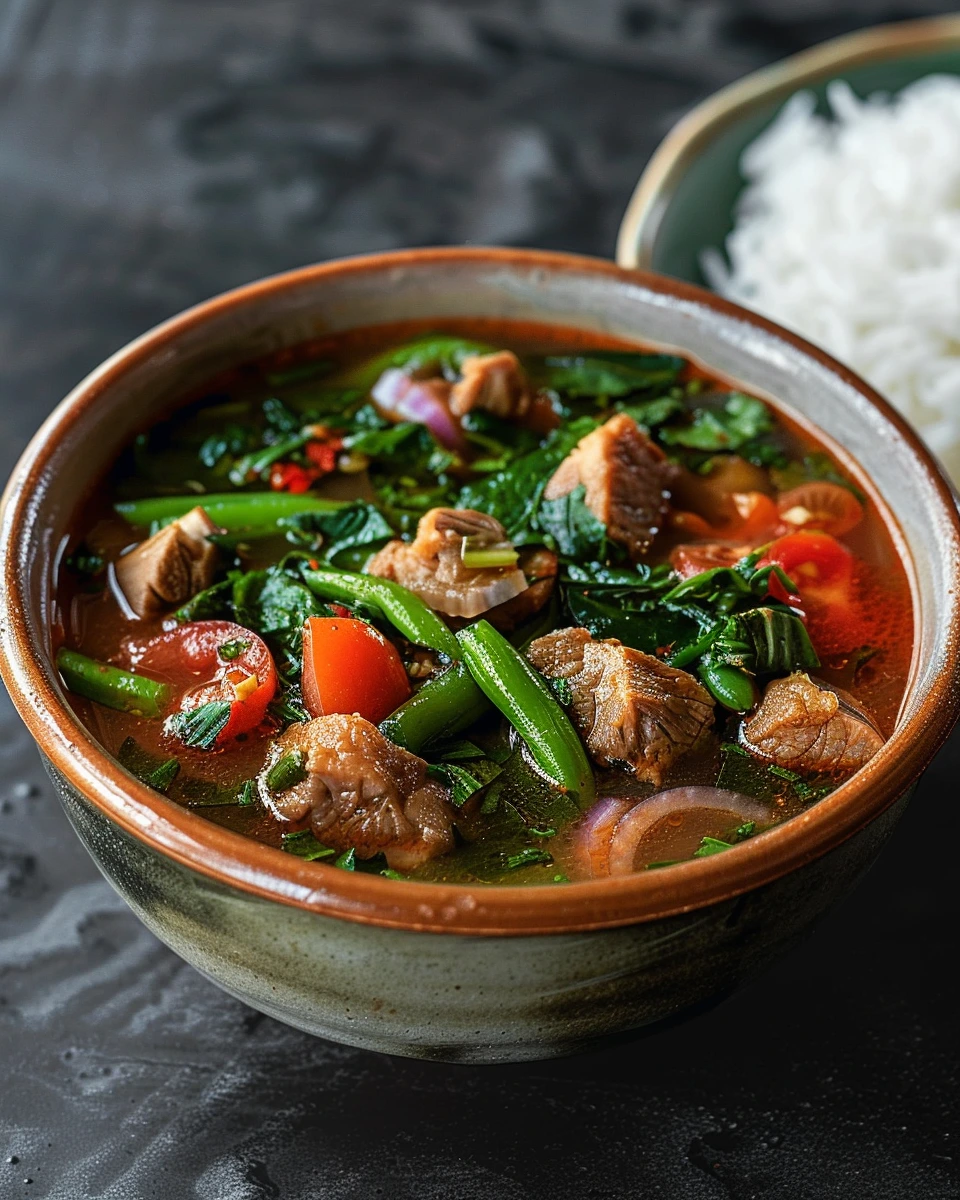
Sinigang is an Indigenous souring tradition with regional versions based on tamarind, kamias, guava, green mango or other acidic fruits. Pork became one of the most common proteins, simmered until its broth could carry the sour base. Its defining quality is clean, mouth-watering sourness rather than chilli heat. Fatty pork, tomatoes and vegetables keep the broth rounded, while the souring agent should remain vivid to the final spoonful. Sinigang is everyday family comfort food, especially welcome in rainy weather. It is eaten with rice, which softens the acidity and turns the soup into a full meal.
Historical background
Sinigang is an Indigenous souring tradition with regional versions based on tamarind, kamias, guava, green mango or other acidic fruits. Pork became one of the most common proteins, simmered until its broth could carry the sour base.
Why it is famous
Its defining quality is clean, mouth-watering sourness rather than chilli heat. Fatty pork, tomatoes and vegetables keep the broth rounded, while the souring agent should remain vivid to the final spoonful.
Cultural significance
Sinigang is everyday family comfort food, especially welcome in rainy weather. It is eaten with rice, which softens the acidity and turns the soup into a full meal.