Laing: the story on the plate
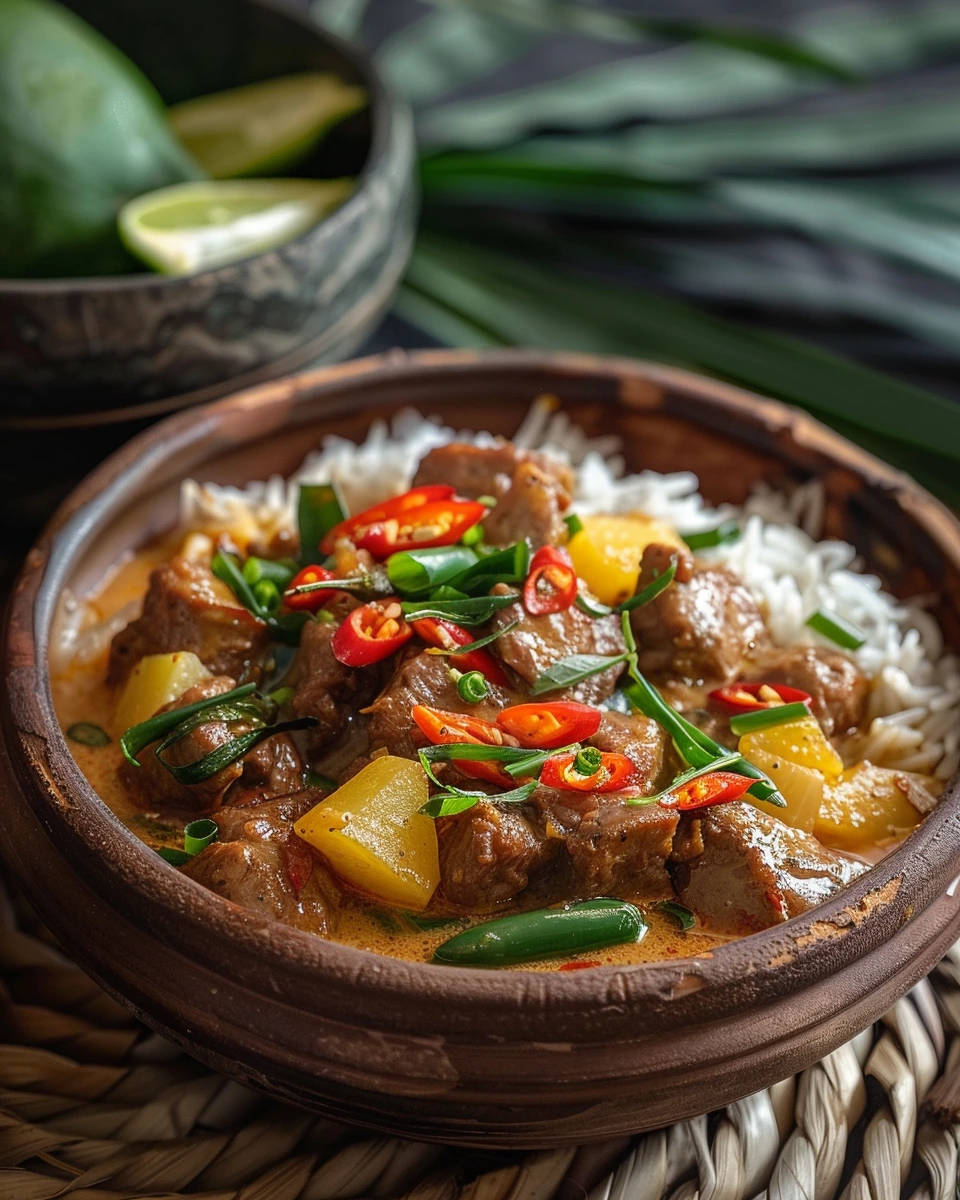
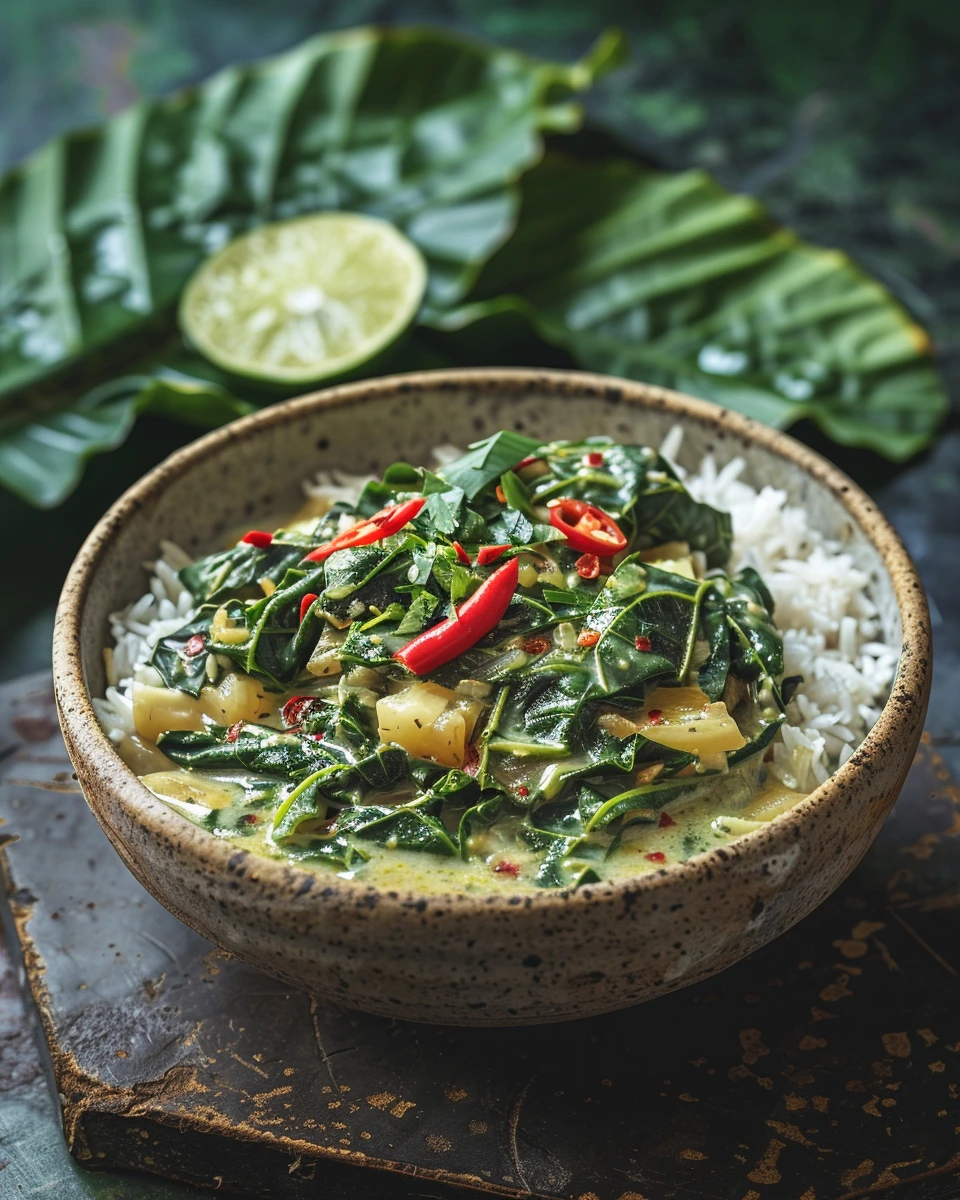
Laing comes from the Bicol region, where coconut palms and chillies shape the local cuisine. Dried taro leaves are slowly hydrated in coconut milk, a technique that concentrates flavour and avoids the irritation associated with improperly handled taro. The dish is valued for its dense, almost creamy texture and the progression from coconut sweetness to chilli heat and bagoong depth. Stirring too early can affect the leaves and texture. It is served with rice as a vegetable main or side and stands as one of the clearest expressions of Bicolano food culture. Versions may include pork, dried fish or seafood.
Historical background
Laing comes from the Bicol region, where coconut palms and chillies shape the local cuisine. Dried taro leaves are slowly hydrated in coconut milk, a technique that concentrates flavour and avoids the irritation associated with improperly handled taro.
Why it is famous
The dish is valued for its dense, almost creamy texture and the progression from coconut sweetness to chilli heat and bagoong depth. Stirring too early can affect the leaves and texture.
Cultural significance
It is served with rice as a vegetable main or side and stands as one of the clearest expressions of Bicolano food culture. Versions may include pork, dried fish or seafood.