Pancit Canton: the story on the plate
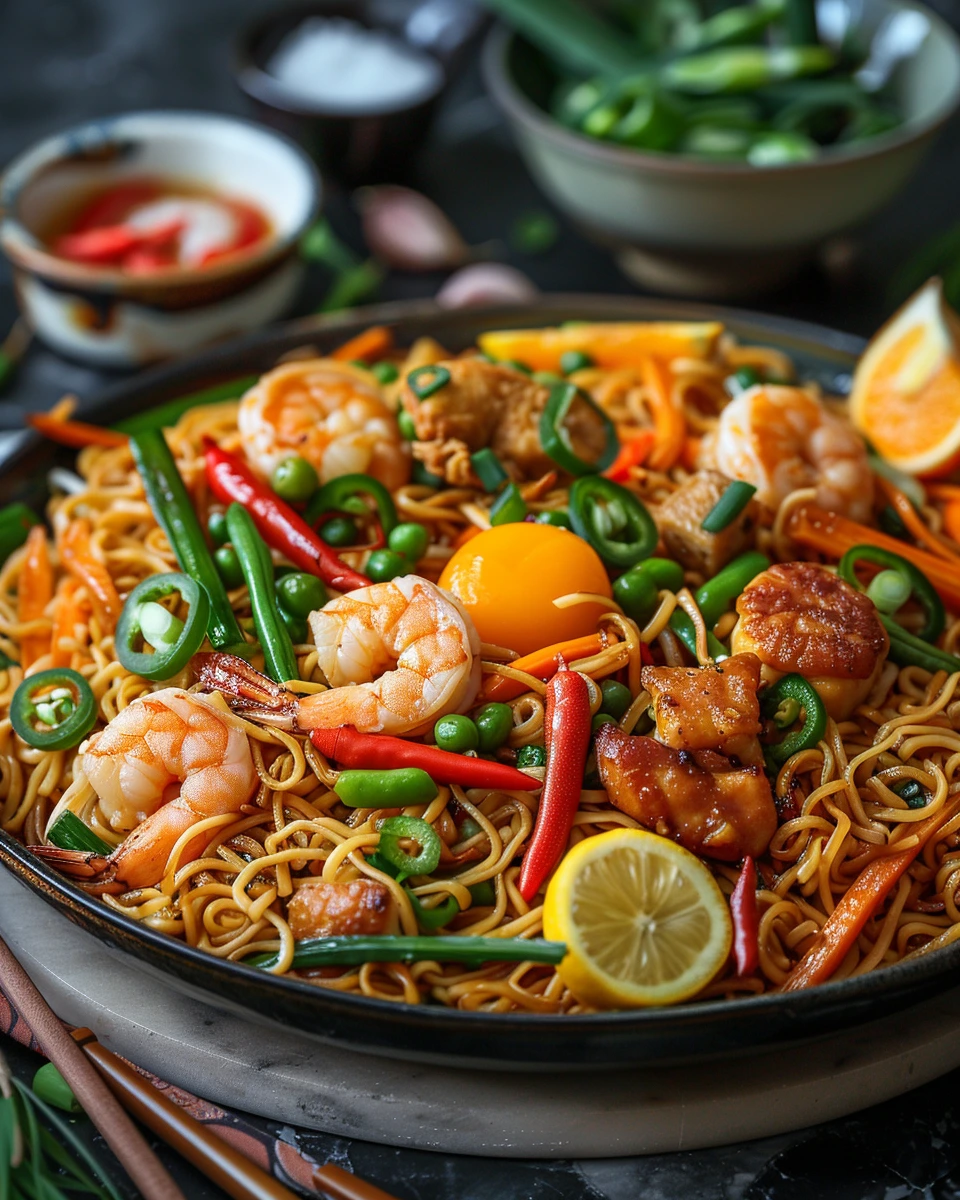
Chinese traders introduced noodle traditions to the Philippines, where pancit dishes were adapted with local seasonings and ingredients. Canton uses wheat egg noodles and became a fixture of home kitchens, restaurants and celebrations. The noodles absorb a soy- and stock-based sauce while retaining spring, and the dish offers a colourful mix of textures. Calamansi squeezed at the table cuts through the savoury coating. Pancit is associated with birthdays and long life, so it appears at nearly every celebration. It is also practical party food because a large wok feeds many guests.
Historical background
Chinese traders introduced noodle traditions to the Philippines, where pancit dishes were adapted with local seasonings and ingredients. Canton uses wheat egg noodles and became a fixture of home kitchens, restaurants and celebrations.
Why it is famous
The noodles absorb a soy- and stock-based sauce while retaining spring, and the dish offers a colourful mix of textures. Calamansi squeezed at the table cuts through the savoury coating.
Cultural significance
Pancit is associated with birthdays and long life, so it appears at nearly every celebration. It is also practical party food because a large wok feeds many guests.