Lechon Kawali: the story on the plate
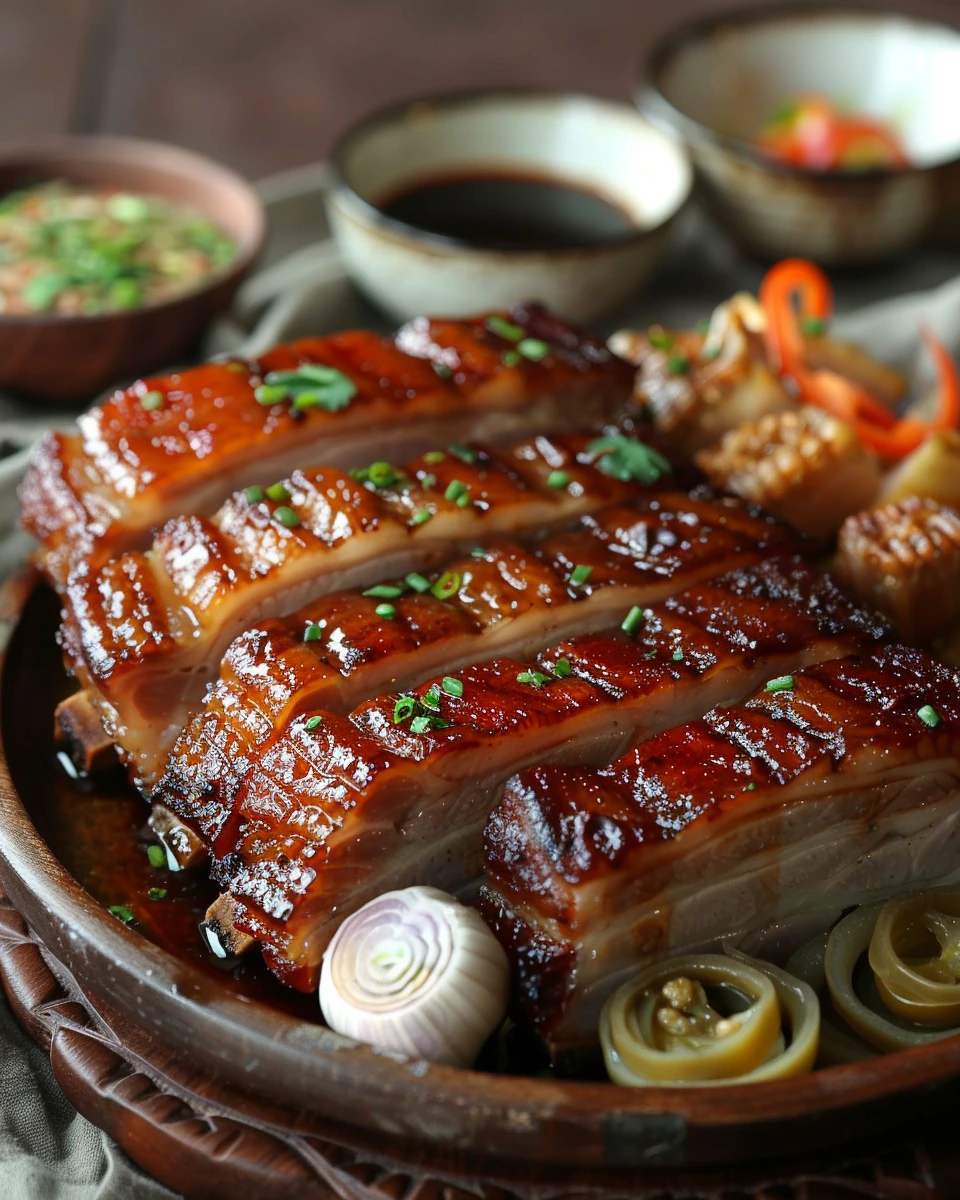
Lechon kawali brings the appeal of whole roast lechon into a home-kitchen method using a wok or kawali. Boiling then frying allows cooks to tenderise the meat before creating the prized blistered skin. The defining contrast is glassy, crackling skin over moist meat and rendered fat. Thorough drying and controlled oil temperature are essential for crispness and safe frying. It is served at celebrations, as pulutan and as a rich main with rice. Liver sauce, spiced vinegar or soy-calamansi dip balances the pork.
Historical background
Lechon kawali brings the appeal of whole roast lechon into a home-kitchen method using a wok or kawali. Boiling then frying allows cooks to tenderise the meat before creating the prized blistered skin.
Why it is famous
The defining contrast is glassy, crackling skin over moist meat and rendered fat. Thorough drying and controlled oil temperature are essential for crispness and safe frying.
Cultural significance
It is served at celebrations, as pulutan and as a rich main with rice. Liver sauce, spiced vinegar or soy-calamansi dip balances the pork.