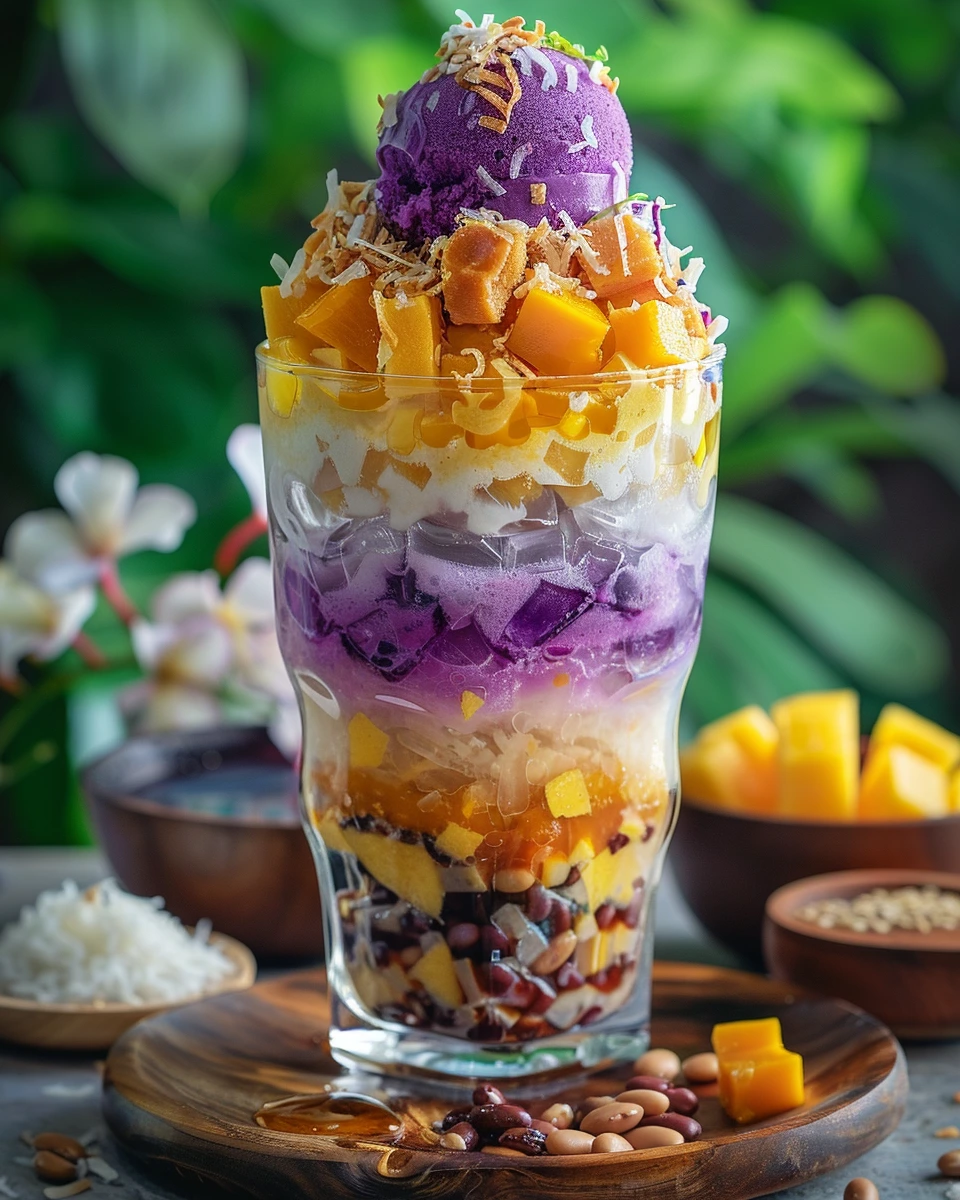
Halo-Halo: the story on the plate
The dessert developed from earlier ice-and-bean sweets influenced by Japanese kakigori and expanded as manufactured ice became available in the Philippines. Its name means 'mix-mix', describing both the method and its abundance. Halo-halo is famous for variety: icy, creamy, chewy and soft elements meet in every spoonful. The ingredients remain layered for presentation but are vigorously mixed before eating. It is an emblem of Filipino summer and merienda culture, sold by street vendors, restaurants and households. Regional and commercial versions compete through increasingly elaborate toppings.
Historical background
The dessert developed from earlier ice-and-bean sweets influenced by Japanese kakigori and expanded as manufactured ice became available in the Philippines. Its name means 'mix-mix', describing both the method and its abundance.
Why it is famous
Halo-halo is famous for variety: icy, creamy, chewy and soft elements meet in every spoonful. The ingredients remain layered for presentation but are vigorously mixed before eating.
Cultural significance
It is an emblem of Filipino summer and merienda culture, sold by street vendors, restaurants and households. Regional and commercial versions compete through increasingly elaborate toppings.