Kinilaw: the story on the plate
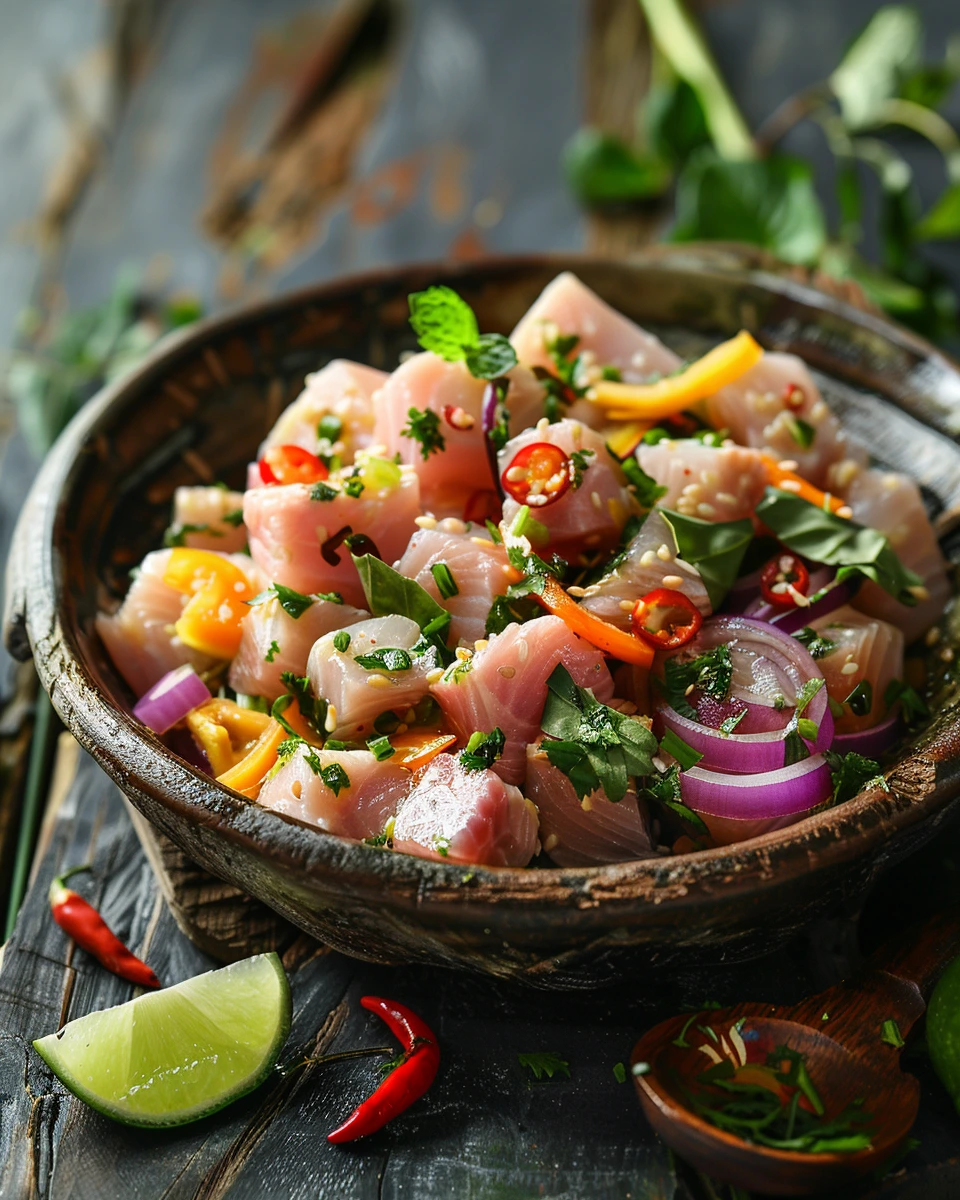
Kinilaw predates Spanish colonisation and reflects an Indigenous Philippine technique of using acidic liquids to season and firm fresh seafood. Coastal communities developed many local versions using native vinegars, calamansi and coconut milk. Unlike a long marinade, good kinilaw is mixed shortly before serving so the fish stays tender. Sharp vinegar is balanced by citrus, ginger, onion and chilli, with freshness more important than elaborate garnish. It is eaten as pulutan with drinks, as an appetiser and as a celebration of extremely fresh coastal catch. Regional variations express the diversity of the archipelago's vinegars and seafood.
Historical background
Kinilaw predates Spanish colonisation and reflects an Indigenous Philippine technique of using acidic liquids to season and firm fresh seafood. Coastal communities developed many local versions using native vinegars, calamansi and coconut milk.
Why it is famous
Unlike a long marinade, good kinilaw is mixed shortly before serving so the fish stays tender. Sharp vinegar is balanced by citrus, ginger, onion and chilli, with freshness more important than elaborate garnish.
Cultural significance
It is eaten as pulutan with drinks, as an appetiser and as a celebration of extremely fresh coastal catch. Regional variations express the diversity of the archipelago's vinegars and seafood.