Korean Main

Dakgalbi

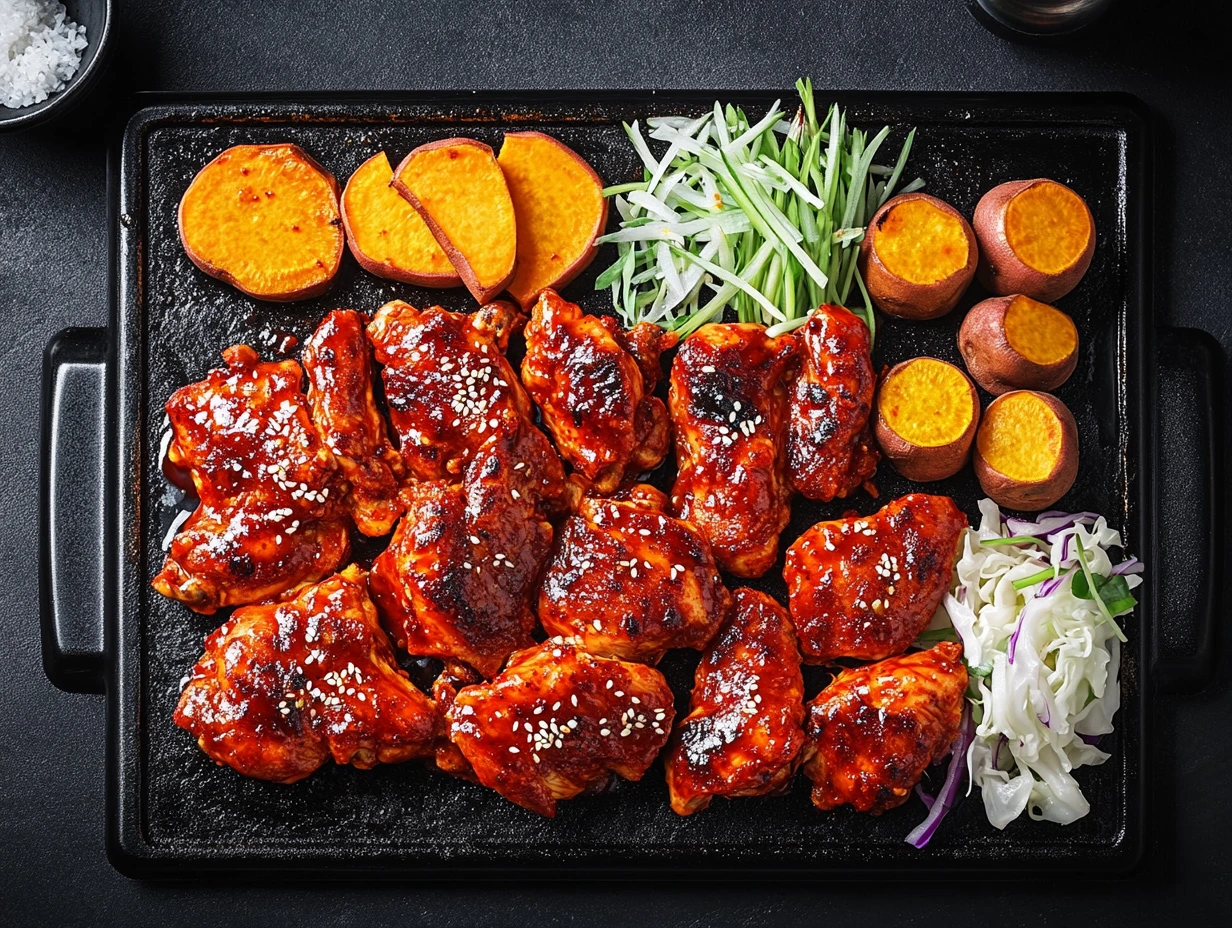
Dakgalbi is spicy stir-fried chicken with sweet potato, cabbage and rice cakes coated in a gochujang-gochugaru sauce. This version uses measured ingredients, clear visual cues and the traditional flavour balance that makes the dish distinctive.

25 minsPrep time
25 minsCook time
Serves 4Servings
EasyDifficulty
Dakgalbi
About this dish

Dakgalbi: the story on the plate

Dakgalbi is a Korean main with a clear sense of place. Dakgalbi is strongly associated with Chuncheon in Gangwon Province and became a popular, affordable restaurant dish in the twentieth century. Despite the name, it is not usually a rib dish; boneless chicken is stir-fried on a large tabletop griddle. The recipe below keeps the defining ingredients and technique intact while giving practical metric quantities and enough detail for a home cook to judge texture, seasoning and doneness rather than simply follow a timer.

Historical background

Dakgalbi is strongly associated with Chuncheon in Gangwon Province and became a popular, affordable restaurant dish in the twentieth century. Despite the name, it is not usually a rib dish; boneless chicken is stir-fried on a large tabletop griddle.

Why it is famous

It is interactive restaurant food: the pan sits in the middle of the table and the final sauce is often used to fry rice after most of the chicken has been eaten.
Cultural significance

It is interactive restaurant food: the pan sits in the middle of the table and the final sauce is often used to fry rice after most of the chicken has been eaten.
Nutrition

Estimated nutrition per serving

These figures are estimates per serving. Actual nutrition can vary with the brands and exact amounts you use, how much oil, dressing or sauce is absorbed, any substitutions or added extras, and the portion size served.

A practical guide for comparing recipes and planning meals.

590Calories
38gProtein
68gCarbs
18gFat
Ingredients

What you need

  • 650 boneless chicken thighs, cut into bite-sized pieces
  • 55 gochujang
  • 2 gochugaru
  • 30 soy sauce
  • 25 rice syrup or honey
  • 18 Garlic, grated
  • 8 ginger, grated
  • 10 toasted sesame oil
  • 250 sweet potato, peeled and sliced 5 mm thick
  • 350 green cabbage, roughly chopped
  • 200 Korean rice cakes
  • 80 Spring onions, cut into 5 cm lengths
  • 15 neutral cooking oil
Method

Step-by-step method

Follow the recipe in order, tasting and adjusting seasoning where needed.

  1. Mix gochujang, gochugaru, soy sauce, rice syrup, garlic, ginger and sesame oil. Toss the chicken thoroughly in two-thirds of the sauce and leave for 20 minutes.
  2. Heat a large wide frying pan or griddle over medium-high heat with the oil. Arrange the sweet potato in the pan first because it needs the longest cooking time, then add the marinated chicken.
  3. Cook for 5 minutes, turning the chicken and sweet potato, then add the cabbage and rice cakes. Spoon over the remaining sauce and 80 ml water.
  4. Cover for 6 minutes so the sweet potato and rice cakes steam through, then remove the lid and stir-fry vigorously for 6–8 minutes until the liquid reduces to a glossy coating.
  5. Add the spring onions for the final 2 minutes. Cut open the thickest chicken piece to check it is fully cooked; the sweet potato should be tender without collapsing.
  6. Serve directly from the pan. If making fried rice afterwards, leave a few spoonfuls of sauce and vegetables in the pan and stir cold rice through them over high heat.
Cook smarter

Tips, storage and serving advice

Shopping tips

Buy Korean gochujang, gochugaru and doenjang from a Korean grocer where possible. Use short-grain rice rather than long-grain rice, and choose well-fermented kimchi for cooked dishes. Check labels on compound ingredients such as sauces, spice blends, stocks, kimchi, fermented pastes and prepared breads when cooking for allergies.

Ingredient quality

For Dakgalbi, prioritise fresh or properly stored versions of boneless chicken thighs, gochujang, gochugaru, soy sauce; speciality seasonings should smell vivid rather than stale.

Common mistakes

Cutting sweet potato too thick leaves it raw; adding all sauce at the start can scorch; using chicken breast easily dries out before the vegetables are ready.

Chef’s tips

Use thigh meat and keep a splash of water available: steam helps the dense vegetables cook before the final high-heat reduction.

How to know it is cooked

Chicken is opaque and juicy, sweet potato yields to a chopstick and the sauce clings rather than pools.

Plating advice

Serve on a broad sizzling pan or shallow platter with the vegetables distributed around the chicken.