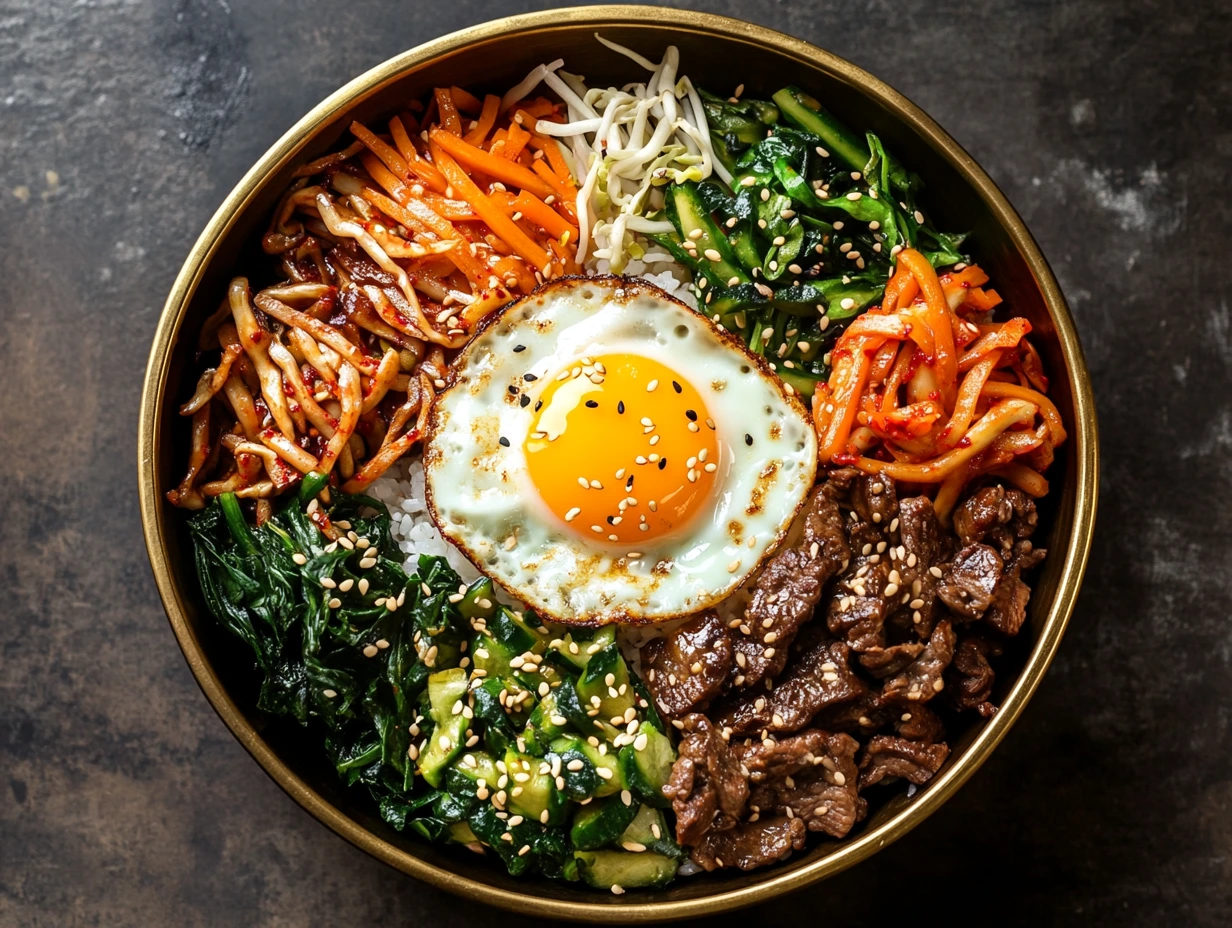
Bibimbap: the story on the plate
Bibimbap is a Korean main with a clear sense of place. Bibimbap literally means mixed rice. Variants are found across Korea, with Jeonju particularly celebrated for elaborate versions and dolsot bibimbap for the crisp rice crust produced in a hot stone bowl. The recipe below keeps the defining ingredients and technique intact while giving practical metric quantities and enough detail for a home cook to judge texture, seasoning and doneness rather than simply follow a timer.
Historical background
Bibimbap literally means mixed rice. Variants are found across Korea, with Jeonju particularly celebrated for elaborate versions and dolsot bibimbap for the crisp rice crust produced in a hot stone bowl.
Why it is famous
The dish expresses a Korean preference for balance in colour, texture and seasoning. The final mixing is part of the experience: separate components become one coherent bowl only at the moment of eating.
Cultural significance
The dish expresses a Korean preference for balance in colour, texture and seasoning. The final mixing is part of the experience: separate components become one coherent bowl only at the moment of eating.