Bossam: the story on the plate
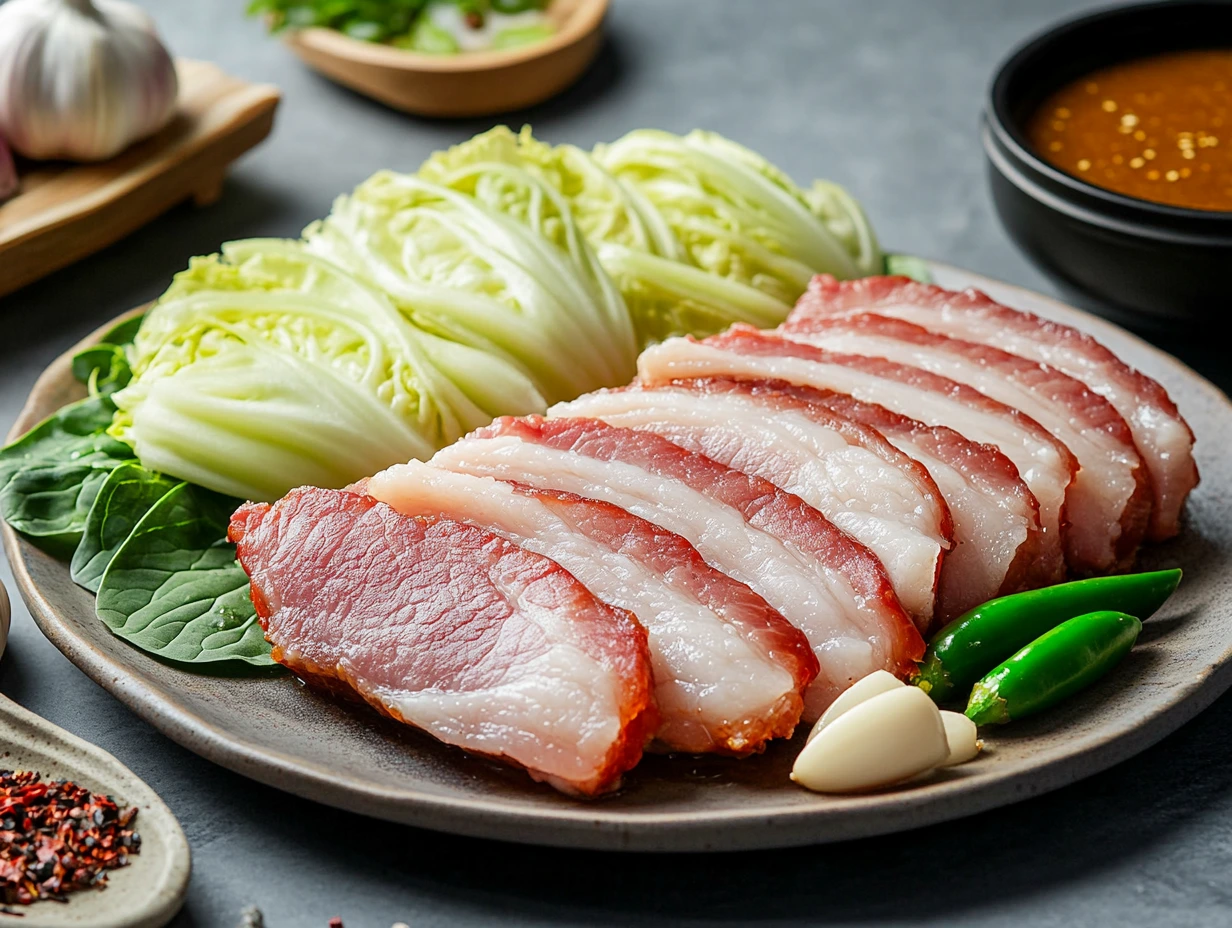
Bossam is a Korean main with a clear sense of place. Bossam means wrapped and commonly refers to tender boiled or simmered pork served with cabbage and condiments. It is strongly associated with kimjang season, when families traditionally prepare large quantities of kimchi and eat pork alongside freshly seasoned cabbage. The recipe below keeps the defining ingredients and technique intact while giving practical metric quantities and enough detail for a home cook to judge texture, seasoning and doneness rather than simply follow a timer.
Historical background
Bossam means wrapped and commonly refers to tender boiled or simmered pork served with cabbage and condiments. It is strongly associated with kimjang season, when families traditionally prepare large quantities of kimchi and eat pork alongside freshly seasoned cabbage.
Why it is famous
Bossam turns preservation work into a feast: rich pork, fresh or salted cabbage and pungent fermented condiments are eaten communally as wraps.
Cultural significance
Bossam turns preservation work into a feast: rich pork, fresh or salted cabbage and pungent fermented condiments are eaten communally as wraps.