
Korean Main
Andong Jjimdak
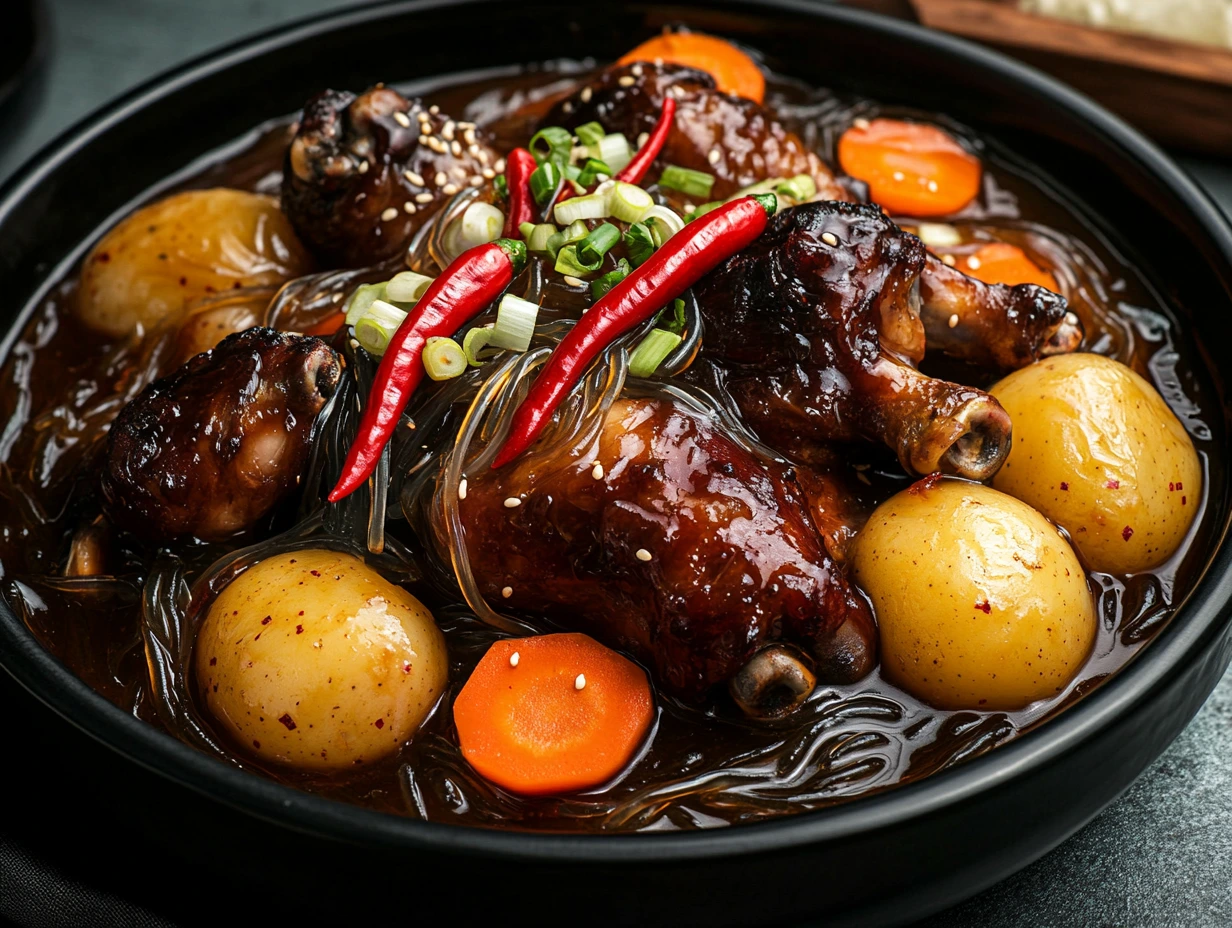
Andong Jjimdak is soy-braised chicken from Andong with glass noodles, potatoes, carrot and chillies in a glossy sweet-savoury sauce. This version uses measured ingredients, clear visual cues and the traditional flavour balance that makes the dish distinctive.
25 minsPrep time
45 minsCook time
Serves 4Servings
MediumDifficulty
Nutrition
Estimated nutrition per serving
These figures are estimates per serving. Actual nutrition can vary with the brands and exact amounts you use, how much oil, dressing or sauce is absorbed, any substitutions or added extras, and the portion size served.A practical guide for comparing recipes and planning meals.
720Calories
45gProtein
78gCarbs
25gFat
Ingredients
What you need
- 1000 bone-in chicken thighs and drumsticks
- 400 potatoes, cut into large chunks
- 180 carrot, cut into chunks
- 180 onion, cut into wedges
- 120 Korean sweet potato noodles, soaked 20 minutes
- 100 soy sauce
- 35 brown sugar
- 25 rice syrup or honey
- 20 Garlic, grated
- 10 ginger, grated
- 3 dried red chillies
- 650 water or light chicken stock
- 80 Spring onions, cut into lengths
- 10 toasted sesame oil
Method
Step-by-step method
Follow the recipe in order, tasting and adjusting seasoning where needed.
- Blanch the chicken pieces in boiling water for 3 minutes, drain and rinse away any foam. This keeps the finished braising liquid cleaner while leaving enough fat for richness.
- Return the chicken to a wide pot with soy sauce, sugar, rice syrup, garlic, ginger, chillies and stock. Bring to a boil and simmer uncovered for 15 minutes.
- Add potatoes, carrot and onion. Continue simmering for 15 minutes, turning the chicken occasionally so exposed pieces remain glazed and the vegetables cook evenly.
- Drain the soaked glass noodles and add them to the pot. Simmer another 8–10 minutes, stirring gently so the noodles absorb braising liquid without catching on the base.
- When the chicken is tender and the potatoes are cooked, raise the heat for 2–3 minutes to reduce the liquid until glossy. Stir in spring onions and sesame oil at the end.
- Serve in a wide communal bowl, lifting some noodles to the top so they do not disappear under the chicken and vegetables.
Cook smarter
Tips, storage and serving advice
Shopping tips
Ingredient quality
Common mistakes
Chef’s tips
How to know it is cooked
Plating advice
Cook next
View cuisine More Korean recipes
Keep exploring the country’s food story through related starters, mains and desserts.
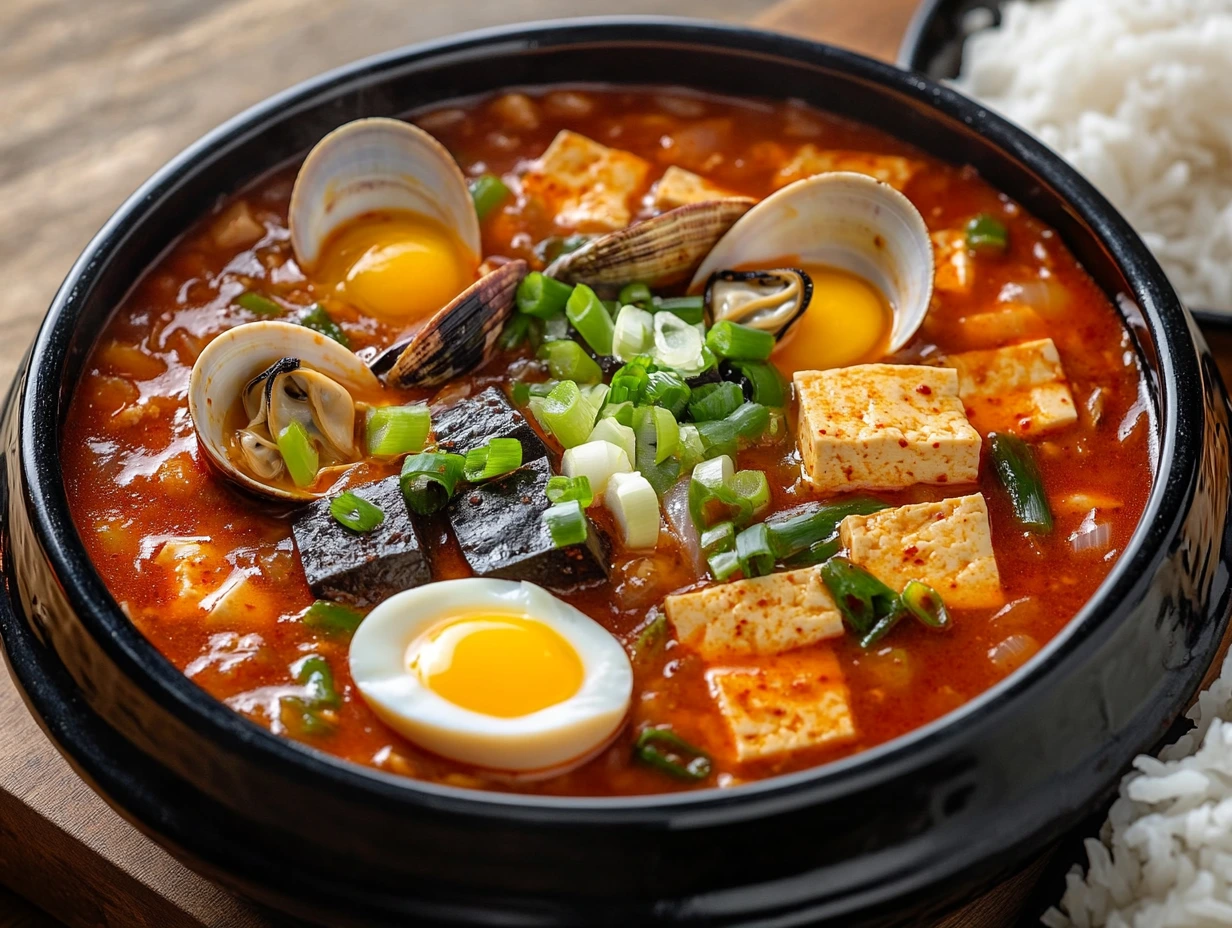
Sundubu-jjigae
Sundubu-jjigae is a fiery Korean soft-tofu stew with pork, clams and egg in a red chilli broth. Thi…
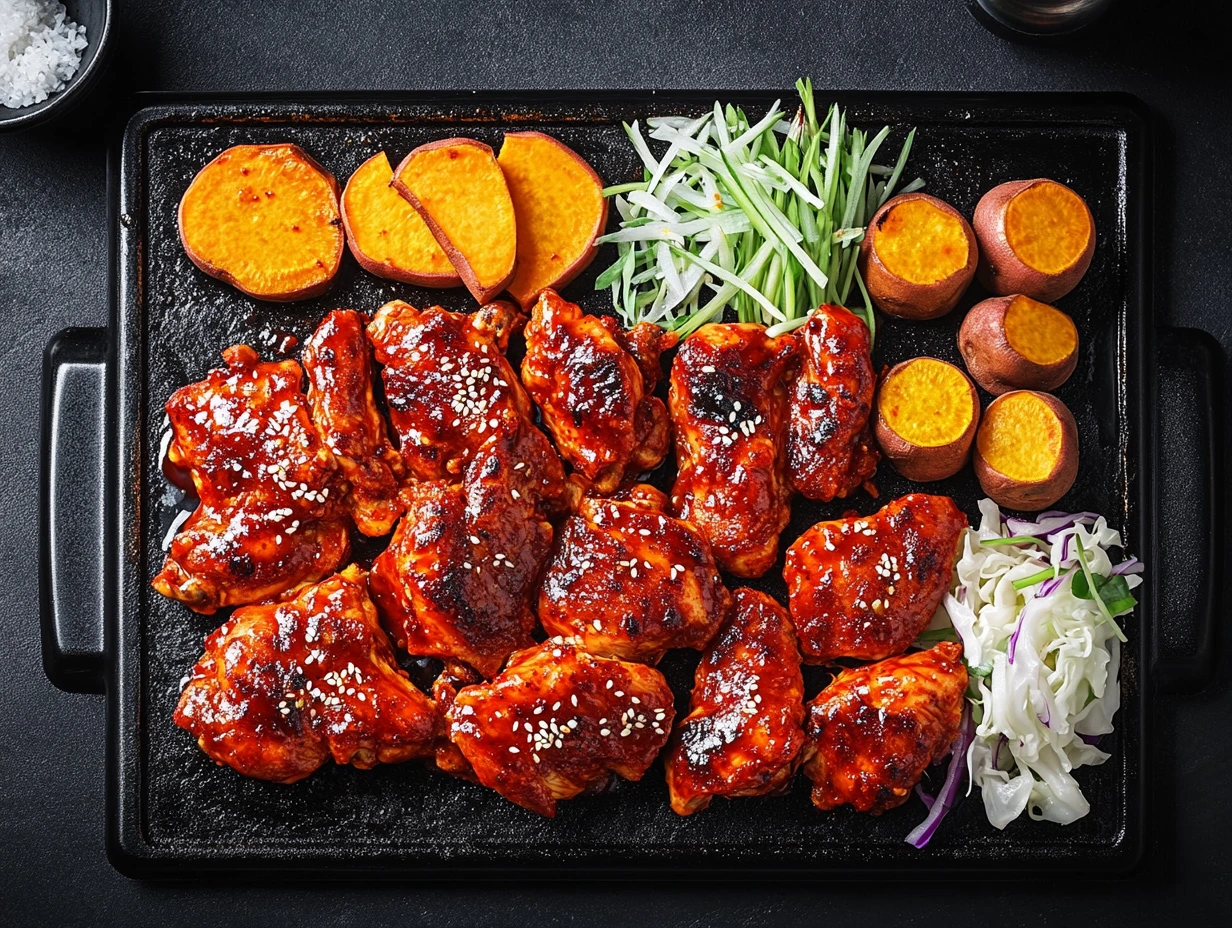
Dakgalbi
Dakgalbi is spicy stir-fried chicken with sweet potato, cabbage and rice cakes coated in a gochujan…
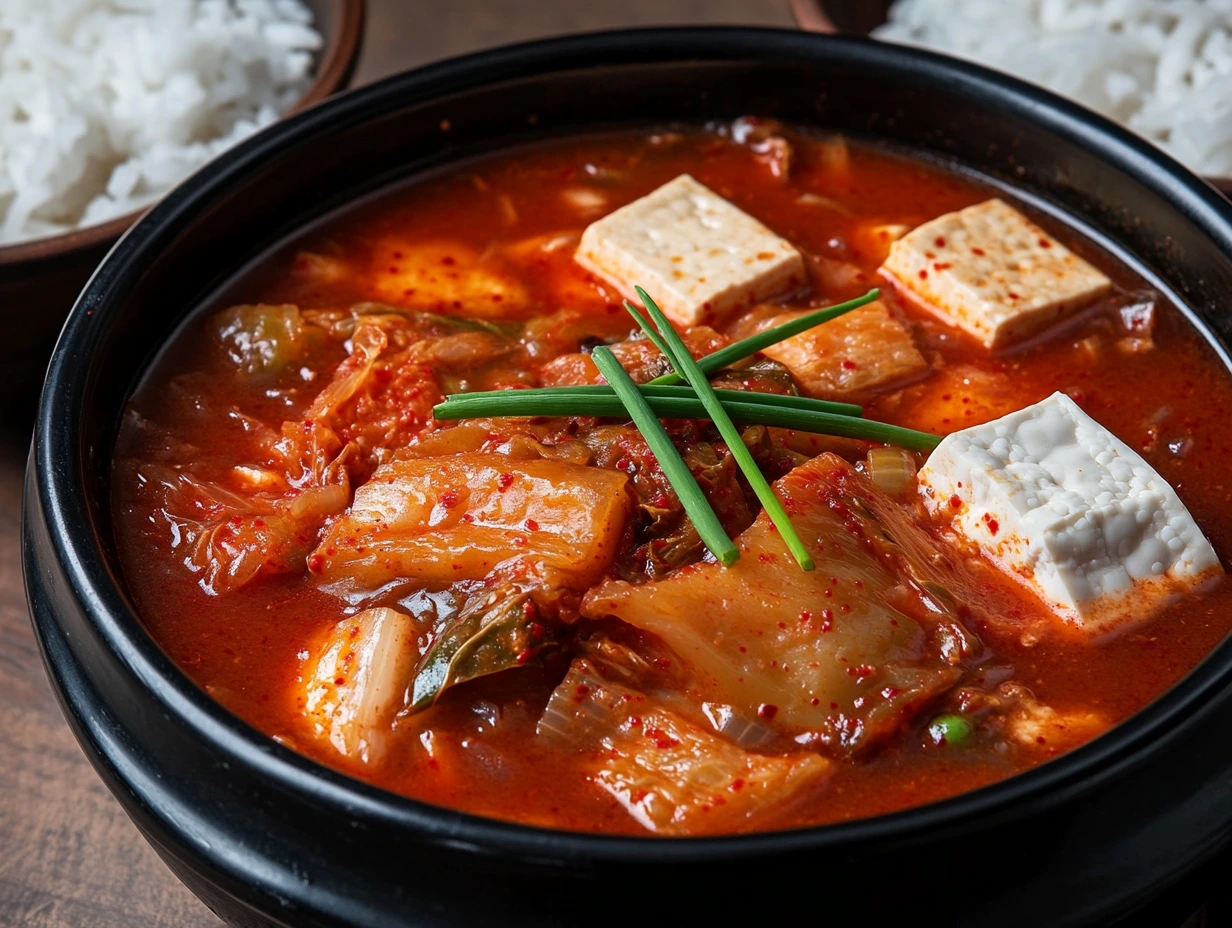
Kimchi Jjigae
Kimchi Jjigae is a bubbling Korean stew of well-fermented kimchi, pork, tofu and chilli, designed t…
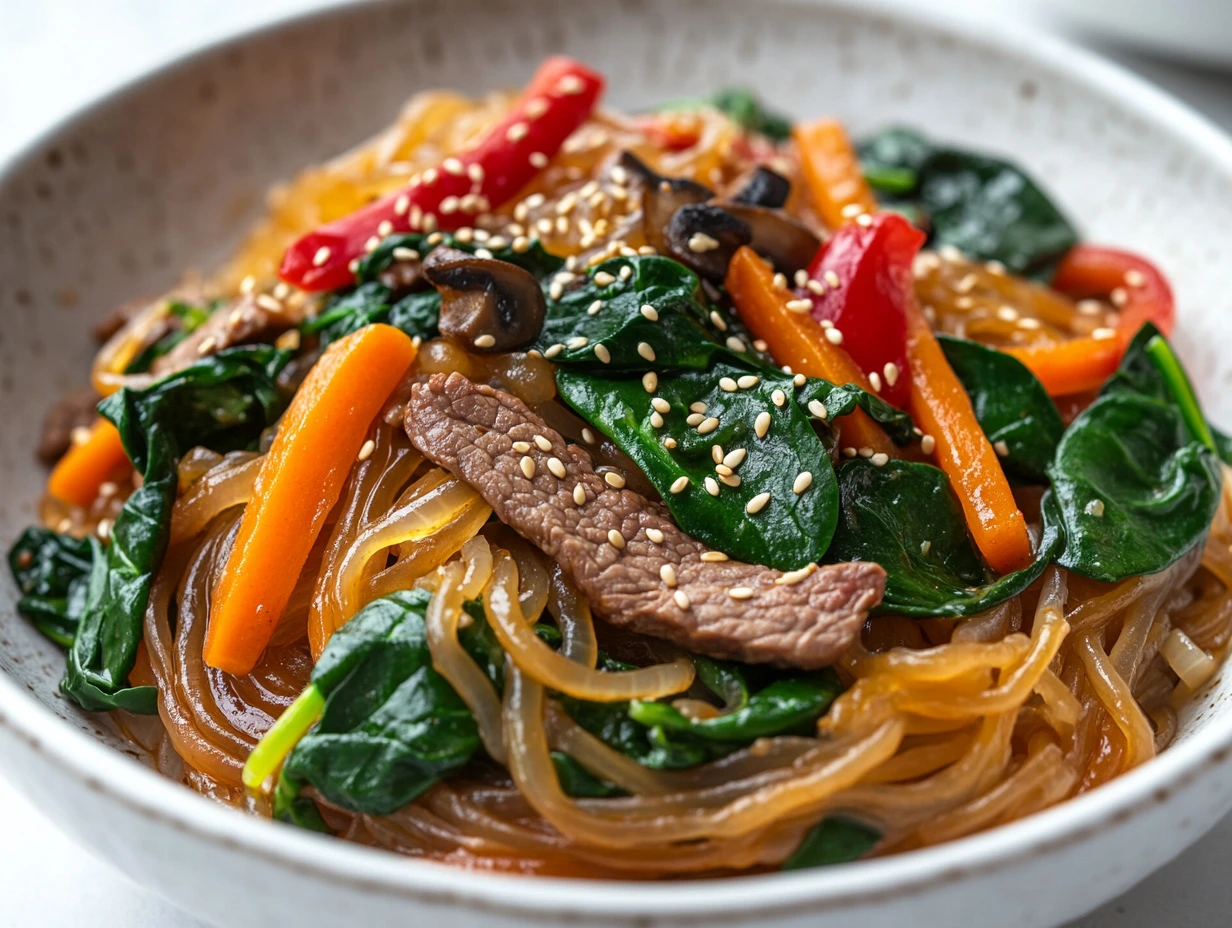
Japchae
Japchae is chewy sweet-potato glass noodles tossed with beef, mushrooms and colourful vegetables in…