
Korean Starter
Gyeran-jjim
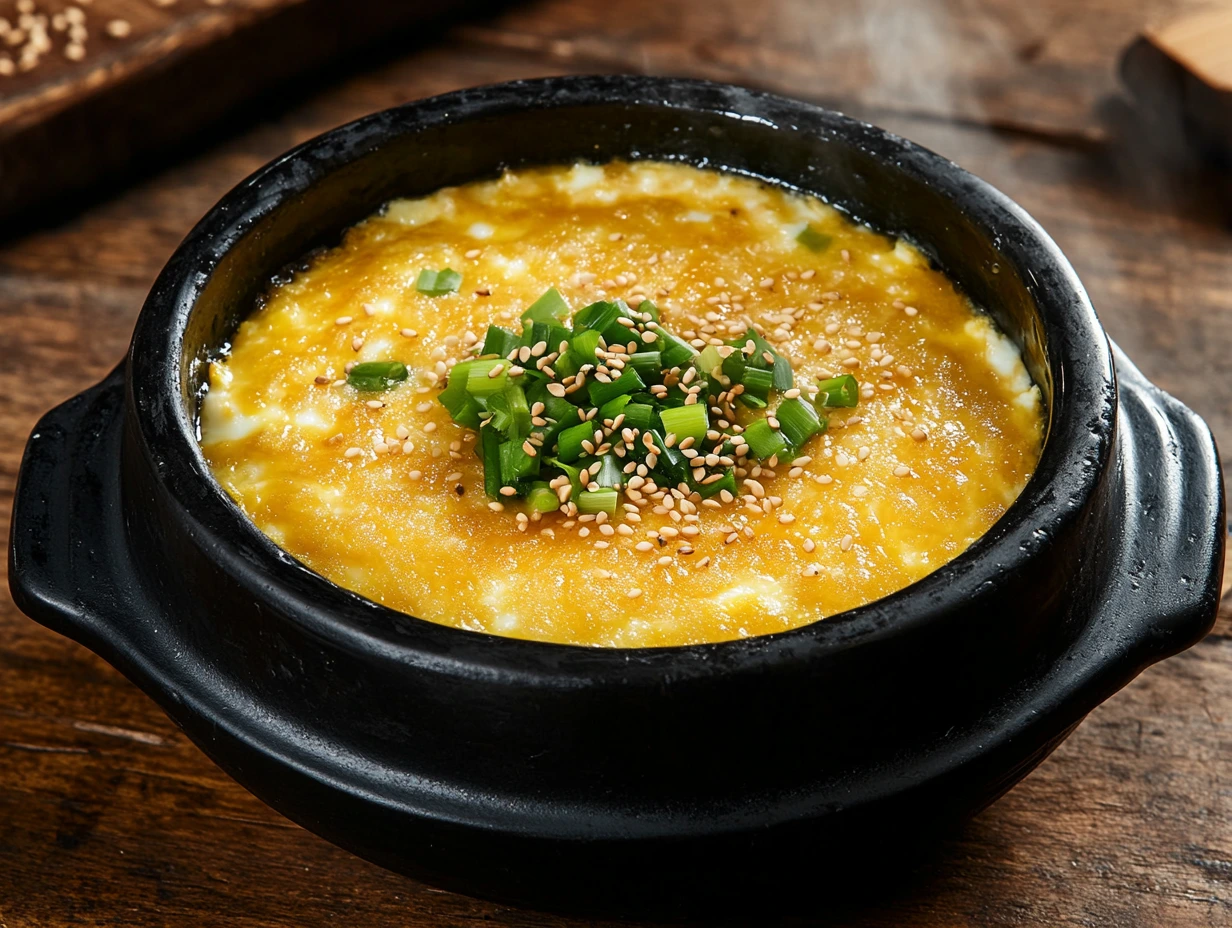
Gyeran-jjim is a softly steamed Korean egg custard that rises into a delicate, savoury cloud in a hot earthenware pot. This version uses measured ingredients, clear visual cues and the traditional flavour balance that makes the dish distinctive.
10 minsPrep time
12 minsCook time
Serves 4Servings
EasyDifficulty
Nutrition
Estimated nutrition per serving
These figures are estimates per serving. Actual nutrition can vary with the brands and exact amounts you use, how much oil, dressing or sauce is absorbed, any substitutions or added extras, and the portion size served.A practical guide for comparing recipes and planning meals.
165Calories
12gProtein
4gCarbs
11gFat
Ingredients
What you need
- 5 eggs
- 300 anchovy-kelp stock, warm
- 1 fish sauce
- 25 spring onion, finely sliced
- 25 carrot, finely diced
- 1 toasted sesame oil
- 1 toasted sesame seeds
Method
Step-by-step method
Follow the recipe in order, tasting and adjusting seasoning where needed.
- Beat the eggs gently with chopsticks or a fork until the whites and yolks are combined but not foamy. Strain through a fine sieve for the smoothest texture.
- Mix the warm stock with fish sauce, then stir it into the eggs. Fold in half the spring onion and the finely diced carrot.
- Brush a small ttukbaegi or heavy saucepan with sesame oil and set it over medium-low heat. Pour in the egg mixture and stir slowly for 2–3 minutes, scraping the base as soft curds begin to form.
- When the mixture is about one-third set, lower the heat, cover and steam gently for 5–7 minutes. Do not let the pot boil hard or the custard will become porous and watery.
- Remove the lid when the centre has puffed and trembles softly. Take it off the heat while still slightly underdone because the hot pot will continue cooking the eggs.
- Finish with the remaining spring onion, sesame seeds and a few drops of sesame oil. Serve immediately while puffed.
Cook smarter
Tips, storage and serving advice
Shopping tips
Ingredient quality
Common mistakes
Chef’s tips
How to know it is cooked
Plating advice
Cook next
View cuisine More Korean recipes
Keep exploring the country’s food story through related starters, mains and desserts.
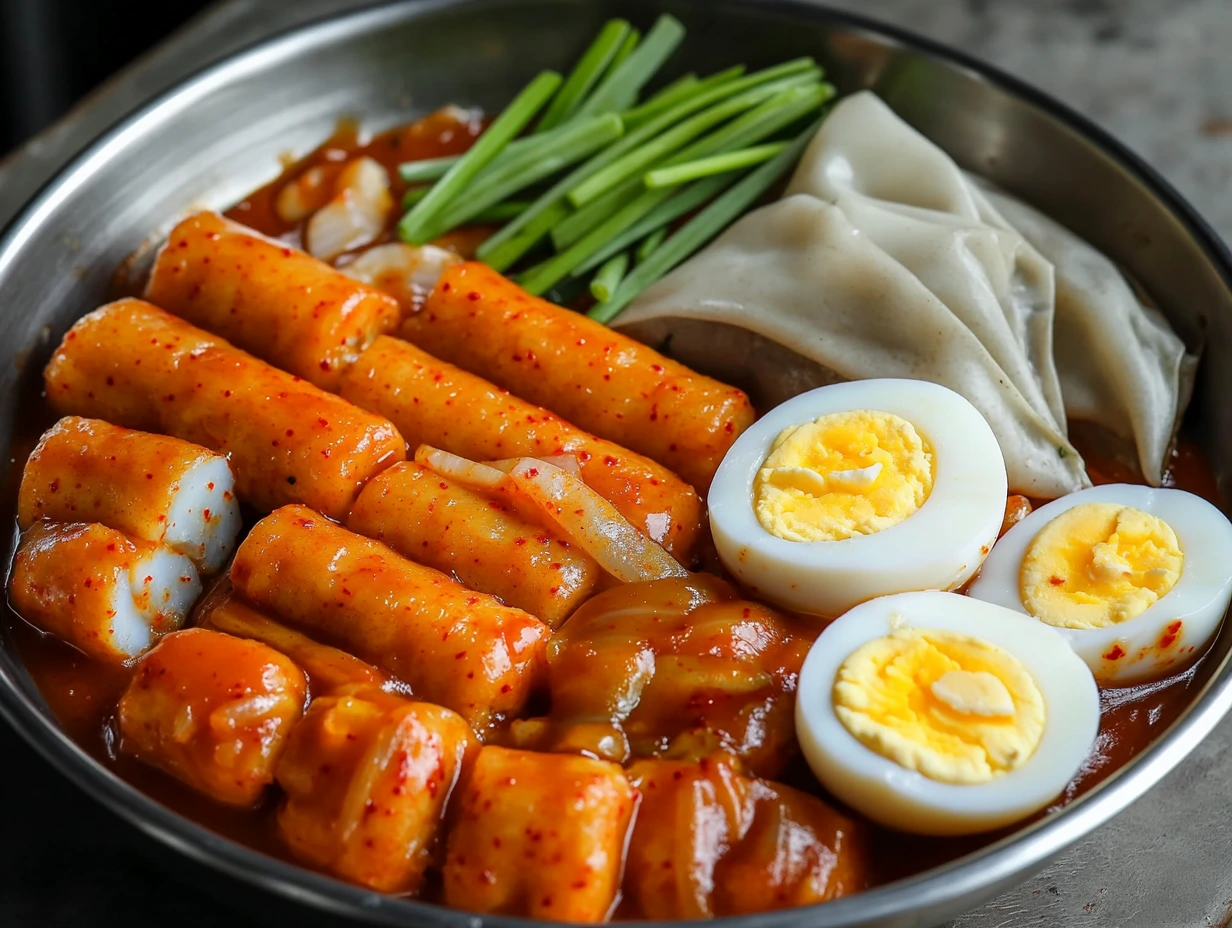
Tteokbokki
Tteokbokki is chewy Korean rice cakes simmered in a glossy gochujang sauce with fish cake, spring o…
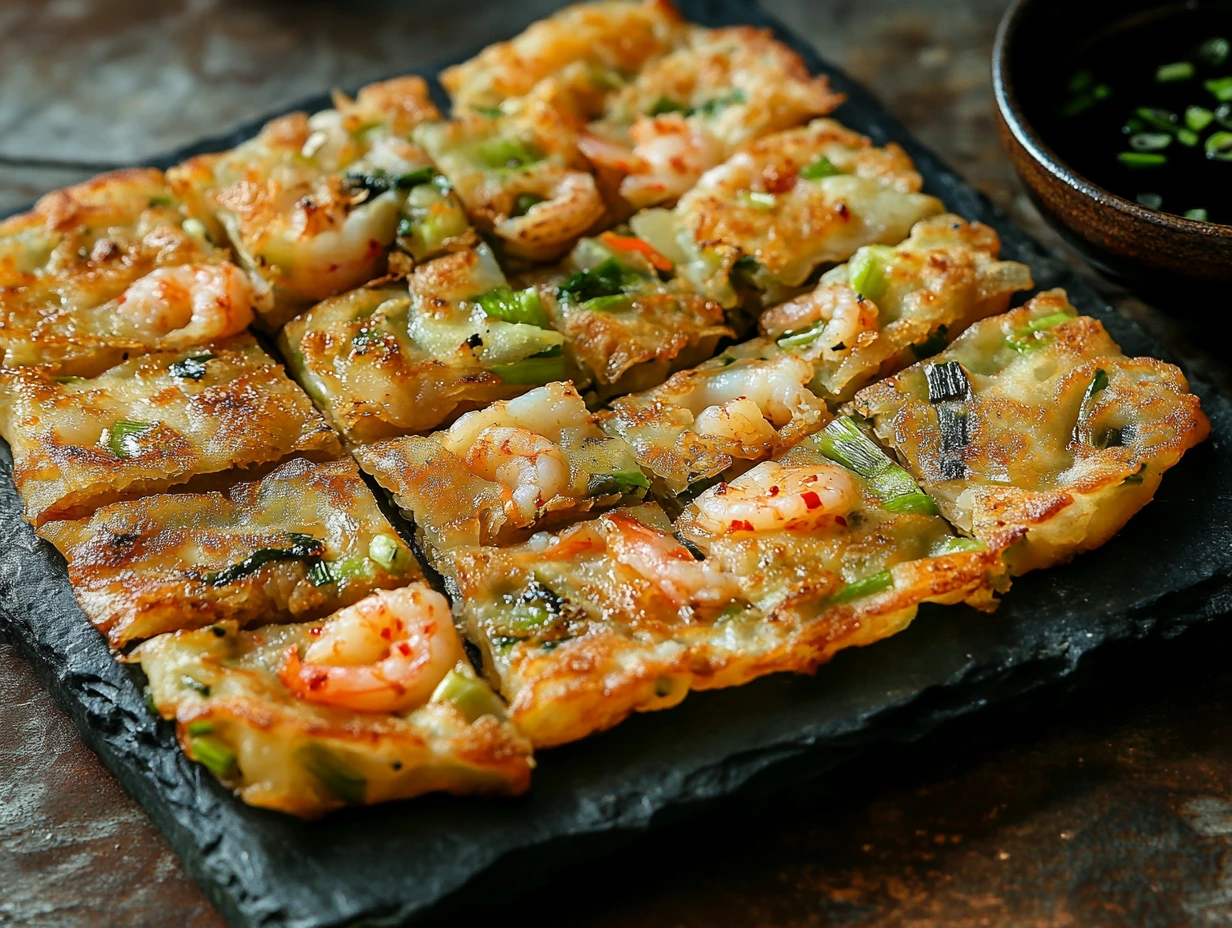
Haemul Pajeon
Haemul Pajeon is a crisp-edged Korean spring-onion pancake filled with seafood and served with a sh…
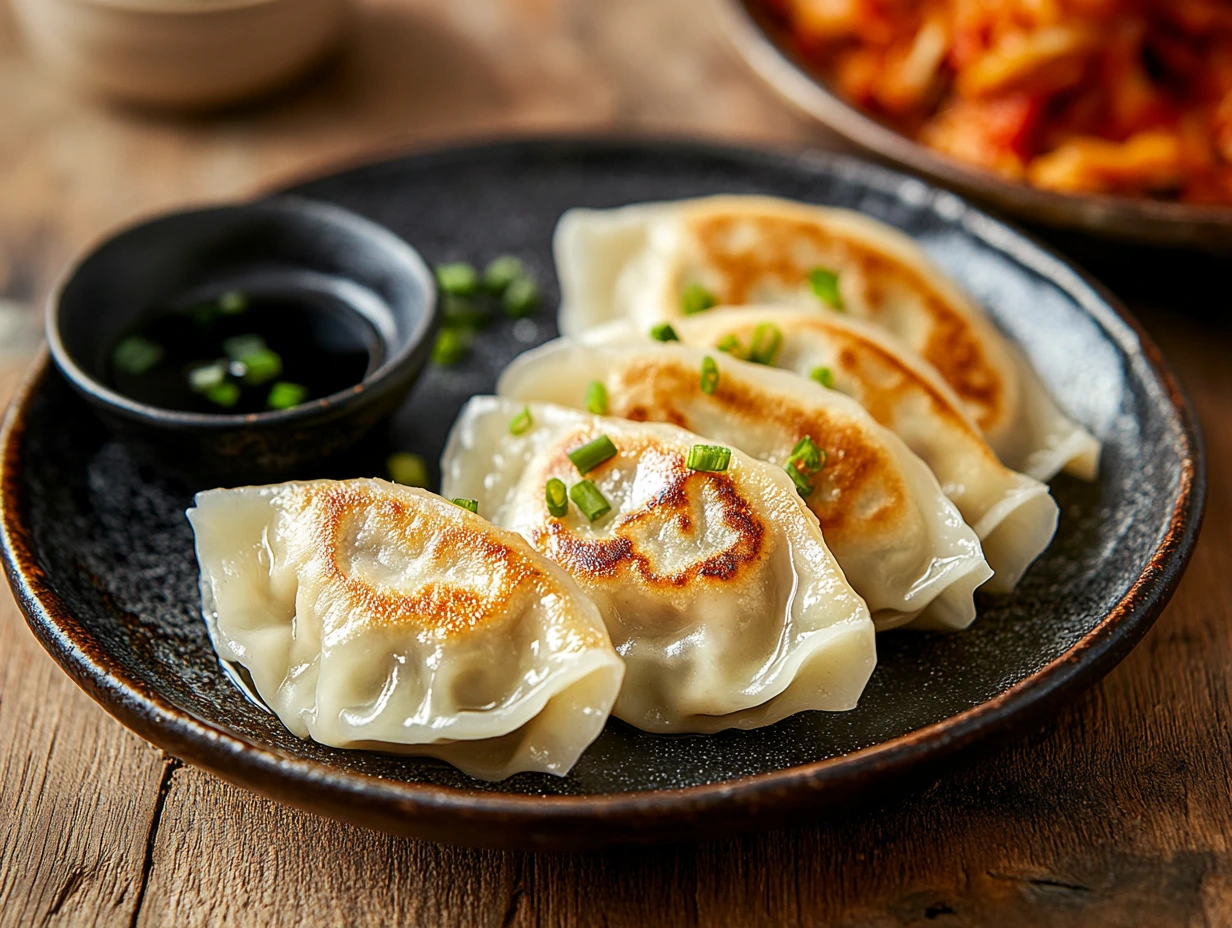
Mandu
Mandu is Korean dumplings with a juicy pork, tofu, kimchi and chive filling, pan-fried so the bases…
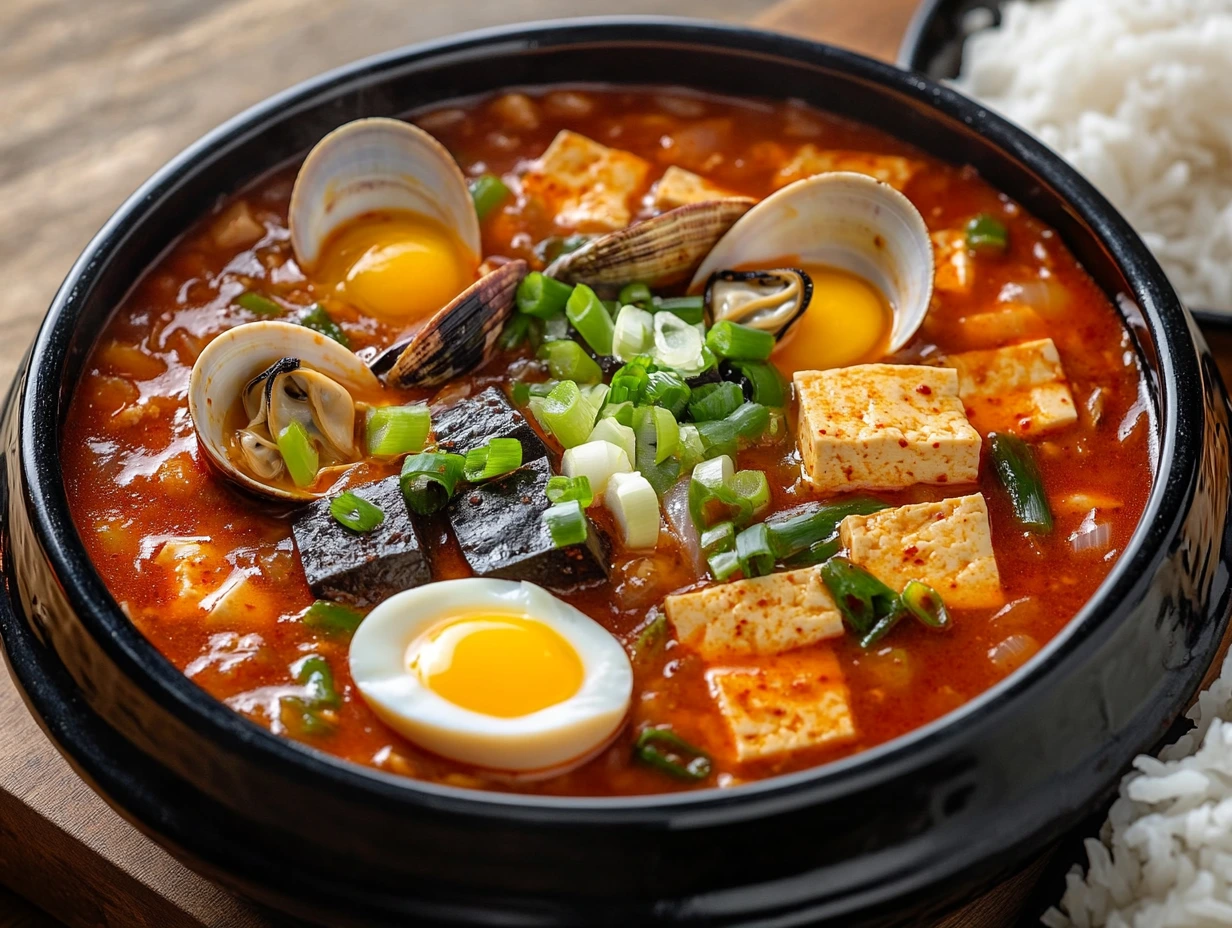
Sundubu-jjigae
Sundubu-jjigae is a fiery Korean soft-tofu stew with pork, clams and egg in a red chilli broth. Thi…