Georgian Main

Chakapuli

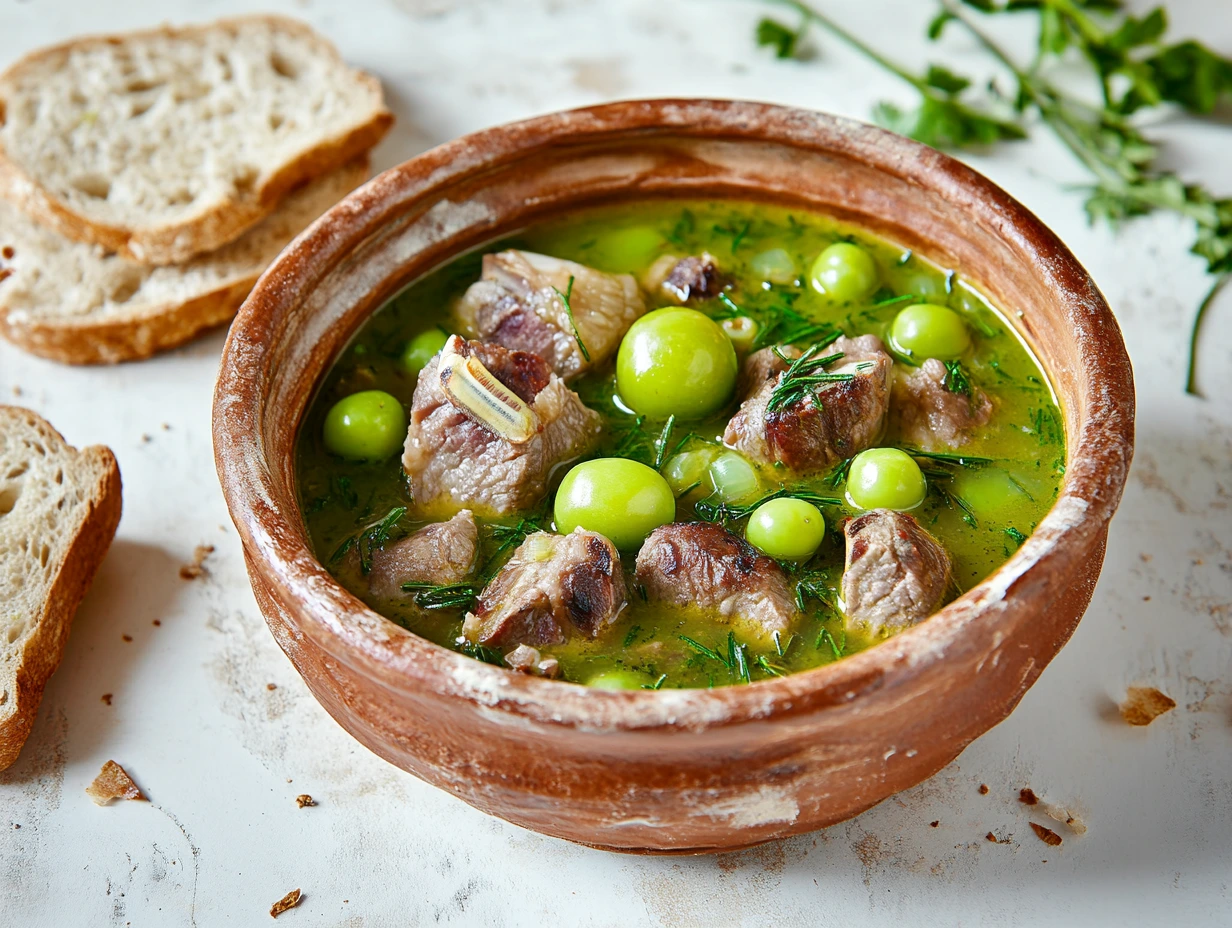
Chakapuli is a spring Georgian lamb stew perfumed with tarragon, coriander, green plum and white wine rather than browned meat. This version uses measured ingredients, clear visual cues and the traditional flavour balance that makes the dish distinctive.

25 minsPrep time
1 hr 10 minsCook time
Serves 4Servings
MediumDifficulty
Chakapuli
About this dish

Chakapuli: the story on the plate

Chakapuli is a Georgian main with a clear sense of place. Chakapuli is a celebrated Georgian spring dish traditionally associated with young lamb, fresh tarragon and tart green plums. It is especially linked with Easter and the brief season when these ingredients are abundant. The recipe below keeps the defining ingredients and technique intact while giving practical metric quantities and enough detail for a home cook to judge texture, seasoning and doneness rather than simply follow a timer.

Historical background

Chakapuli is a celebrated Georgian spring dish traditionally associated with young lamb, fresh tarragon and tart green plums. It is especially linked with Easter and the brief season when these ingredients are abundant.

Why it is famous

The dish captures Georgian spring cooking: fresh herbs are not garnish but a major ingredient, and sour fruit does the work that tomato or heavy spice might do elsewhere.
Cultural significance

The dish captures Georgian spring cooking: fresh herbs are not garnish but a major ingredient, and sour fruit does the work that tomato or heavy spice might do elsewhere.
Nutrition

Estimated nutrition per serving

These figures are estimates per serving. Actual nutrition can vary with the brands and exact amounts you use, how much oil, dressing or sauce is absorbed, any substitutions or added extras, and the portion size served.

A practical guide for comparing recipes and planning meals.

480Calories
39gProtein
12gCarbs
28gFat
Ingredients

What you need

  • 800 boneless lamb shoulder, cut into 4 cm pieces
  • 180 Spring onions, roughly chopped
  • 80 fresh tarragon, leaves picked
  • 60 fresh coriander, roughly chopped
  • 40 flat-leaf parsley, roughly chopped
  • 200 green plums or tkemali sauce, green plums halved, or 80 ml tkemali
  • 300 dry white wine
  • 250 water
  • 2 green chilli, split
  • 12 Garlic, sliced
  • 1.5 fine salt
Method

Step-by-step method

Follow the recipe in order, tasting and adjusting seasoning where needed.

  1. Place half the chopped spring onions and herbs in the bottom of a heavy casserole. Arrange the lamb over them, season lightly and cover with the remaining onions, herbs, plums, chilli and garlic.
  2. Pour in the white wine and enough water to come about halfway up the ingredients. Bring slowly to a simmer without browning the lamb first; chakapuli should stay green and aromatic rather than dark and roasted.
  3. Cover and cook gently for 45 minutes, checking after 30 minutes that there is enough liquid to prevent catching. The herbs will collapse into the broth.
  4. Uncover, stir carefully and simmer another 15–20 minutes until the lamb is tender and the broth tastes distinctly sour-herbal. If using bottled tkemali rather than fresh plums, add most of it during this final stage.
  5. Taste for salt and acidity. Add a little extra tkemali if the broth lacks the mouth-watering sourness that balances the lamb fat.
  6. Rest for 10 minutes off the heat, then serve in bowls with bread to soak up the green, winey broth.
Cook smarter

Tips, storage and serving advice

Shopping tips

If sulguni is unavailable, blend low-moisture mozzarella with feta for stretch plus tang. Fresh coriander and tarragon matter; stale dried herbs will not recreate the brightness of Georgian food. Check labels on compound ingredients such as sauces, spice blends, stocks, kimchi, fermented pastes and prepared breads when cooking for allergies.

Ingredient quality

For Chakapuli, prioritise fresh or properly stored versions of boneless lamb shoulder, spring onions, fresh tarragon, fresh coriander; speciality seasonings should smell vivid rather than stale.

Common mistakes

Browning the meat changes the fresh character; timid quantities of tarragon make the dish generic; sweet ripe plums do not provide enough acidity.

Chef’s tips

Do not fear the amount of herbs. Their volume collapses dramatically and defines the sauce.

How to know it is cooked

Lamb pulls apart with a spoon and the broth tastes bright, herbal and sour enough to make the next bite appetising.

Plating advice

Serve in simple bowls with plenty of broth and visible tarragon leaves.