Apple Pie: the story on the plate
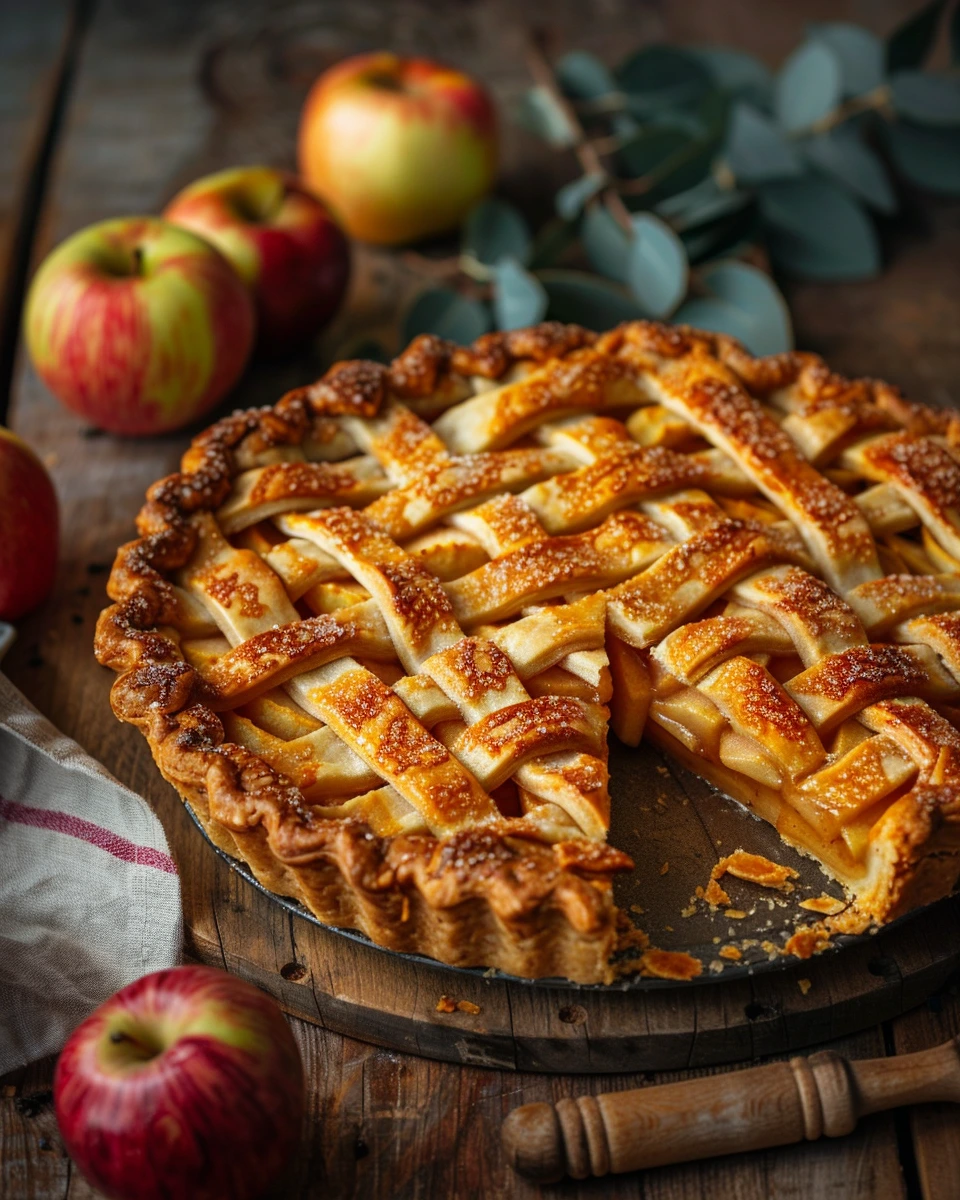
Apple pies originated in Europe and arrived in North America with settlers, who cultivated imported apple varieties. Over time the dessert became deeply embedded in American cookery, helped by the spread of orchards and inexpensive printed recipes. The phrase “as American as apple pie” gained cultural force in the twentieth century, despite the dish’s international ancestry. The pie balances tender fruit, bright acidity, spice and a crisp pastry shell. Using more than one apple variety creates better flavour and texture, while controlling the fruit’s liquid prevents a watery filling and a gap beneath the top crust. It is familiar, adaptable and strongly tied to ideas of home baking. Apple pie is served at family dinners, diners, fairs and holidays, particularly Thanksgiving and the Fourth of July. It may be eaten warm with vanilla ice cream or, in some regions, a slice of cheddar cheese. Its symbolic status often exceeds the simplicity of the ingredients.
Historical background
Apple pies originated in Europe and arrived in North America with settlers, who cultivated imported apple varieties. Over time the dessert became deeply embedded in American cookery, helped by the spread of orchards and inexpensive printed recipes. The phrase “as American as apple pie” gained cultural force in the twentieth century, despite the dish’s international ancestry.
Why it is famous
The pie balances tender fruit, bright acidity, spice and a crisp pastry shell. Using more than one apple variety creates better flavour and texture, while controlling the fruit’s liquid prevents a watery filling and a gap beneath the top crust. It is familiar, adaptable and strongly tied to ideas of home baking.
Cultural significance
Apple pie is served at family dinners, diners, fairs and holidays, particularly Thanksgiving and the Fourth of July. It may be eaten warm with vanilla ice cream or, in some regions, a slice of cheddar cheese. Its symbolic status often exceeds the simplicity of the ingredients.