British Main

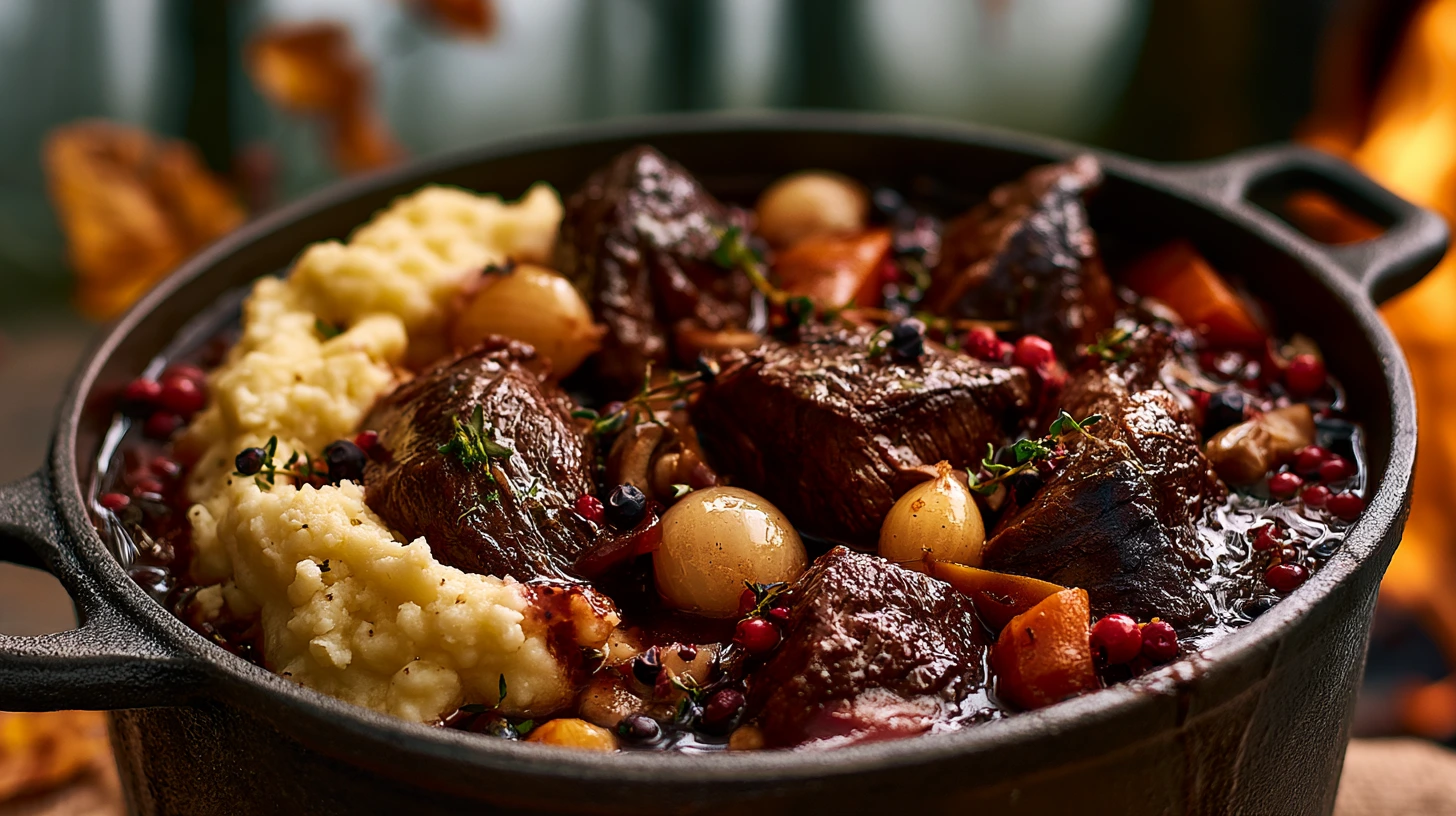
Venison Casserole

Slow-braised venison with juniper, red wine, mushrooms and root vegetables.

25 minsPrep time
2 hr 30 minsCook time
Serves 6Servings
MediumDifficulty
Venison Casserole
About this dish

Venison Casserole: the story on the plate

Venison Casserole is a traditional British main presented with exact metric quantities, practical preparation detail, controlled temperatures, visual doneness cues and a method suitable for confident home cooking.

Historical background

A traditional dish connected to British home cooking, regional produce and established preparation methods.

Why it is famous

It is valued for recognisable flavours, practical technique and a clear sense of place.

Cultural significance

The recipe reflects the ingredients and cooking habits associated with British food culture.

Nutrition

Estimated nutrition per serving

Useful for meal planning and calorie-aware recipe browsing.

620Calories
35gProtein
48gCarbs
31gFat

Estimated from a representative ingredient basket; verify against exact brands and edible yields before publication.

Ingredients

What you need

  • 900 venison, 4 cm cubes
  • 250 onion, 8 mm dice
  • 250 carrot, 1.5 cm chunks
  • 300 mushrooms, quartered
  • 400 red wine
  • 400 beef stock
  • 6 juniper berries, crushed
  • 35 plain flour
Method

Step-by-step method

Follow the recipe in order, tasting and adjusting seasoning where needed.

  1. Heat oven to 160°C conventional or 140°C fan. Pat venison very dry and brown in small batches over high heat for 3–4 minutes.
  2. Cook onion and carrot over medium heat for 8 minutes. Add mushrooms and cook 5 minutes until lightly browned.
  3. Stir in flour for 1 minute, then add wine gradually and boil for 3 minutes to reduce alcohol harshness.
  4. Add stock, juniper and venison. Bring to a simmer, cover and braise 1¾–2 hours until fork-tender.
  5. Rest for 15 minutes, skim excess fat and adjust seasoning. The sauce should coat the back of a spoon.
Cook smarter

Tips, storage and serving advice

Shopping tips

Buy the freshest central ingredient available and check seafood, meat or dairy dates carefully.

Ingredient quality

Use even cuts, accurate scales and fresh herbs or spices.

Common mistakes

Uneven cutting, overcrowding the pan, excessive heat and insufficient resting are the most common failures.

Chef’s tips

Read the complete method first, prepare all ingredients, and use a thermometer for meat or frying oil.

How to know it is cooked

Use the stated visual cue and internal temperature rather than time alone.

Plating advice

Serve on warmed plates for savoury dishes or cooled plates for desserts.

Make ahead

Complete preparatory stages ahead where noted; finish crisp, fried or delicate components close to service.

Storage and reheating

Cool within two hours, cover and refrigerate for up to 2 days unless seafood guidance requires earlier use. Reheat savoury food gently until piping hot throughout; avoid repeated reheating.

Wine pairing

What to drink with Venison Casserole

Pairings are chosen around the dish’s flavour, texture, richness, acidity and cooking style — not just the country it comes from.

Beaujolais / Gamay wine pairing
#1 Great match Red

Beaujolais / Gamay

Why it works: Gamay gives juicy red fruit, freshness and low tannin, making it dependable with poultry, pork, mushrooms and lighter meat dishes.

Juicy light red with cherry, raspberry and low tannin. Excellent slightly chilled with charcuterie, poultry, pâté, sausages and rustic dishes.

GrapeGamay
RegionBeaujolais, Loire, Switzerland
Wine flavourcherry, raspberry, violet, pepper
Serve at12-14°C
  • Flavour bridge: red fruit and earth bridge poultry and mushrooms
  • Acidity: Fresh acidity refreshes savoury fat.
  • Body: Light body avoids overpowering.
  • Tannin: Low tannin suits pork and poultry.
  • Sweetness: Dry style.
  • Best for: Selected specifically for this British or Portuguese recipe.
Pinot Noir / Burgundy wine pairing
#1 Great match Red

Pinot Noir / Burgundy

Why it works: Pinot Noir combines red fruit, earth and moderate structure, especially credible with duck, game birds, mushrooms and richer fish.

Elegant red with red cherry, earth, spice and fine tannins. Great with duck, mushroom, poultry, pork and lighter beef dishes.

GrapePinot Noir, Spätburgunder
RegionBurgundy, Oregon, Central Otago, Baden
Wine flavourred cherry, raspberry, earth, mushroom, spice
Serve at14-16°C
  • Flavour bridge: red fruit and forest-floor notes mirror game and mushrooms
  • Acidity: Medium-high acidity keeps rich meat lively.
  • Body: Medium body suits game birds.
  • Tannin: Low-medium tannin avoids dominating.
  • Sweetness: Dry style.
  • Best for: Selected specifically for this British or Portuguese recipe.
Rioja / Tempranillo wine pairing
#1 Great match Red

Rioja / Tempranillo

Why it works: Rioja combines red fruit, savoury spice and controlled tannin, suiting lamb, pork, paprika, chorizo and slow-cooked meat.

Spanish red with red fruit, vanilla, leather and spice. Good with garlic chicken, lamb, roast meat, paprika and grilled dishes.

GrapeTempranillo, Garnacha, Graciano
RegionRioja, Ribera del Duero, Navarra
Wine flavourred cherry, plum, vanilla, leather, dill
Serve at15-17°C
  • Flavour bridge: red fruit, leather and spice echo roasted meat
  • Acidity: Fresh acidity balances fat.
  • Body: Medium-full body matches hearty dishes.
  • Tannin: Medium tannin is softened by meat.
  • Sweetness: Dry style.
  • Best for: Selected specifically for this British or Portuguese recipe.
Côtes du Rhône / GSM Blend wine pairing
#1 Great match Red

Côtes du Rhône / GSM Blend

Why it works: A Rhône-style blend brings ripe fruit, pepper and herbs to lamb, sausages, casseroles and herb-led braises.

Southern Rhône-style blend with dark fruit, herbs, pepper and moderate tannin. Reliable with stews, roast meat, beans and savoury herbs.

GrapeGrenache, Syrah, Mourvèdre
RegionRhône, Languedoc, Australia
Wine flavourblackberry, plum, herbs, pepper, liquorice
Serve at15-17°C
  • Flavour bridge: pepper and dried herbs bridge roasted meat
  • Acidity: Moderate acidity balances braises.
  • Body: Medium-full body matches hearty food.
  • Tannin: Medium tannin works with protein.
  • Sweetness: Dry style.
  • Best for: Selected specifically for this British or Portuguese recipe.

These are wine-style pairings, so you can choose any bottle in that style rather than needing one exact producer. Look for the grape, region or style name on the label.