British Main

Kedgeree

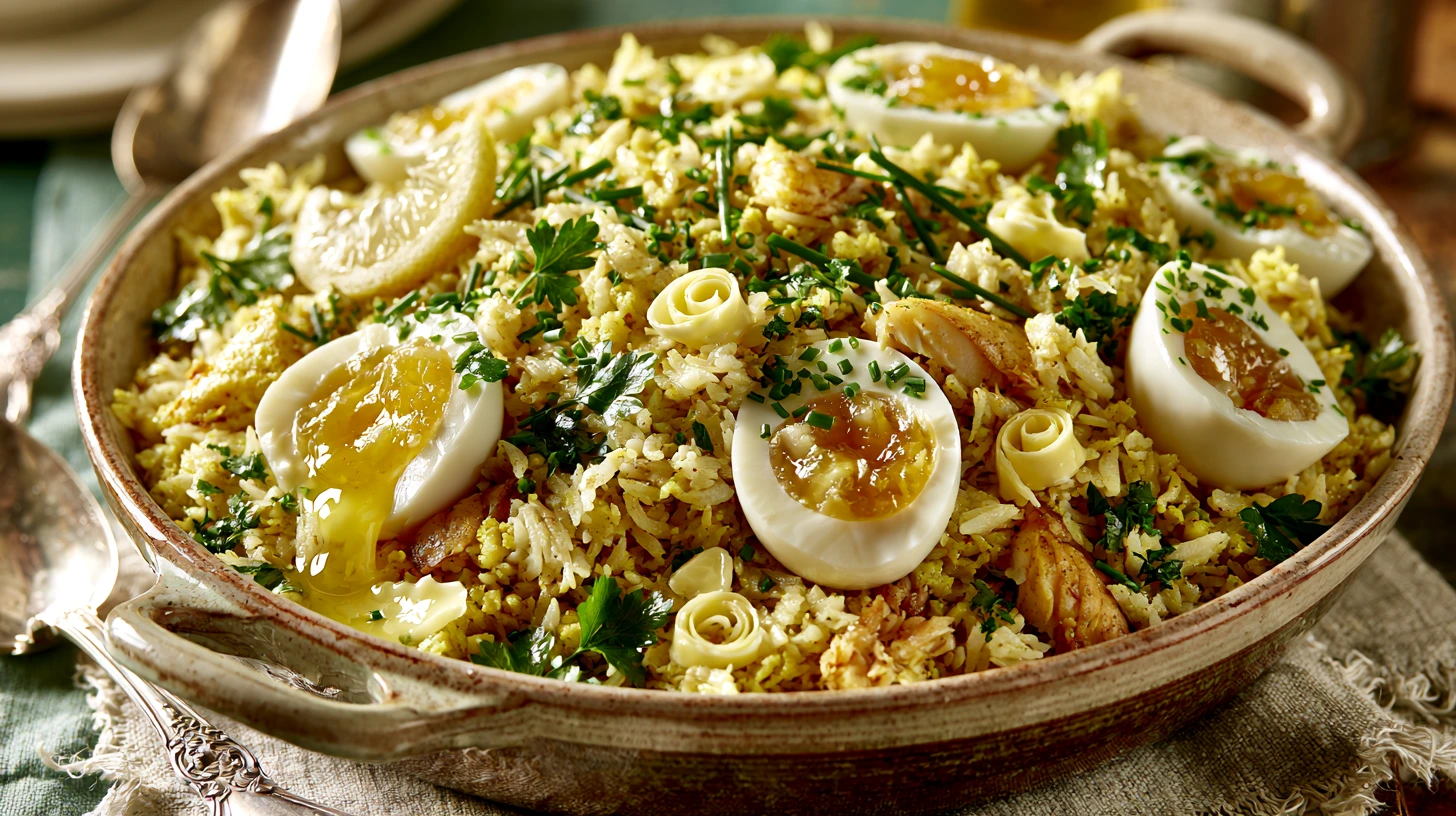
Curried rice with smoked haddock, jammy eggs, parsley and lemon.

20 minsPrep time
35 minsCook time
Serves 4Servings
EasyDifficulty
Kedgeree
About this dish

Kedgeree: the story on the plate

Kedgeree is a traditional British main presented with exact metric quantities, practical preparation detail, controlled temperatures, visual doneness cues and a method suitable for confident home cooking.

Historical background

A traditional dish connected to British home cooking, regional produce and established preparation methods.

Why it is famous

It is valued for recognisable flavours, practical technique and a clear sense of place.

Cultural significance

The recipe reflects the ingredients and cooking habits associated with British food culture.

Nutrition

Estimated nutrition per serving

Useful for meal planning and calorie-aware recipe browsing.

620Calories
35gProtein
48gCarbs
31gFat

Estimated from a representative ingredient basket; verify against exact brands and edible yields before publication.

Ingredients

What you need

  • 300 basmati rice, rinsed
  • 350 smoked haddock
  • 400 whole milk
  • 4 eggs
  • 180 onion, 5 mm dice
  • 2 curry powder
  • 50 butter
  • 20 parsley, chopped
  • 1 lemon, wedges
Method

Step-by-step method

Follow the recipe in order, tasting and adjusting seasoning where needed.

  1. Rinse the rice until the water is nearly clear. Cook in 450 ml lightly salted water, covered, for 12 minutes; rest off the heat for 10 minutes.
  2. Poach the haddock in milk at 85–90°C for 7 minutes, then flake and remove bones.
  3. Lower eggs into simmering water for 7 minutes, cool in ice water, peel and quarter.
  4. Cook 5 mm diced onion in butter over medium-low heat for 8 minutes. Add curry powder for 30 seconds.
  5. Fold in rice and haddock gently, heat for 3–4 minutes, then finish with parsley, eggs and lemon.
Cook smarter

Tips, storage and serving advice

Shopping tips

Buy the freshest central ingredient available and check seafood, meat or dairy dates carefully.

Ingredient quality

Use even cuts, accurate scales and fresh herbs or spices.

Common mistakes

Uneven cutting, overcrowding the pan, excessive heat and insufficient resting are the most common failures.

Chef’s tips

Read the complete method first, prepare all ingredients, and use a thermometer for meat or frying oil.

How to know it is cooked

Use the stated visual cue and internal temperature rather than time alone.

Plating advice

Serve on warmed plates for savoury dishes or cooled plates for desserts.

Make ahead

Complete preparatory stages ahead where noted; finish crisp, fried or delicate components close to service.

Storage and reheating

Cool within two hours, cover and refrigerate for up to 2 days unless seafood guidance requires earlier use. Reheat savoury food gently until piping hot throughout; avoid repeated reheating.

Wine pairing

What to drink with Kedgeree

Pairings are chosen around the dish’s flavour, texture, richness, acidity and cooking style — not just the country it comes from.

Dry Riesling wine pairing
#1 Great match White

Dry Riesling

Why it works: Dry Riesling combines piercing acidity with citrus and mineral notes that lift pork, smoke, cabbage and sweet-sour elements.

A precise, high-acid white with lime, green apple, blossom and mineral tension. It loves pork, fish, cabbage, spice and rich sauces.

GrapeRiesling
RegionMosel, Rheingau, Alsace, Clare Valley
Wine flavourlime, green apple, petrol, slate, blossom
Serve at8-10°C
  • Flavour bridge: lime and apple echo pork, smoke and cabbage
  • Acidity: High acidity balances fat and salt.
  • Body: Light body keeps the match agile.
  • Tannin: Low tannin avoids metallic clashes.
  • Sweetness: Dry profile supports savoury dishes.
  • Best for: Selected specifically for this British or Portuguese recipe.
Off-Dry Riesling wine pairing
#1 Great match White

Off-Dry Riesling

Why it works: A touch of residual sweetness calms chilli heat while Riesling acidity keeps rich or aromatic sauces lively.

Slightly sweet, high-acid Riesling that balances spice, salt, smoked pork and sweet-sour sauces without tasting heavy.

GrapeRiesling
RegionMosel, Pfalz, Alsace, Austria
Wine flavourlime, peach, apricot, honey, slate
Serve at7-9°C
  • Flavour bridge: peach and lime bridge spice and sweet-sour sauce
  • Acidity: High acidity refreshes spice and fat.
  • Body: Light body avoids amplifying heat.
  • Tannin: No tannin means less heat amplification.
  • Sweetness: Off-dry sweetness softens chilli.
  • Best for: Selected specifically for this British or Portuguese recipe.
Sauvignon Blanc wine pairing
#1 Great match White

Sauvignon Blanc

Why it works: Sauvignon Blanc mirrors herbs and citrus while its acidity suits green vegetables, fresh cheese and shellfish.

Zesty white wine with lemon, gooseberry, grass and herb notes. It refreshes green vegetables, goat cheese, seafood and herb-led dishes.

GrapeSauvignon Blanc
RegionLoire, Marlborough, Bordeaux, Chile
Wine flavourlemon, gooseberry, grass, passion fruit, herbs
Serve at7-9°C
  • Flavour bridge: citrus and herbal notes echo the dish
  • Acidity: High acidity matches lemon and fresh herbs.
  • Body: Light body suits delicate ingredients.
  • Tannin: Low tannin is seafood-friendly.
  • Sweetness: Dry style preserves freshness.
  • Best for: Selected specifically for this British or Portuguese recipe.
Chablis / Unoaked Chardonnay wine pairing
#1 Great match White

Chablis / Unoaked Chardonnay

Why it works: Mineral, unoaked Chardonnay has the weight for fish and butter while retaining enough acidity for shellfish and creamy sauces.

Lean Chardonnay with citrus, apple, chalk and shell-like minerality. Perfect with white fish, butter sauces, shellfish and delicate starters.

GrapeChardonnay
RegionChablis, Mâcon, Margaret River, Limarí
Wine flavourlemon, green apple, chalk, oyster shell
Serve at8-10°C
  • Flavour bridge: lemon, apple and chalk bridge fish and butter
  • Acidity: High acidity balances butter or cream.
  • Body: Medium body matches flaky fish and poultry.
  • Tannin: No meaningful tannin.
  • Sweetness: Dry style suits savoury sauces.
  • Best for: Selected specifically for this British or Portuguese recipe.

These are wine-style pairings, so you can choose any bottle in that style rather than needing one exact producer. Look for the grape, region or style name on the label.