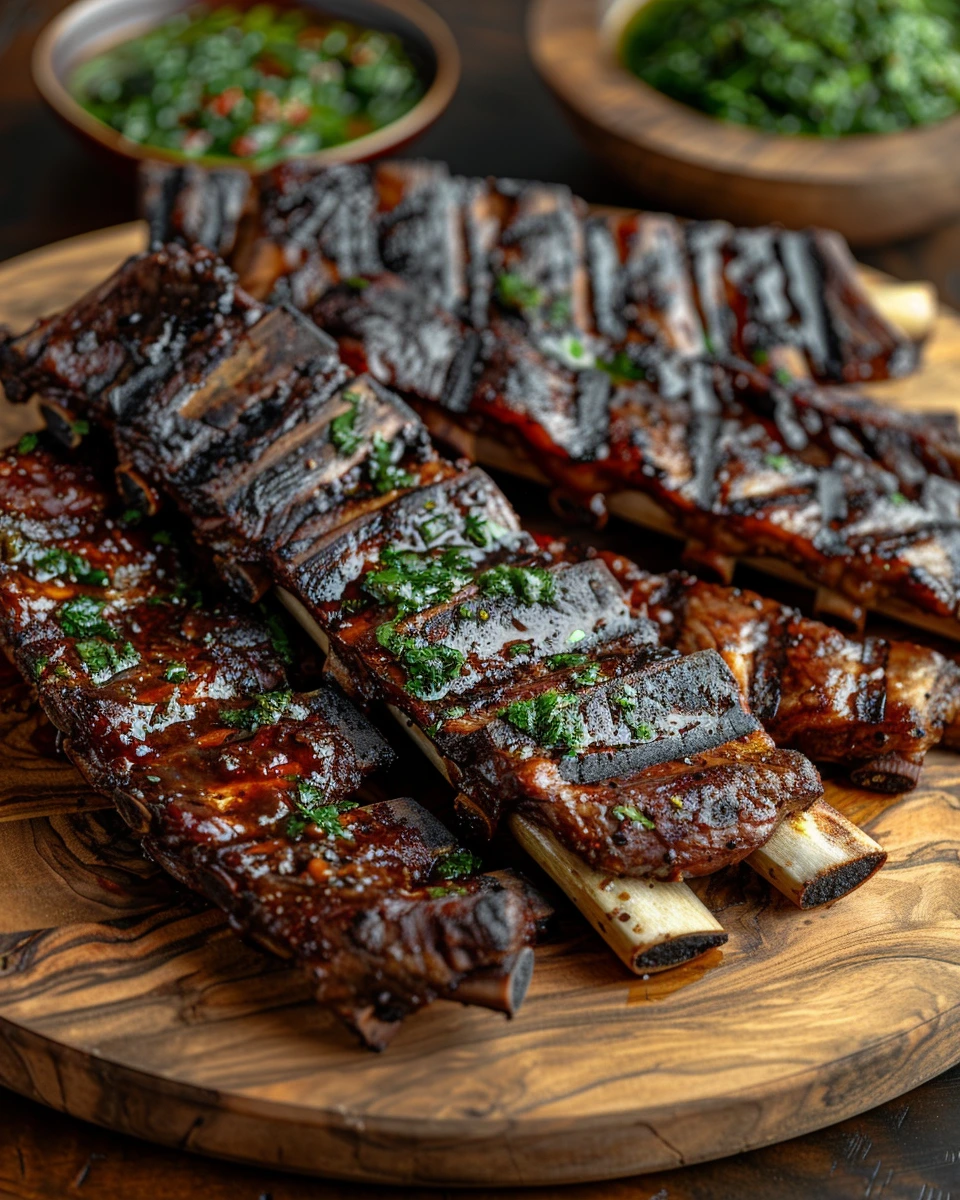
Tira de Asado: the story on the plate
Tira de asado is created by cutting beef ribs across the bone into strips, a style closely associated with Argentine butchery and the parrilla. The cut makes several small bone sections visible and exposes more surface to smoke and heat. Its fame comes from the flavour held around the bones and seams of fat. Slow cooking renders the fat and develops a deep crust while the meat remains pleasantly chewy rather than falling apart like braised ribs. These ribs are among the most recognisable components of an Argentine asado. They demand time, so they anchor the meal while quicker sausages and steaks are served around them.
Historical background
Tira de asado is created by cutting beef ribs across the bone into strips, a style closely associated with Argentine butchery and the parrilla. The cut makes several small bone sections visible and exposes more surface to smoke and heat.
Why it is famous
Its fame comes from the flavour held around the bones and seams of fat. Slow cooking renders the fat and develops a deep crust while the meat remains pleasantly chewy rather than falling apart like braised ribs.
Cultural significance
These ribs are among the most recognisable components of an Argentine asado. They demand time, so they anchor the meal while quicker sausages and steaks are served around them.