Sopaipillas Pasadas: the story on the plate
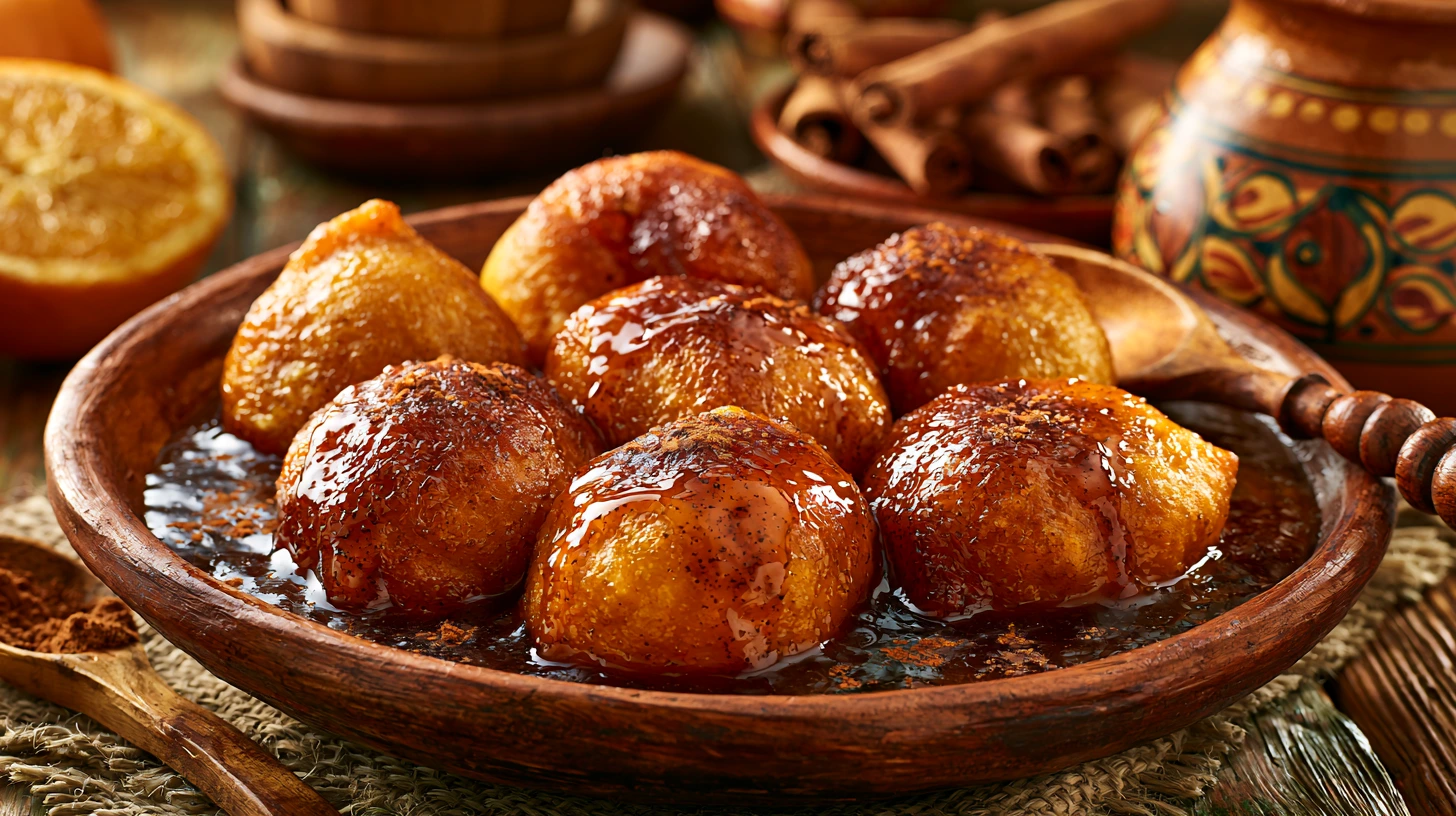
The dish emerged from a food culture in which economy, seasonality and regional taste mattered more than elaborate presentation. It belongs to Chile’s bakery and home-dessert culture, shaped by local fruit, manjar, wheat, milk and strong German and Spanish influences in different regions. The appeal comes from pumpkin fritters soaked in warm chancaca syrup with citrus and spice. Its method turns familiar ingredients into something with a distinct regional character. Sopaipillas Pasadas matters culturally because it is tied to a recognisable way of eating rather than existing only as a written recipe. It is served in homes, picadas, markets, coastal restaurants or at national and family celebrations.
Historical background
The dish emerged from a food culture in which economy, seasonality and regional taste mattered more than elaborate presentation. It belongs to Chile’s bakery and home-dessert culture, shaped by local fruit, manjar, wheat, milk and strong German and Spanish influences in different regions.
Why it is famous
The appeal comes from pumpkin fritters soaked in warm chancaca syrup with citrus and spice. Its method turns familiar ingredients into something with a distinct regional character.
Cultural significance
Sopaipillas Pasadas matters culturally because it is tied to a recognisable way of eating rather than existing only as a written recipe. It is served in homes, picadas, markets, coastal restaurants or at national and family celebrations.