
Georgian Dessert
Pelamushi
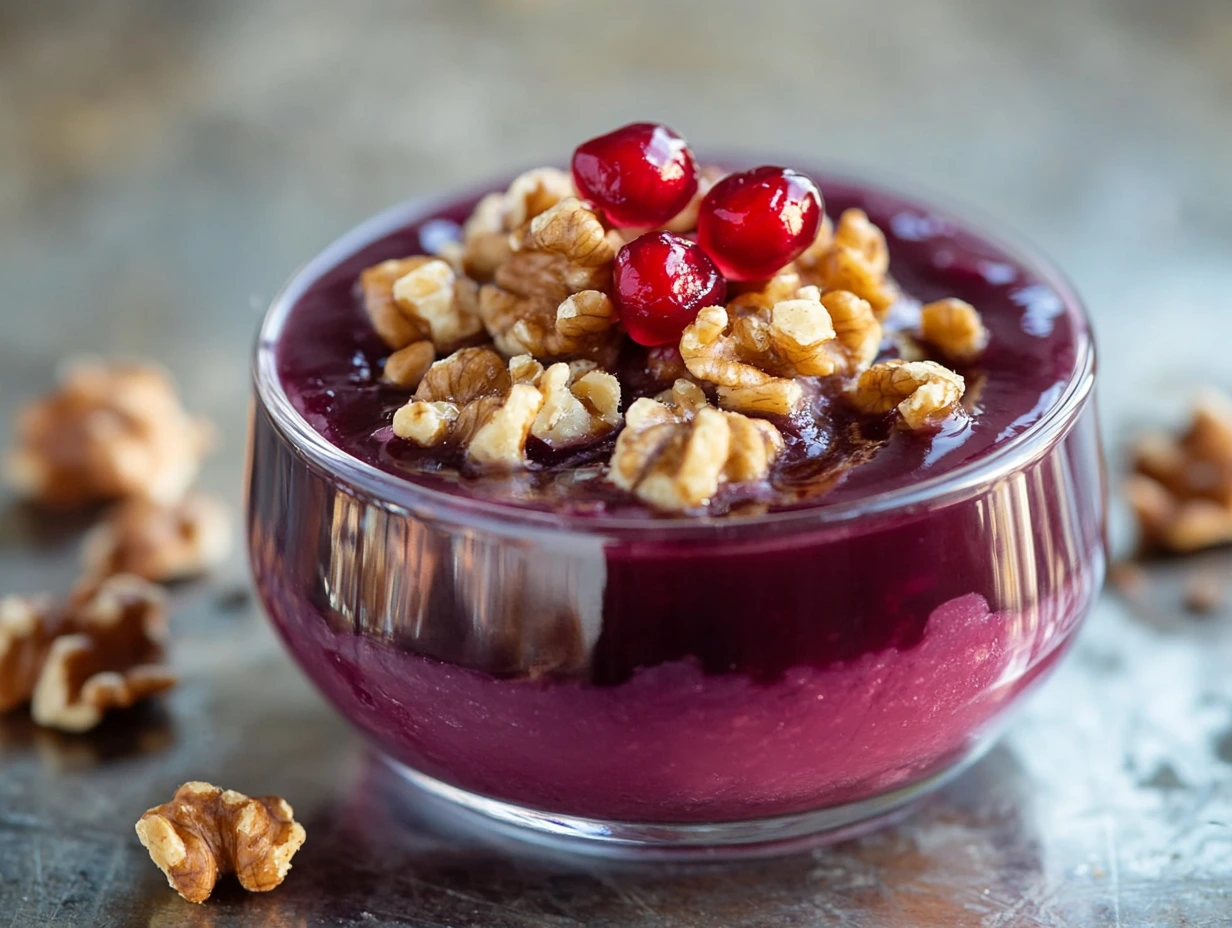
Pelamushi is a silky Georgian grape pudding thickened gently with flour and served cool with toasted walnuts. This version uses measured ingredients, clear visual cues and the traditional flavour balance that makes the dish distinctive.
10 minsPrep time
18 minsCook time
Serves 6Servings
EasyDifficulty
Nutrition
Estimated nutrition per serving
These figures are estimates per serving. Actual nutrition can vary with the brands and exact amounts you use, how much oil, dressing or sauce is absorbed, any substitutions or added extras, and the portion size served.A practical guide for comparing recipes and planning meals.
210Calories
4gProtein
39gCarbs
6gFat
Ingredients
What you need
- 1000 red grape juice, unsweetened
- 90 plain flour
- 30 cornflour
- 80 Walnuts, toasted and chopped
- 50 pomegranate seeds, optional
Method
Step-by-step method
Follow the recipe in order, tasting and adjusting seasoning where needed.
- Whisk 250 ml cold grape juice with the flour and cornflour until completely smooth. Strain if necessary; small flour lumps are difficult to remove after heating.
- Bring the remaining grape juice just to a simmer in a saucepan. Slowly whisk in the cold flour mixture in a thin stream.
- Cook over medium-low heat for 8–10 minutes, stirring continuously and scraping the corners of the pan. The mixture will darken slightly and become glossy.
- Taste a small cooled dab. If it still tastes floury, continue cooking for another 2–3 minutes; do not simply raise the heat, which can scorch the grape sugars.
- Pour into lightly dampened bowls or moulds. Cool to room temperature, then chill for at least 2 hours until softly set.
- Unmould or serve in bowls, scattering with toasted walnuts and optional pomegranate seeds just before eating.
Cook smarter
Tips, storage and serving advice
Shopping tips
Ingredient quality
Common mistakes
Chef’s tips
How to know it is cooked
Plating advice
Cook next
View cuisine More Georgian recipes
Keep exploring the country’s food story through related starters, mains and desserts.
Gozinaki
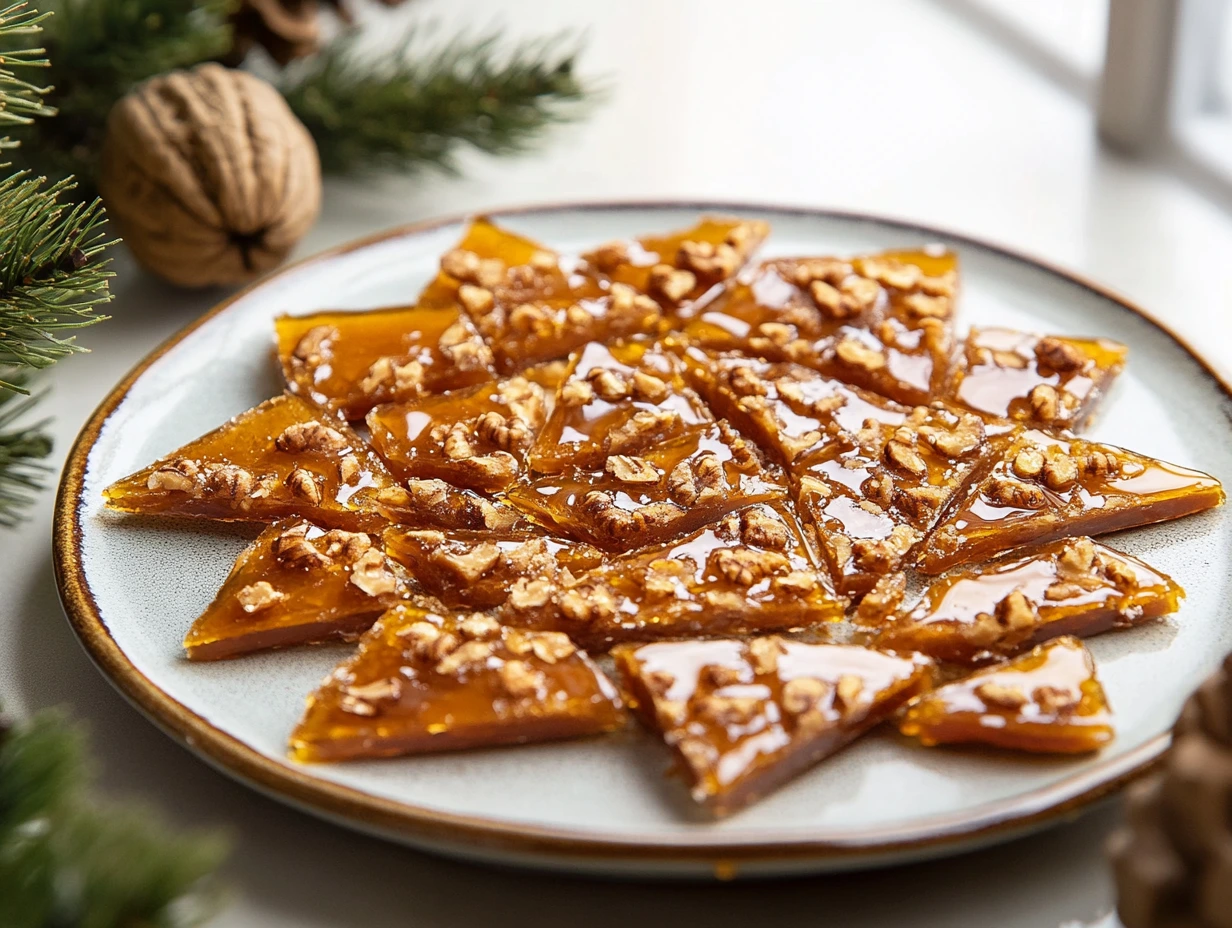
Gozinaki is a Georgian New Year confection of toasted walnuts bound in amber honey and cut into cri…
Kada
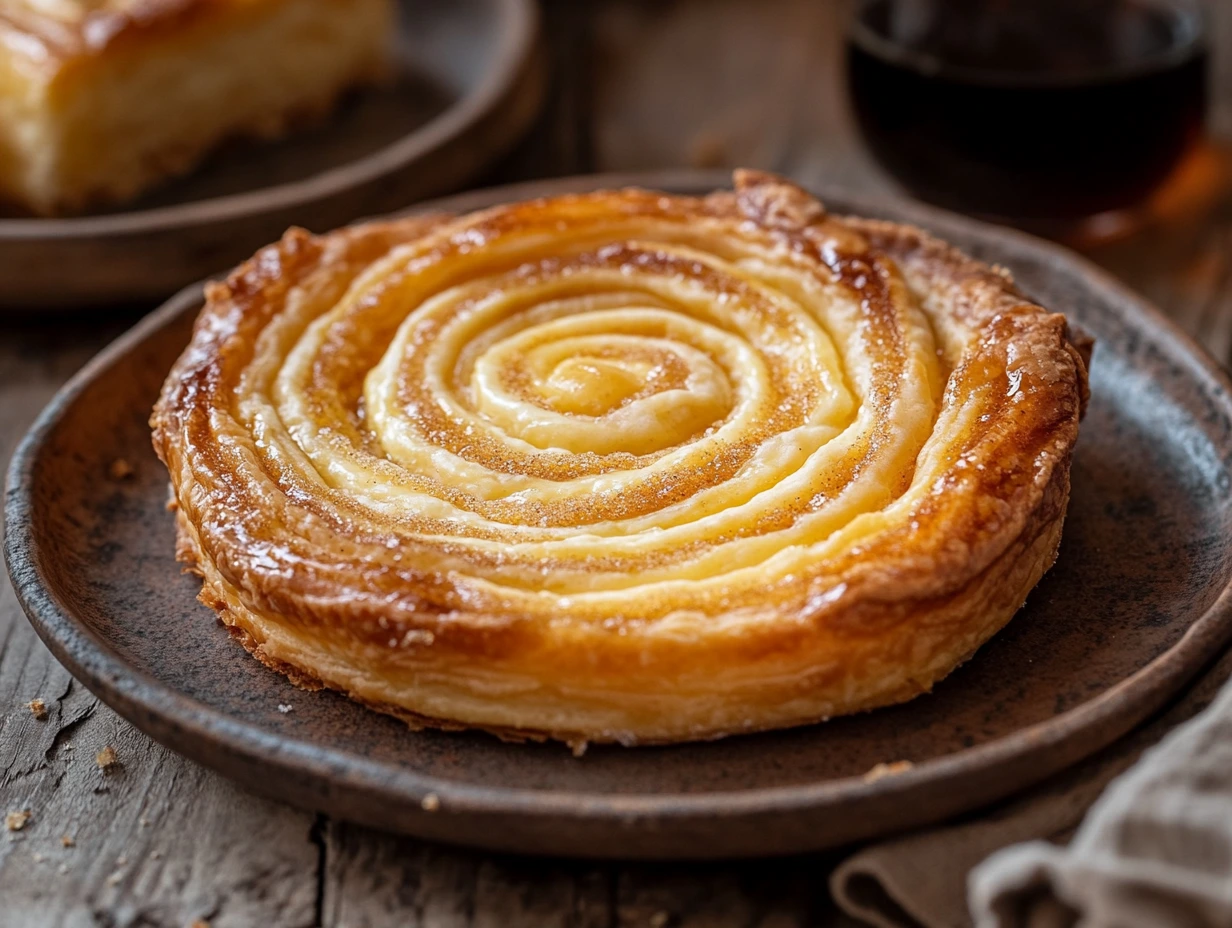
Kada is a Georgian layered pastry filled with buttery toasted flour and sugar, baked until crisp ou…
Churchkhela
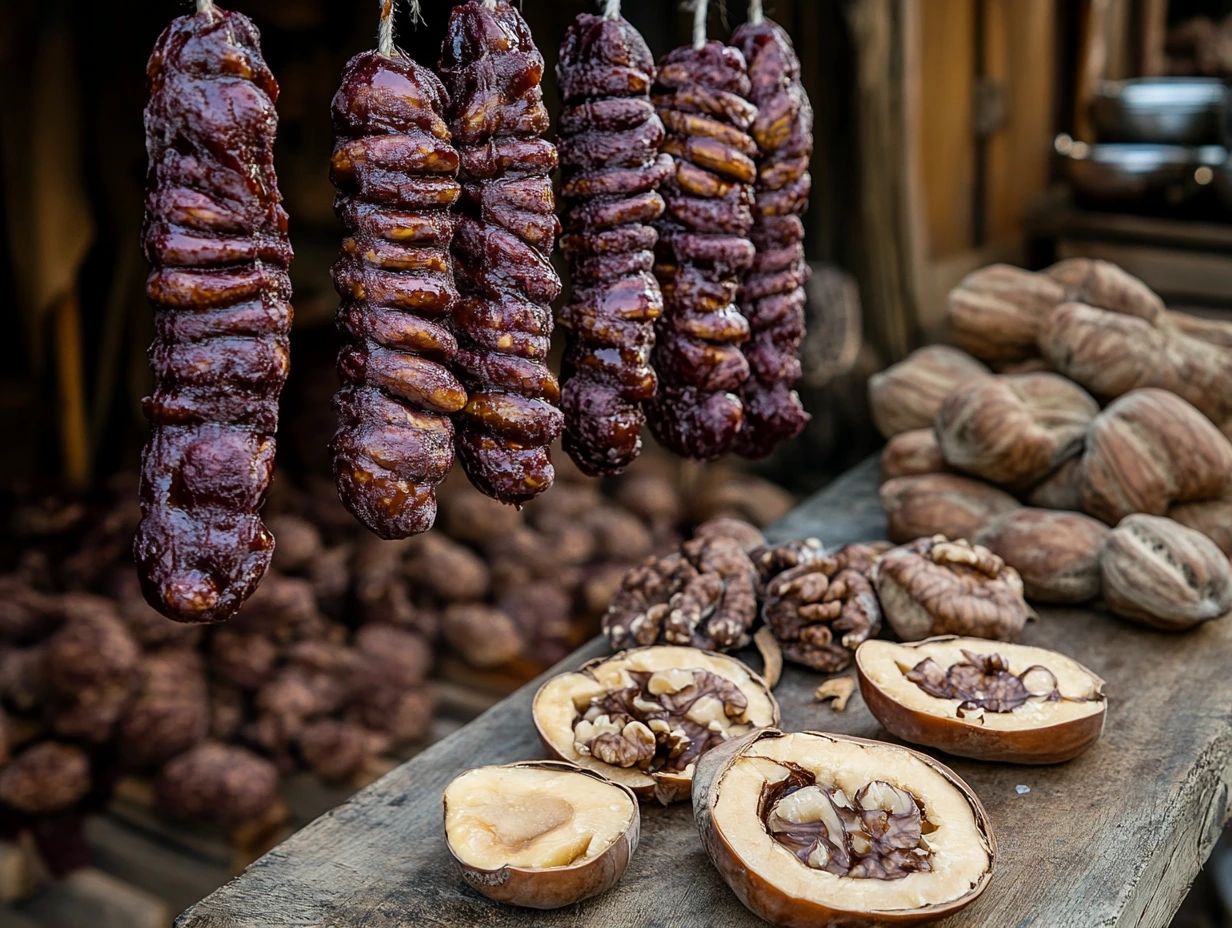
Churchkhela is Georgia’s iconic walnut strings repeatedly dipped in thickened grape must and dried…
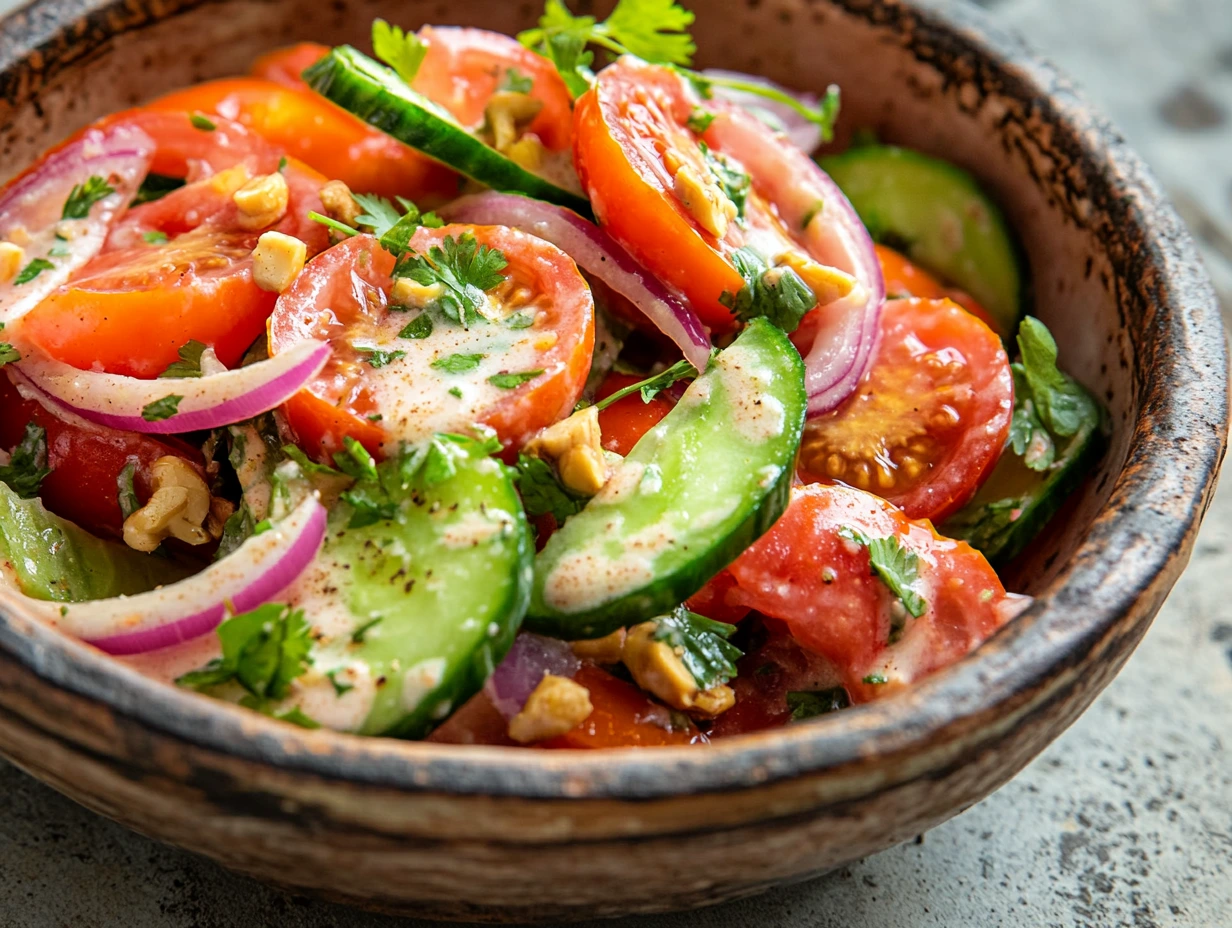
Georgian Salad with Walnut Dressing
Georgian Salad with Walnut Dressing is a crunchy tomato, cucumber and herb salad coated in a thin g…