Medovik: the story on the plate
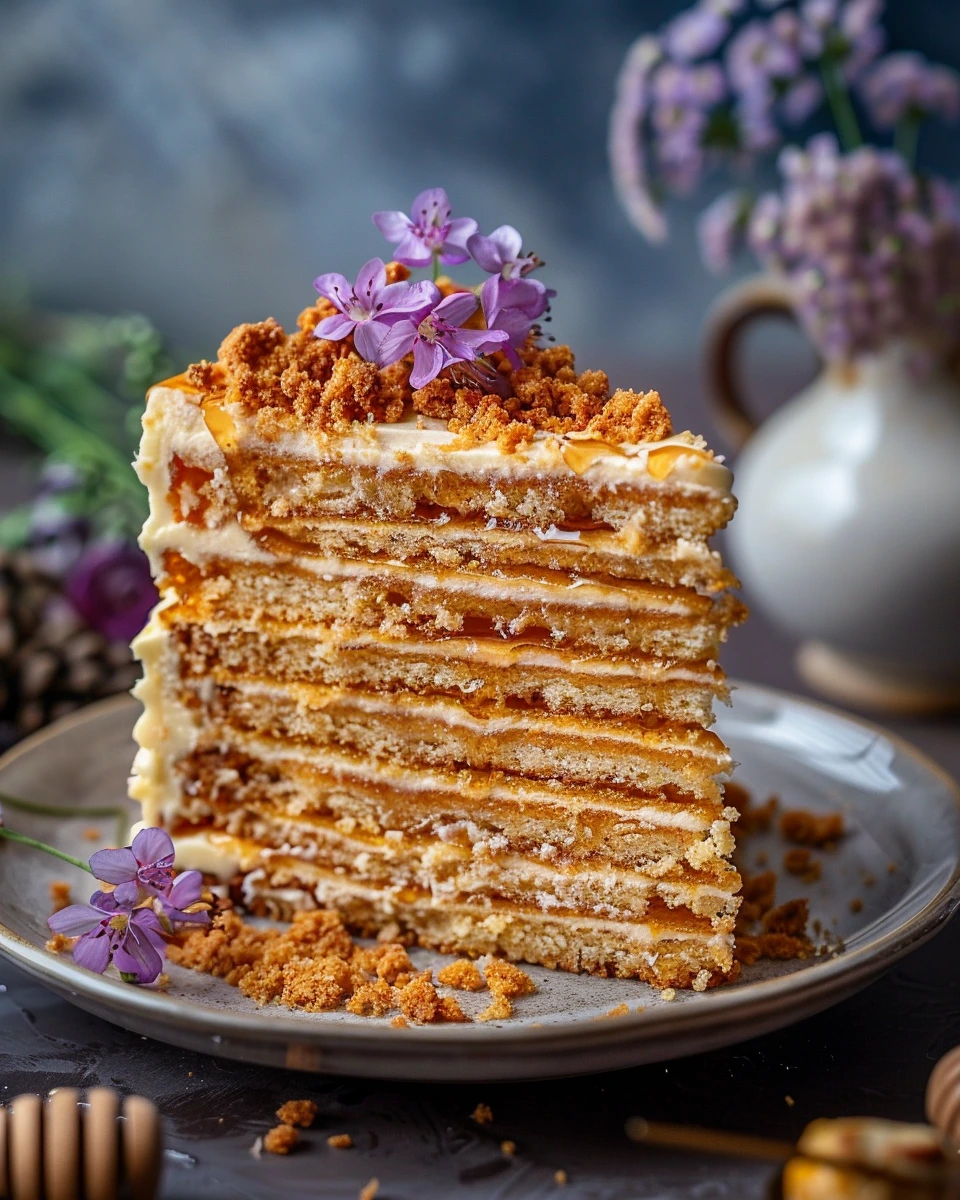
Medovik is commonly linked with nineteenth-century imperial Russian baking, although stories about its precise court origin are difficult to verify. Honey in the dough caramelises during baking and the filled cake softens overnight. The dish is recognised for many thin honey cake layers softened by tangy sour-cream filling. Its success depends on preserving the contrast between the principal ingredient, seasoning and finished texture rather than allowing one element to dominate. It is a major celebration cake for birthdays, holidays and café displays, admired for the patience required to build its layers.
Historical background
Medovik is commonly linked with nineteenth-century imperial Russian baking, although stories about its precise court origin are difficult to verify. Honey in the dough caramelises during baking and the filled cake softens overnight.
Why it is famous
The dish is recognised for many thin honey cake layers softened by tangy sour-cream filling. Its success depends on preserving the contrast between the principal ingredient, seasoning and finished texture rather than allowing one element to dominate.
Cultural significance
It is a major celebration cake for birthdays, holidays and café displays, admired for the patience required to build its layers.