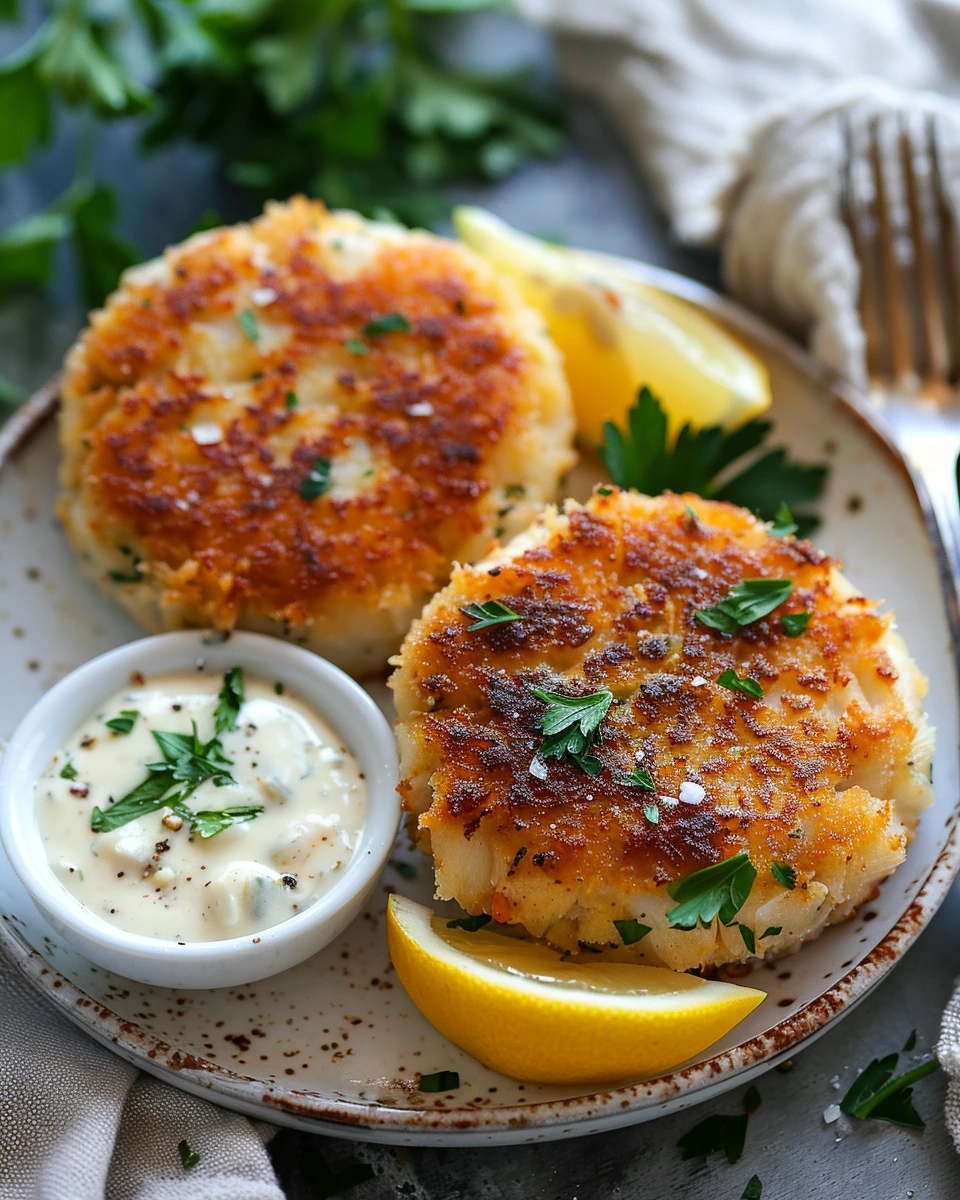
Maryland Crab Cakes: the story on the plate
Crab cakes belong to the wider Chesapeake Bay tradition of cooking blue crab, a resource central to Maryland food culture for generations. Recipes resembling modern crab cakes appeared in American cookery during the nineteenth century, while the name became common in the twentieth. Maryland versions developed a reputation for using large pieces of crab and very little filler. Their appeal lies in keeping the crab meat, rather than breadcrumbs, at the centre of the dish. The best examples are loosely bound, delicately seasoned and browned outside while remaining moist inside. Old Bay-style spice, mustard and a little Worcestershire support the crab without masking its natural sweetness. Crab cakes are a fixture of Maryland restaurants, summer gatherings and Chesapeake seafood menus. They may be served as a starter, in a sandwich or as a main course with slaw and seasonal vegetables. The ratio of crab to filler is a point of regional pride.
Historical background
Crab cakes belong to the wider Chesapeake Bay tradition of cooking blue crab, a resource central to Maryland food culture for generations. Recipes resembling modern crab cakes appeared in American cookery during the nineteenth century, while the name became common in the twentieth. Maryland versions developed a reputation for using large pieces of crab and very little filler.
Why it is famous
Their appeal lies in keeping the crab meat, rather than breadcrumbs, at the centre of the dish. The best examples are loosely bound, delicately seasoned and browned outside while remaining moist inside. Old Bay-style spice, mustard and a little Worcestershire support the crab without masking its natural sweetness.
Cultural significance
Crab cakes are a fixture of Maryland restaurants, summer gatherings and Chesapeake seafood menus. They may be served as a starter, in a sandwich or as a main course with slaw and seasonal vegetables. The ratio of crab to filler is a point of regional pride.