Oysters Rockefeller: the story on the plate
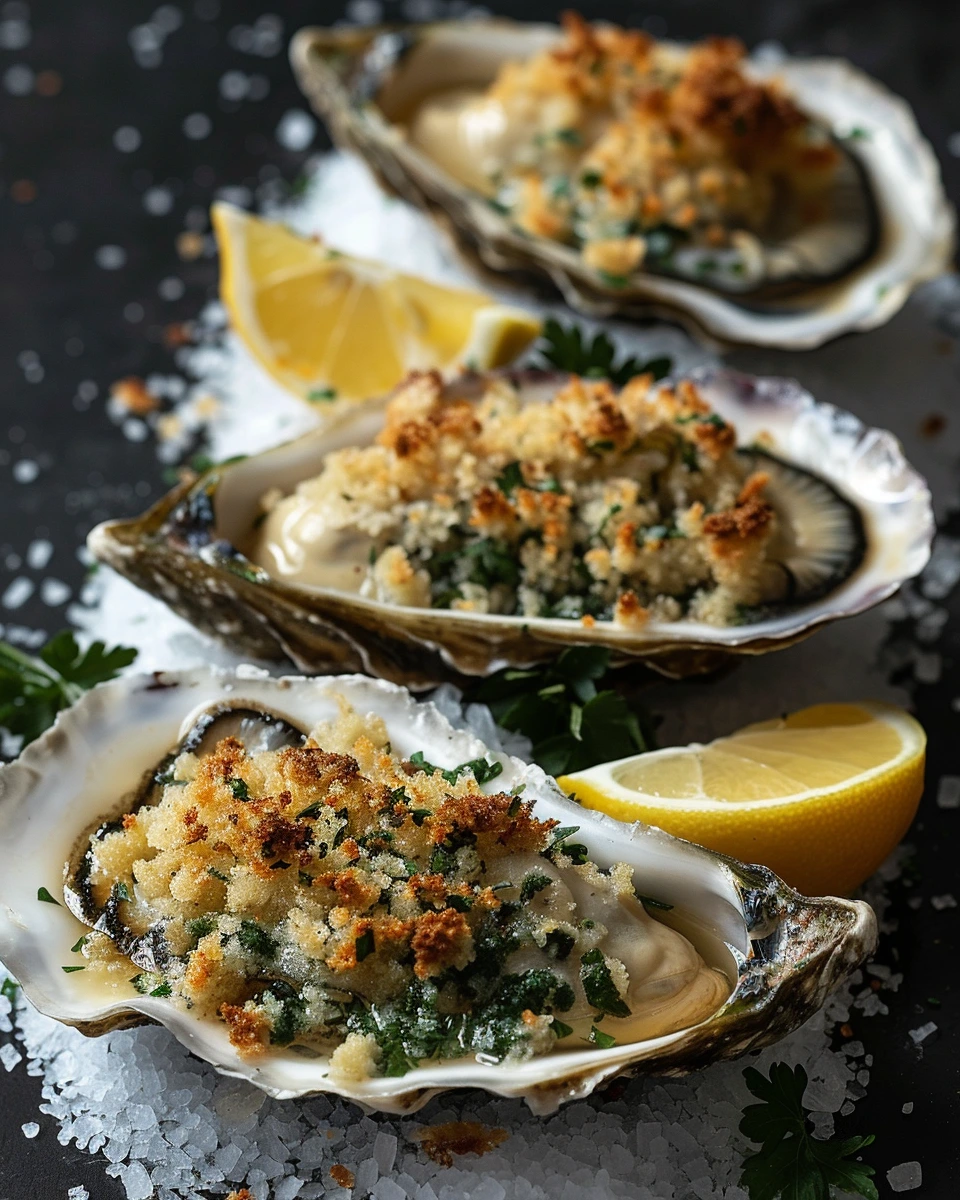
Oysters Rockefeller was created at Antoine’s restaurant in New Orleans in 1889 by Jules Alciatore. It was devised as a replacement for escargots when French snails were difficult to obtain. The dish was named for John D. Rockefeller because the sauce was considered exceptionally rich, and Antoine’s original formula remains closely guarded. The dish combines briny oysters with a deeply flavoured green topping, traditionally built from herbs and vegetables rather than simply spinach. Baking or grilling cooks the oysters gently while browning the surface. Its richness, theatrical shell presentation and New Orleans pedigree made it a restaurant classic. Oysters Rockefeller represents the French-Creole fine-dining tradition of New Orleans. It remains prominent in historic restaurants, holiday menus and celebratory seafood meals. Serving the oysters on rock salt helps stabilise the shells and creates the formal presentation associated with the dish.
Historical background
Oysters Rockefeller was created at Antoine’s restaurant in New Orleans in 1889 by Jules Alciatore. It was devised as a replacement for escargots when French snails were difficult to obtain. The dish was named for John D. Rockefeller because the sauce was considered exceptionally rich, and Antoine’s original formula remains closely guarded.
Why it is famous
The dish combines briny oysters with a deeply flavoured green topping, traditionally built from herbs and vegetables rather than simply spinach. Baking or grilling cooks the oysters gently while browning the surface. Its richness, theatrical shell presentation and New Orleans pedigree made it a restaurant classic.
Cultural significance
Oysters Rockefeller represents the French-Creole fine-dining tradition of New Orleans. It remains prominent in historic restaurants, holiday menus and celebratory seafood meals. Serving the oysters on rock salt helps stabilise the shells and creates the formal presentation associated with the dish.