Flan de Huevo: the story on the plate
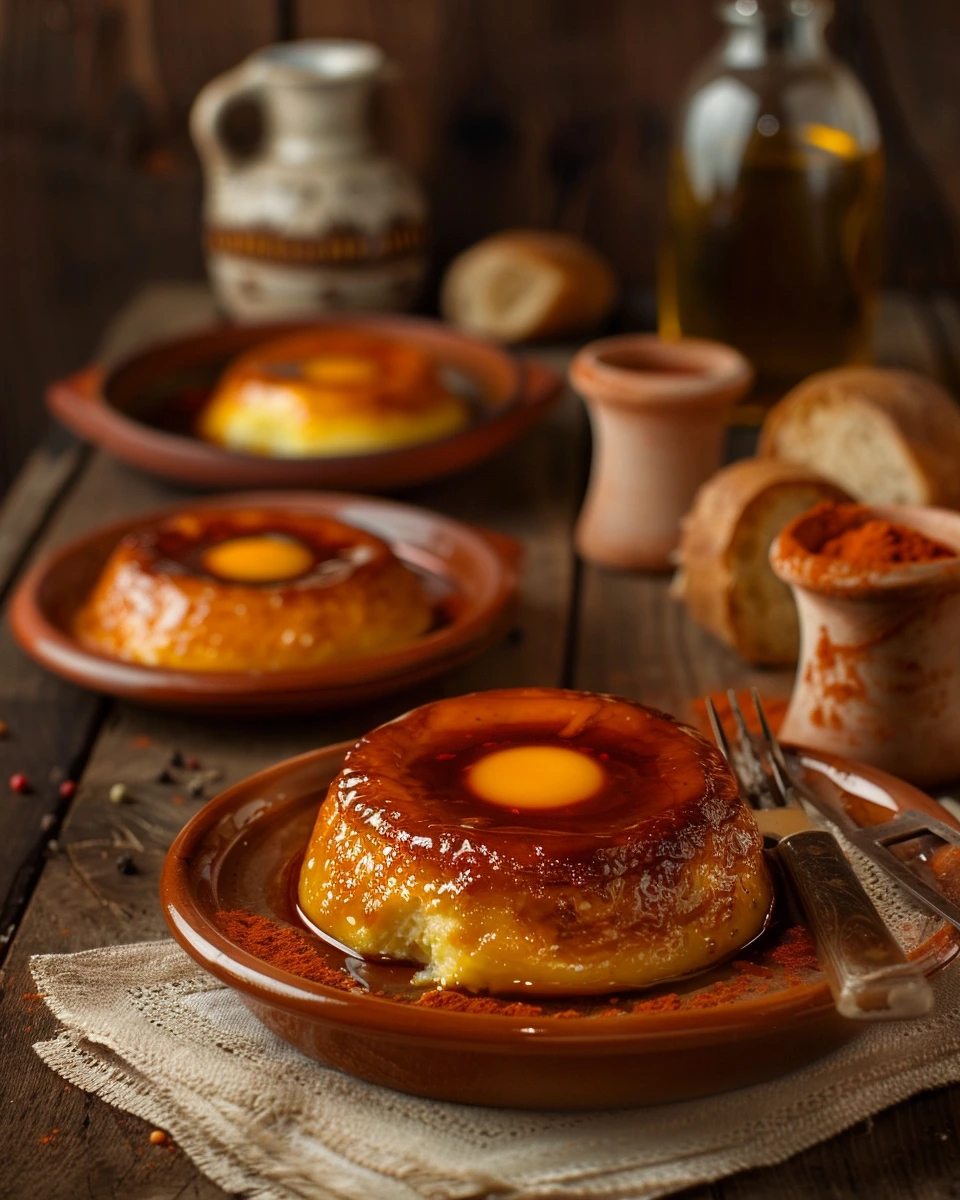
Flan de huevo belongs to the Iberian and wider European custard tradition, with roots reaching back to Roman egg preparations and later convent and domestic cookery. In Spain it became a standard dessert because eggs, milk and sugar could be turned into something elegant with little specialist equipment. It is famous for a delicate wobble, fine texture and bitter-sweet caramel that liquefies around the custard when unmoulded. Gentle cooking is essential: excessive heat creates bubbles, curdling and a rubbery finish. Flan is served in homes, menú del día restaurants and cafés across Spain and is one of the most familiar endings to an everyday meal. Individual moulds and large family versions are both traditional.
Historical background
Flan de huevo belongs to the Iberian and wider European custard tradition, with roots reaching back to Roman egg preparations and later convent and domestic cookery. In Spain it became a standard dessert because eggs, milk and sugar could be turned into something elegant with little specialist equipment.
Why it is famous
It is famous for a delicate wobble, fine texture and bitter-sweet caramel that liquefies around the custard when unmoulded. Gentle cooking is essential: excessive heat creates bubbles, curdling and a rubbery finish.
Cultural significance
Flan is served in homes, menú del día restaurants and cafés across Spain and is one of the most familiar endings to an everyday meal. Individual moulds and large family versions are both traditional.