Cherry Clafoutis: the story on the plate
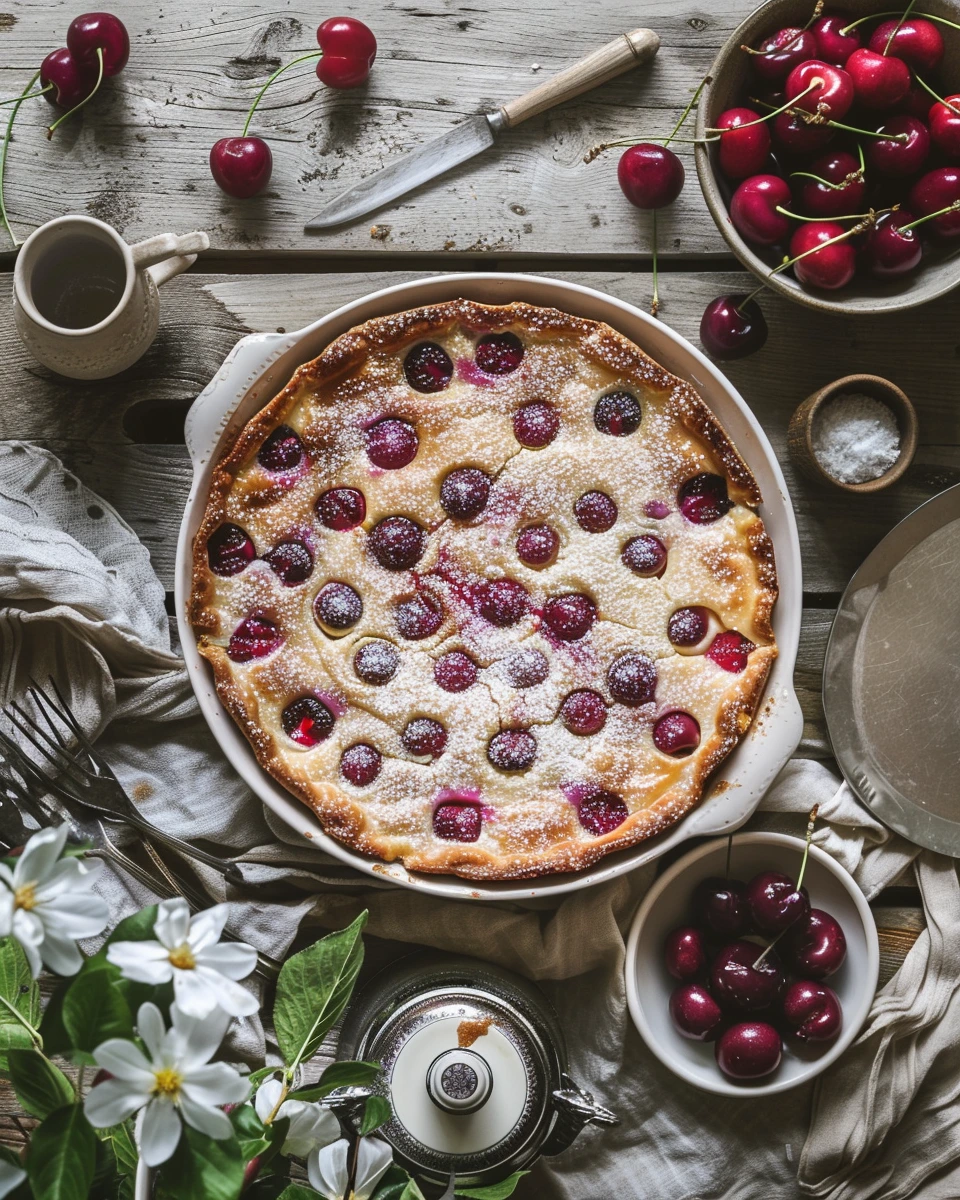
Clafoutis comes from Limousin in central France. The traditional version uses black cherries, historically baked with their stones because they were believed to add flavour, though modern home recipes often pit them for easier eating. It is famous for sitting between a custard, pancake and cake. The cherries release tart juice into a softly set batter, creating a dessert that feels rustic, light and intensely seasonal. Clafoutis is home cooking rather than elaborate pâtisserie and is commonly made when cherries are abundant. Variations using other fruit are technically called flognarde, although the clafoutis name is widely used.
Historical background
Clafoutis comes from Limousin in central France. The traditional version uses black cherries, historically baked with their stones because they were believed to add flavour, though modern home recipes often pit them for easier eating.
Why it is famous
It is famous for sitting between a custard, pancake and cake. The cherries release tart juice into a softly set batter, creating a dessert that feels rustic, light and intensely seasonal.
Cultural significance
Clafoutis is home cooking rather than elaborate pâtisserie and is commonly made when cherries are abundant. Variations using other fruit are technically called flognarde, although the clafoutis name is widely used.