Albóndigas en Salsa: the story on the plate
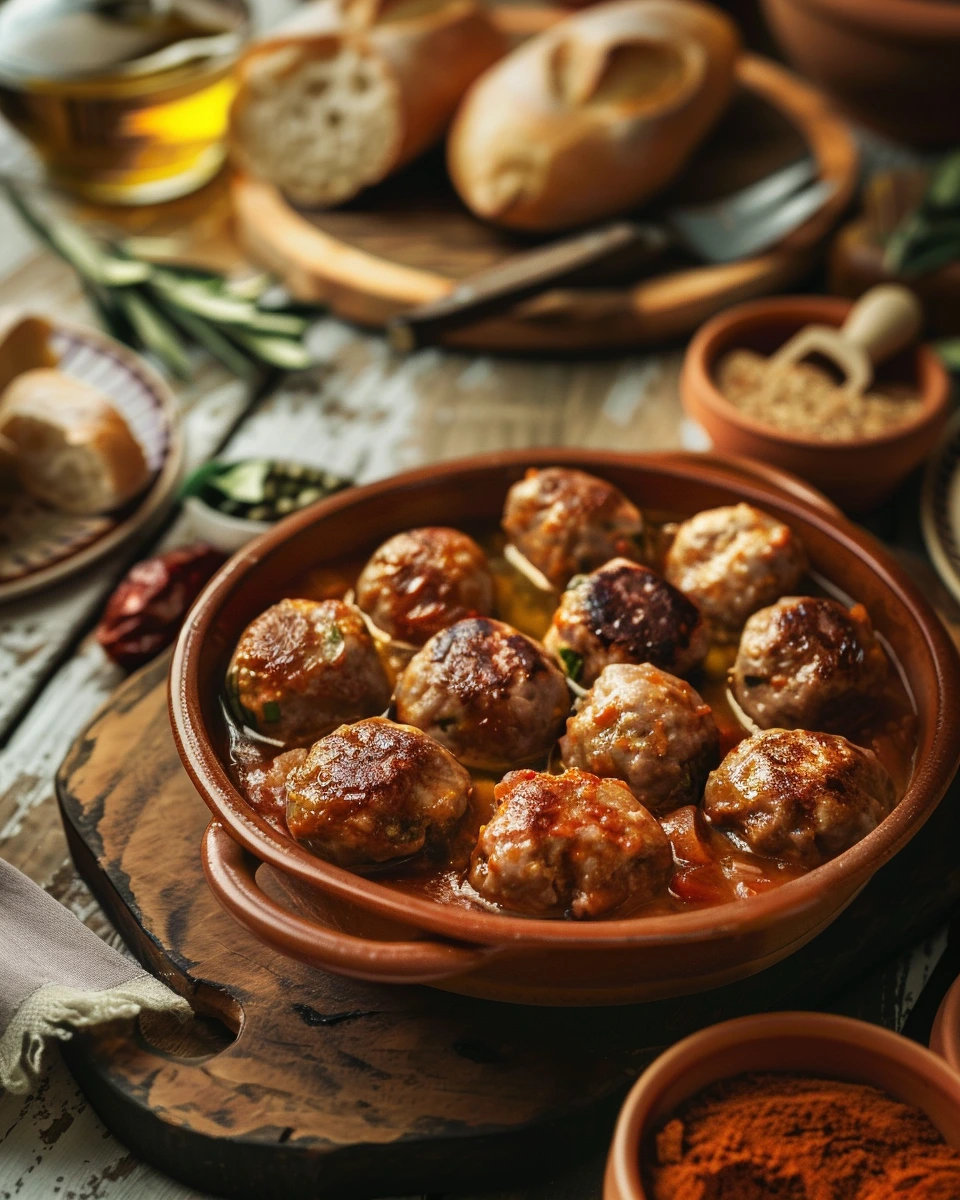
Albóndigas reflect the long history of minced-meat cookery in Iberia; the name derives from Arabic, pointing to the influence of al-Andalus. Spanish versions developed into home and tapas dishes made with beef, pork or a mixture and served in tomato, almond or wine-based sauces. They are famous for being soft and well seasoned rather than dense. Browning adds flavour, but the final simmer in sauce allows the meatballs to stay moist and gives the sauce body from their juices. Albóndigas appear as a family main course, a bar tapa and a practical make-ahead meal. The dish varies widely by region and household, which makes the sauce as much a signature as the meatballs themselves.
Historical background
Albóndigas reflect the long history of minced-meat cookery in Iberia; the name derives from Arabic, pointing to the influence of al-Andalus. Spanish versions developed into home and tapas dishes made with beef, pork or a mixture and served in tomato, almond or wine-based sauces.
Why it is famous
They are famous for being soft and well seasoned rather than dense. Browning adds flavour, but the final simmer in sauce allows the meatballs to stay moist and gives the sauce body from their juices.
Cultural significance
Albóndigas appear as a family main course, a bar tapa and a practical make-ahead meal. The dish varies widely by region and household, which makes the sauce as much a signature as the meatballs themselves.