Migas Extremeñas: the story on the plate
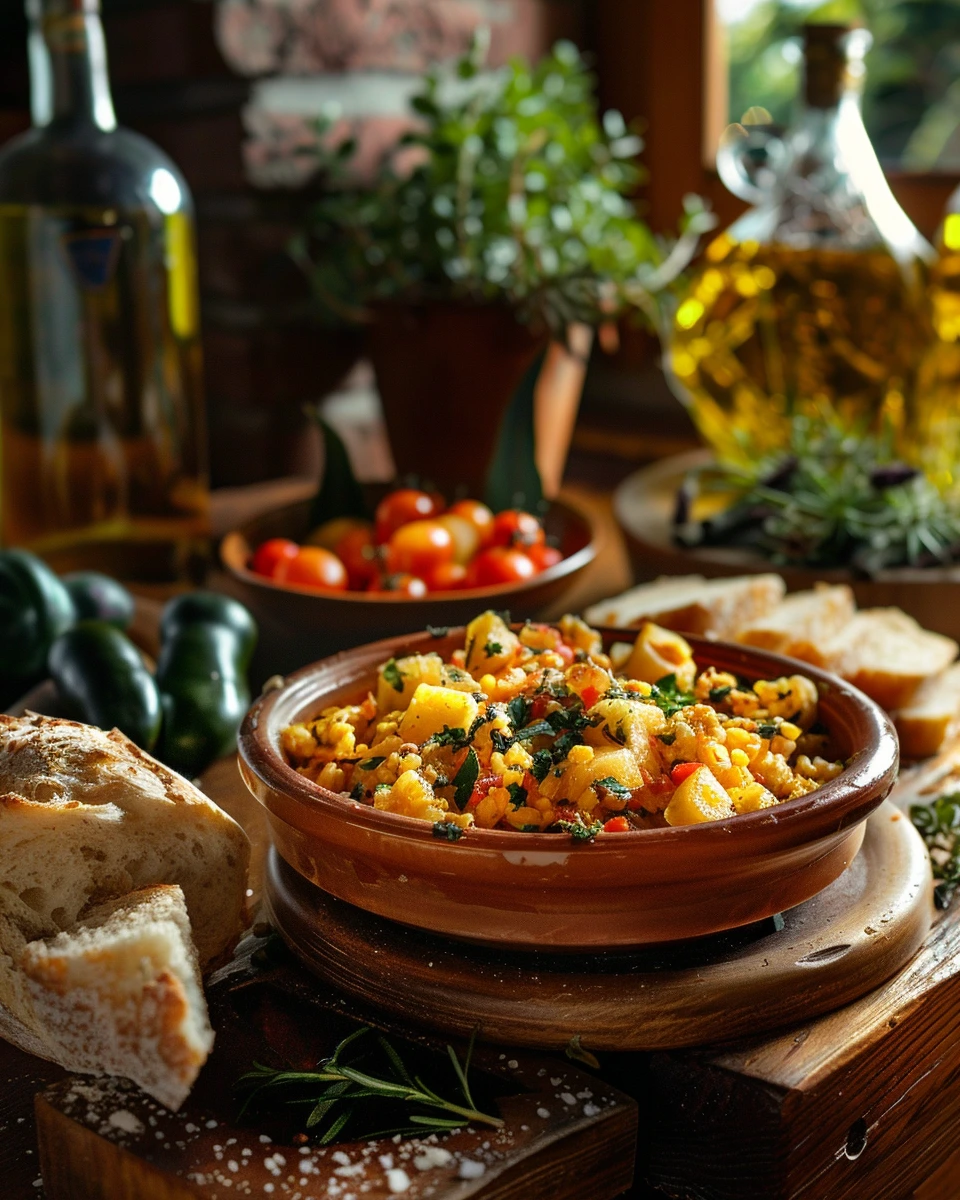
Migas extremeñas developed as shepherds' and farm workers' food in Extremadura, using stale bread softened with water and fried in fat with garlic and available accompaniments. Similar migas exist across Spain, but the Extremaduran version often includes paprika, chorizo and pork. It is famous for turning old bread into separate, lightly crisp crumbs rather than a soft stuffing. The texture depends on moistening the bread evenly and working it patiently in the pan so it fries without clumping. Traditionally eaten early in the day by people doing physical work, migas now appears at festivals, rural restaurants and family gatherings. It is often served communally with grapes, peppers, eggs or fried pork, combining thrift with abundance.
Historical background
Migas extremeñas developed as shepherds' and farm workers' food in Extremadura, using stale bread softened with water and fried in fat with garlic and available accompaniments. Similar migas exist across Spain, but the Extremaduran version often includes paprika, chorizo and pork.
Why it is famous
It is famous for turning old bread into separate, lightly crisp crumbs rather than a soft stuffing. The texture depends on moistening the bread evenly and working it patiently in the pan so it fries without clumping.
Cultural significance
Traditionally eaten early in the day by people doing physical work, migas now appears at festivals, rural restaurants and family gatherings. It is often served communally with grapes, peppers, eggs or fried pork, combining thrift with abundance.