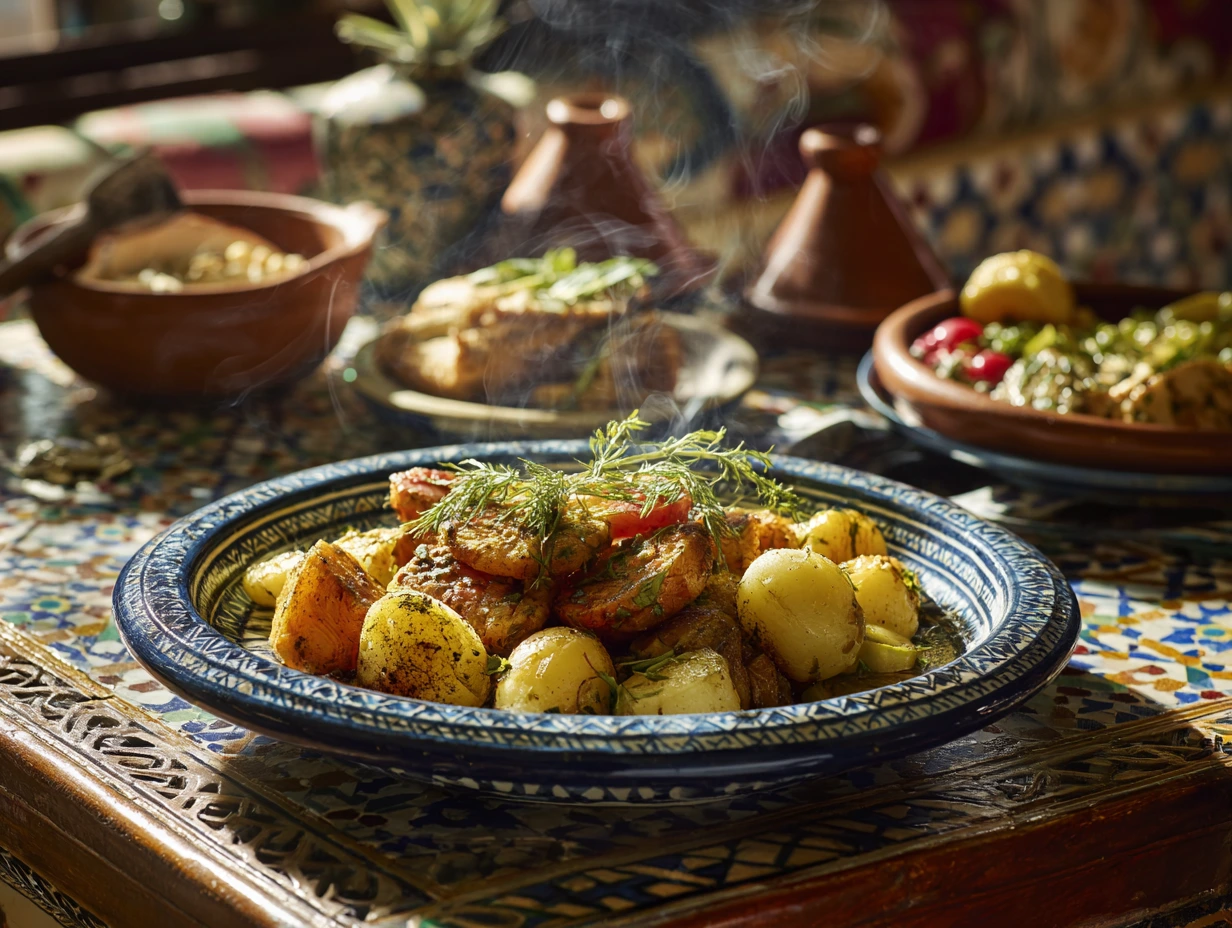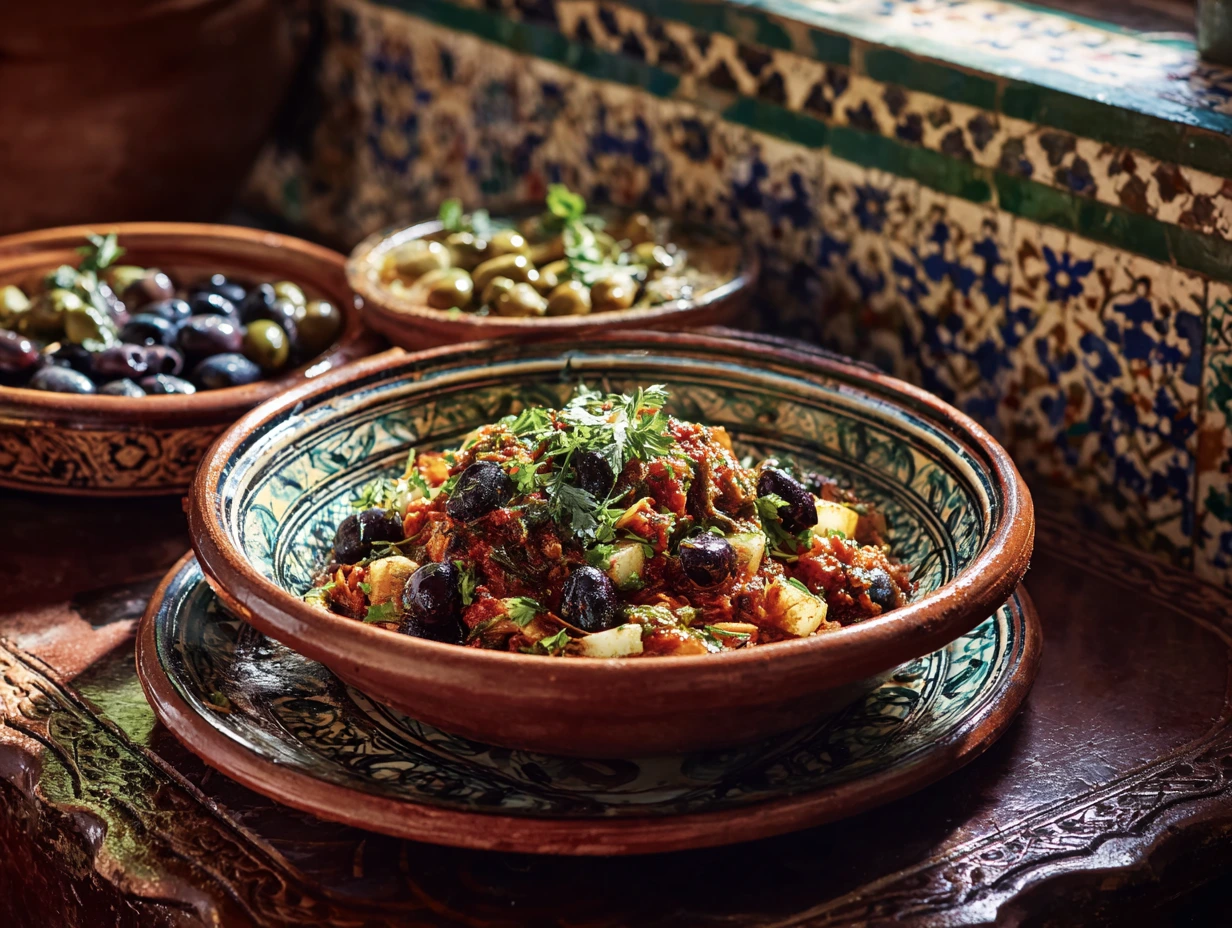
Moroccan Starter

Zaalouk

Smoky Moroccan aubergine and tomato salad cooked down with garlic, cumin, paprika, coriander and olive oil.

20 minsPrep time
35 minsCook time
Serves 4Servings
EasyDifficulty
Zaalouk
About this dish

Zaalouk: the story on the plate

Zaalouk is one of Morocco’s essential cooked salads, usually served before the main meal with warm khobz. Its story sits in everyday Moroccan home cooking, where aubergines, tomatoes, garlic and spices are slowly reduced until the mixture becomes silky, smoky and intensely savoury. It is popular because it works as a dip, salad, side dish and mezze-style starter.

Historical background

Zaalouk is one of Morocco’s essential cooked salads, usually served before the main meal with warm khobz. Its story sits in everyday Moroccan home cooking, where aubergines, tomatoes, garlic and spices are slowly reduced until the mixture becomes silky, smoky and intensely savoury. It is popular because it works as a dip, salad, side dish and mezze-style starter.

Why it is famous

Zaalouk is a strong Moroccan starter because it is traditional, recognisable and tells a clear story about Moroccan home cooking, markets, Ramadan tables or shared family meals.

Cultural significance

Moroccan starters often arrive as several small salads, soups or pastries before the main dish. They are designed for sharing, scooping with khobz and building anticipation for the meal.

Nutrition

Estimated nutrition per serving

Useful for meal planning and calorie-aware recipe browsing.

220Calories
5gProtein
20gCarbs
14gFat

Estimated from the structured Moroccan starter ingredient list. Validate before making formal health claims.

Ingredients

What you need

  • 150.0 aubergines, diced into 2cm cubes
  • 100.0 ripe tomatoes, peeled and chopped
  • 0.75 garlic cloves, finely grated
  • 11.25 olive oil
  • 1.25 ground cumin
  • 1.25 sweet paprika
  • /4 tsp cayenne pepper
  • 3.75 fresh coriander, chopped
  • 3.75 lemon juice
  • salt to taste
Method

Step-by-step method

Follow the recipe in order, tasting and adjusting seasoning where needed.

  1. Trim the aubergines and cut them into 2cm cubes so they soften evenly. Peel the tomatoes by scoring the base, covering with boiling water for 30 seconds, then slipping off the skins and chopping roughly.
  2. Heat a wide sauté pan over medium heat. Add olive oil and aubergine, then cook for 12–15 minutes, stirring often, until the cubes collapse and begin to turn golden at the edges.
  3. Add garlic, cumin, paprika and cayenne. Cook for 60 seconds until fragrant, keeping the heat controlled so the garlic does not brown.
  4. Add tomatoes and salt. Cook uncovered on medium-low heat for 20 minutes, crushing with a wooden spoon until thick, jammy and no longer watery.
  5. Stir in coriander and lemon juice. Taste for salt and acidity, then serve warm or at room temperature with Moroccan bread.
Cook smarter

Tips, storage and serving advice

Shopping tips

Use fresh herbs, ripe tomatoes, good olive oil and spices that still smell fragrant. Avoid tired ground spices.

Ingredient quality

Slice vegetables evenly, cook out raw tomato properly and use controlled heat so garlic and spices do not burn.

Common mistakes

The biggest mistakes are watery cooked salads, greasy frying oil, under-seasoned pulses and using too much spice before tasting.

Chef’s tips

Cook patiently, reduce sauces properly and finish with lemon, herbs or olive oil so the starter tastes bright rather than heavy.

How to know it is cooked

Ready when the texture matches the dish: thick and glossy for cooked salads, tender for pulses, crisp for fried starters and fresh for raw salads.

Plating advice

Serve in small Moroccan bowls or plates with bread nearby. Keep garnishes simple: herbs, cumin, olive oil, lemon or sesame where appropriate.

Make ahead

Most cooked salads and soups can be made ahead and served warm or room temperature. Fried pastry and potato cakes are best finished close to serving.

Storage and reheating

Refrigerate in a sealed container. Cooked salads and soups usually keep 2–3 days; fried items are best eaten sooner. Reheat soups and cooked salads gently. Refresh fried items in a hot oven rather than microwaving.