Italian Starter

Vitello Tonnato

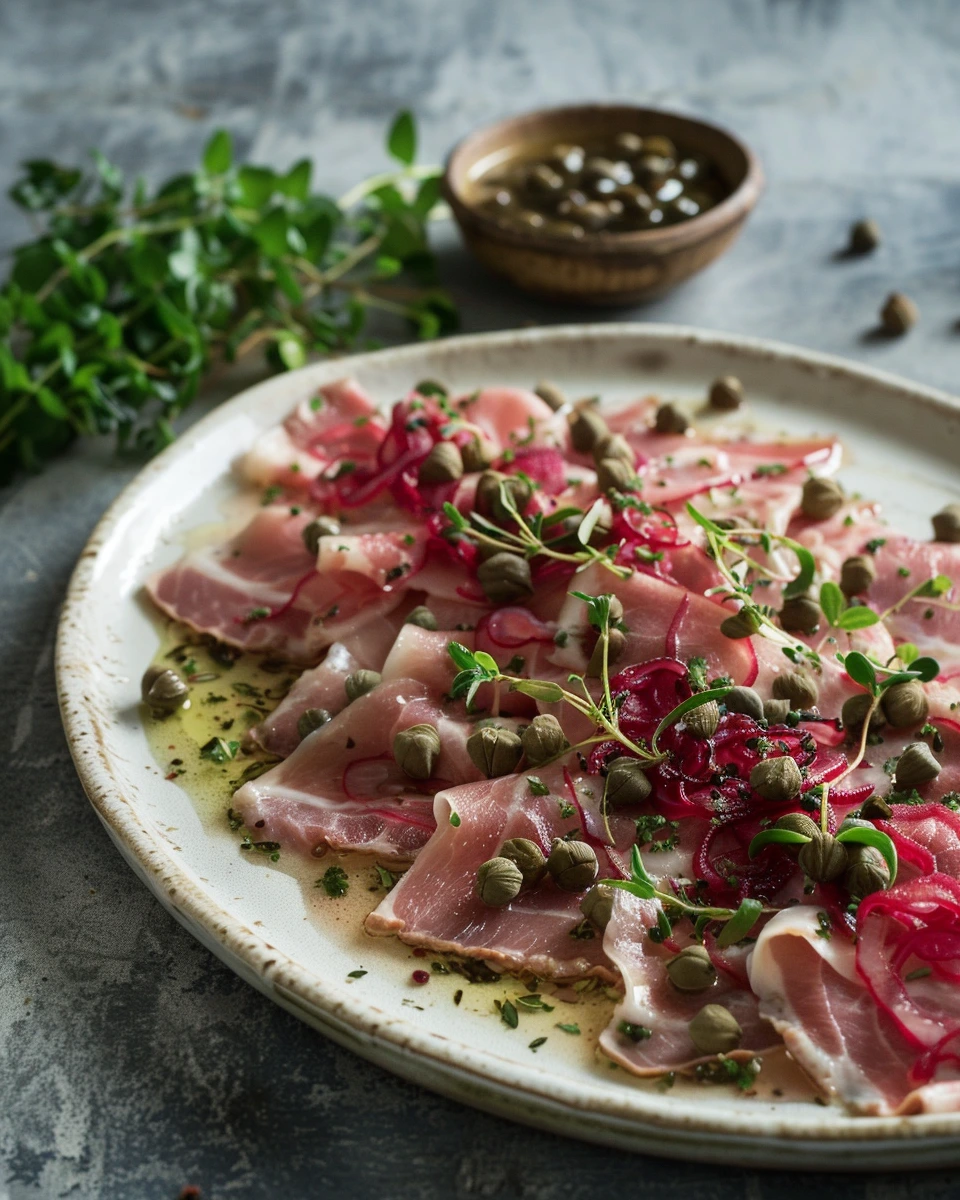
Vitello tonnato is chilled poached veal with a silky tuna, anchovy, caper and lemon sauce.

25 minsPrep time
1 hr 10 minsCook time
Serves 2Servings
MediumDifficulty
Vitello Tonnato
About this dish

Vitello Tonnato: the story on the plate

A refined Piedmontese dish often served as an antipasto. The veal is gently cooked, cooled, sliced thinly and covered with a savoury tuna sauce.

Historical background

A northern Italian classic that proves Italian food is not only tomato and pasta. It is elegant, make-ahead and ideal for a refined antipasti section.

Why it is famous

Vitello Tonnato is useful because it is both recognisably Italian and regionally specific, helping the page move beyond generic pasta dishes.

Cultural significance

In Piedmont, this dish is associated with home cooking, restaurants, feast days or local food identity depending on the recipe.

Nutrition

Estimated nutrition per serving

Useful for meal planning and calorie-aware recipe browsing.

360Calories
34gProtein
3gCarbs
23gFat

Estimated from the exact ingredient measures in the recipe text. Validate with your preferred nutrition calculator before publishing.

Ingredients

What you need

  • 266.67 veal topside or eye round
  • 0.33 carrot, chopped
  • 0.33 celery stick, chopped
  • 0.33 small onion, halved
  • 0.33 bay leaf
  • 50 dry white wine
  • 0.33 fine sea salt
  • 53.33 tuna in olive oil, drained
  • 1 anchovy fillets
  • 0.33 capers, plus extra to serve
  • 0.67 egg yolks
  • 0.33 lemon juice
  • 40 light olive oil
  • 0.67 cooled veal poaching liquid
Method

Step-by-step method

Follow the recipe in order, tasting and adjusting seasoning where needed.

  1. 1. Poach veal: Place veal, vegetables, bay, wine, salt and water to cover in a pan; simmer gently.
  2. 2. Cool in liquid: Let the veal cool in its poaching liquid.
  3. 3. Make sauce: Blend tuna, anchovies, capers, yolks, lemon and poaching liquid, adding oil slowly.
  4. 4. Slice: Slice veal very thinly across the grain.
  5. 5. Assemble: Layer veal on a platter and cover with tuna sauce.
  6. 6. Rest and serve: Chill for at least 2 hours, then garnish with capers.
Cook smarter

Tips, storage and serving advice

Shopping tips

Buy the best version of the core ingredient first; avoid over-spending on decoration if the cheese, seafood, meat, rice, pasta, olive oil or fruit is weak.

Ingredient quality

Use real regional cheeses where named, good olive oil, properly salted water and fresh herbs. Drain wet dairy and seafood carefully before cooking.

Common mistakes

The most common mistake is adding too much liquid, overcooking the main ingredient, or using shortcuts that hide the regional character.

Chef’s tips

Cook with restraint. Let the main ingredient lead, season gradually and finish with only the garnish the dish actually needs.

How to know it is cooked

Use the visual cues in the method: tender but not collapsing, glossy not watery, crisp not burnt, set not rubbery, or al dente not soft.

Plating advice

Serve simply on warm plates for savoury dishes or chilled/room-temperature plates for desserts. Keep the focus on the food.

Make ahead

Prepare components ahead where possible, but finish pasta, fried items, seafood and crisp pastry close to serving.

Storage and reheating

Store covered in the fridge for up to 2 days where suitable. Fried and fresh seafood dishes are best eaten the same day. Reheat gently only where appropriate. Pasta, seafood, liver, cream-set desserts and filled pastry are usually best freshly served.

Wine pairing

What to drink with Vitello Tonnato

Pairings are chosen around the dish’s flavour, texture, richness, acidity and cooking style — not just the country it comes from.

Champagne / Traditional Method Brut wine pairing
#1 Great match Sparkling

Champagne / Traditional Method Brut

Why it works: High acidity and fine bubbles cut through fat, salt and crisp coatings while matching the dish without overwhelming it.

High-acid, dry sparkling wine with fine bubbles, citrus, apple, brioche and mineral notes. It cuts through fried food, cream and salt while making starters feel celebratory.

GrapeChardonnay, Pinot Noir, Pinot Meunier
RegionChampagne, Franciacorta, English sparkling wine, Crémant
Wine flavourcitrus, green apple, brioche, chalk, almond
Serve at6-8°C
  • Flavour bridge: crisp bubbles with fried, salty or creamy textures
  • Acidity: High acidity refreshes the palate.
  • Body: Medium body suits starters and fried food.
  • Tannin: Low tannin is safe with seafood and salt.
  • Sweetness: Dry sweetness avoids making savoury dishes cloying.
  • Best for: A credible food-led pairing for this recipe.
Sauvignon Blanc wine pairing
#1 Great match White

Sauvignon Blanc

Why it works: Sauvignon Blanc mirrors herbs and citrus while its acidity suits green vegetables, fresh cheese and shellfish.

Zesty white wine with lemon, gooseberry, grass and herb notes. It refreshes green vegetables, goat cheese, seafood and herb-led dishes.

GrapeSauvignon Blanc
RegionLoire, Marlborough, Bordeaux, Chile
Wine flavourlemon, gooseberry, grass, passion fruit, herbs
Serve at7-9°C
  • Flavour bridge: citrus and herbal notes echo the dish
  • Acidity: High acidity matches lemon and fresh herbs.
  • Body: Light body suits delicate ingredients.
  • Tannin: Low tannin is seafood-friendly.
  • Sweetness: Dry style preserves freshness.
  • Best for: A credible food-led pairing for this recipe.
Grüner Veltliner wine pairing
#1 Great match White

Grüner Veltliner

Why it works: Grüner Veltliner offers pepper, citrus and firm acidity that pair naturally with Austrian, pork, herb and vegetable-led dishes.

Peppery, citrusy white with high acidity and a savoury snap. Brilliant with vegetables, pork, fried dishes, herbs and awkward wine-pairing foods.

GrapeGrüner Veltliner
RegionWachau, Kamptal, Kremstal
Wine flavourlime, green apple, white pepper, lentil, herbs
Serve at8-10°C
  • Flavour bridge: white pepper and herbs mirror seasoning
  • Acidity: High acidity cuts frying and pork fat.
  • Body: Light-medium body suits veal and vegetables.
  • Tannin: Low tannin.
  • Sweetness: Dry finish keeps the match precise.
  • Best for: A credible food-led pairing for this recipe.
Provence Rosé wine pairing
#1 Great match Rosé

Provence Rosé

Why it works: Dry rosé combines red-fruit flavour with white-wine freshness, working well with grilled food, tomatoes, peppers and robust seafood.

Pale, dry rosé with red berries, citrus and herbs. Flexible with Mediterranean dishes, grilled vegetables, seafood and summer food.

GrapeGrenache, Cinsault, Syrah, Mourvèdre
RegionProvence, Languedoc, Navarra
Wine flavourstrawberry, citrus, herbs, melon
Serve at8-10°C
  • Flavour bridge: red berries bridge tomato and char
  • Acidity: Bright acidity handles tomato and oil.
  • Body: Light-medium body suits grilled dishes.
  • Tannin: Low tannin.
  • Sweetness: Dry style remains refreshing.
  • Best for: A credible food-led pairing for this recipe.

These are wine-style pairings, so you can choose any bottle in that style rather than needing one exact producer. Look for the grape, region or style name on the label.

Bottle suggestions

Specific wines to try

These are individual wines already linked to this recipe.