Texas Smoked Beef Brisket: the story on the plate
Central Texas brisket developed from the meeting of cattle ranching, commercial meat markets and the smoking traditions of German and Czech immigrants. Butchers cooked tougher unsold cuts over wood and sold them by weight, creating the market-style barbecue still associated with towns such as Lockhart and Taylor. Brisket became the defining cut of Texas barbecue during the twentieth century. Its reputation rests on three textures: dark seasoned bark, rendered fat and meat tender enough to bend without crumbling. Smoke should season rather than overwhelm the beef. Many Central Texas pitmasters use little more than salt, coarse black pepper, oak smoke and patient temperature control. Brisket is served sliced on butcher paper with pickles, onions, white bread and simple sides. Long queues at barbecue restaurants and overnight tending of pits have become part of the ritual. Different Texas regions favour different woods, sauces and cuts, but brisket remains a central symbol of the state’s food identity.
Historical background
Central Texas brisket developed from the meeting of cattle ranching, commercial meat markets and the smoking traditions of German and Czech immigrants. Butchers cooked tougher unsold cuts over wood and sold them by weight, creating the market-style barbecue still associated with towns such as Lockhart and Taylor. Brisket became the defining cut of Texas barbecue during the twentieth century.
Why it is famous
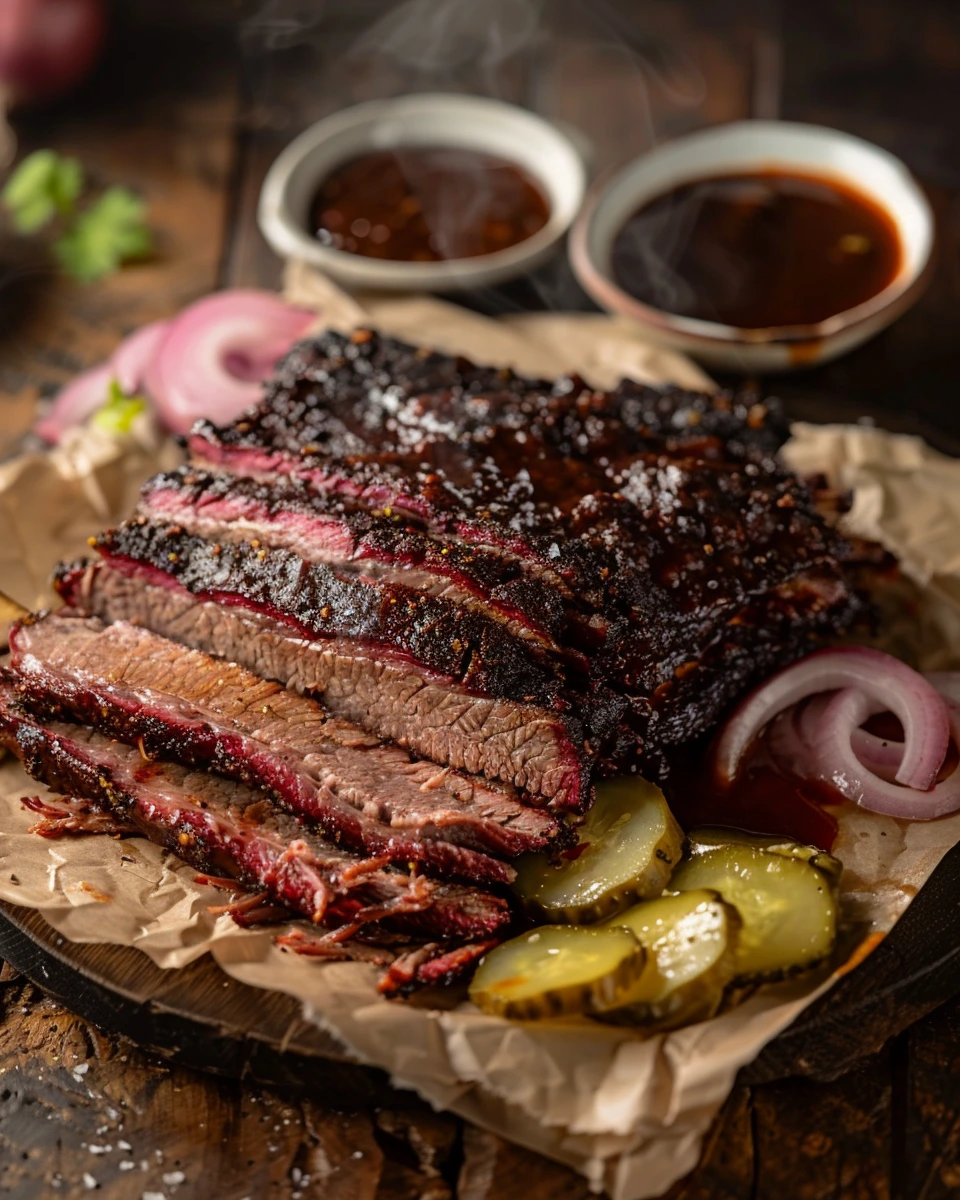
Its reputation rests on three textures: dark seasoned bark, rendered fat and meat tender enough to bend without crumbling. Smoke should season rather than overwhelm the beef. Many Central Texas pitmasters use little more than salt, coarse black pepper, oak smoke and patient temperature control.
Cultural significance
Brisket is served sliced on butcher paper with pickles, onions, white bread and simple sides. Long queues at barbecue restaurants and overnight tending of pits have become part of the ritual. Different Texas regions favour different woods, sauces and cuts, but brisket remains a central symbol of the state’s food identity.