Sauerbraten: the story on the plate
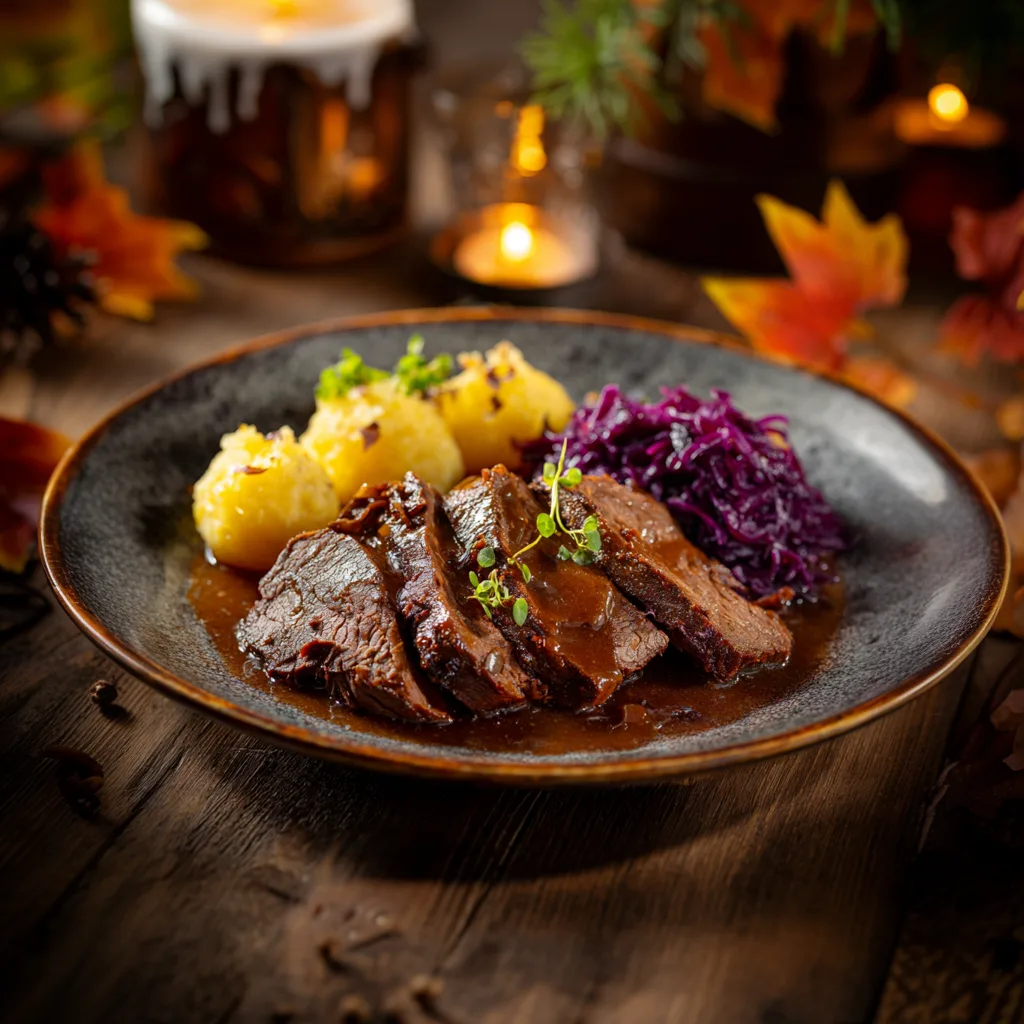
Long acidic marinades were historically used to tenderise and preserve meat. Sauerbraten developed regional forms across Germany, with Rhineland versions often sweetened by raisins, beet syrup or gingerbread. The meat gains a distinctive tang all the way through, while slow braising produces a dark, smooth gravy. Sweetness is used carefully to balance rather than erase the vinegar. It is a classic Sunday and holiday roast, served with red cabbage, potato dumplings or Spätzle. Families often defend their regional approach to the sauce.
Historical background
Long acidic marinades were historically used to tenderise and preserve meat. Sauerbraten developed regional forms across Germany, with Rhineland versions often sweetened by raisins, beet syrup or gingerbread.
Why it is famous
The meat gains a distinctive tang all the way through, while slow braising produces a dark, smooth gravy. Sweetness is used carefully to balance rather than erase the vinegar.
Cultural significance
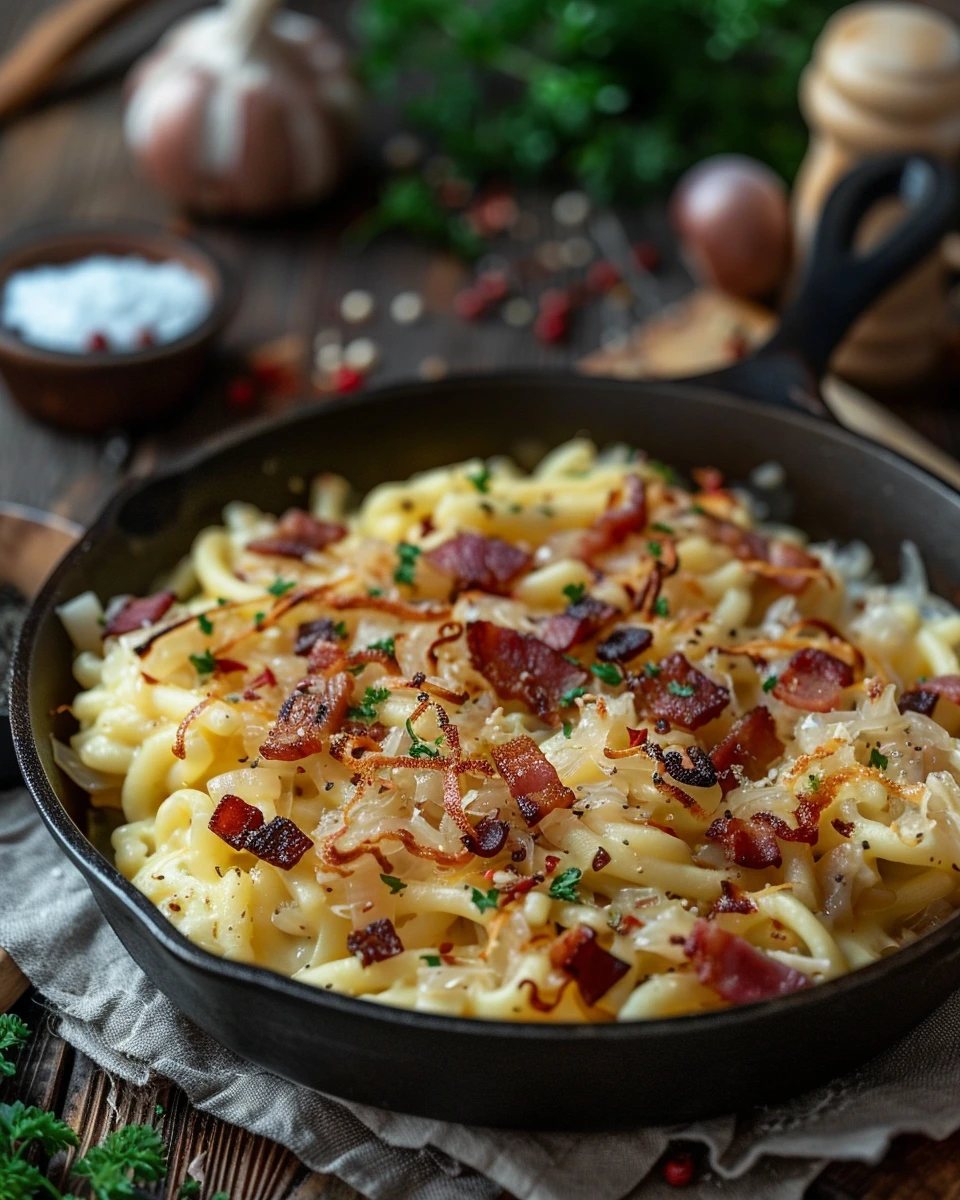
It is a classic Sunday and holiday roast, served with red cabbage, potato dumplings or Spätzle. Families often defend their regional approach to the sauce.