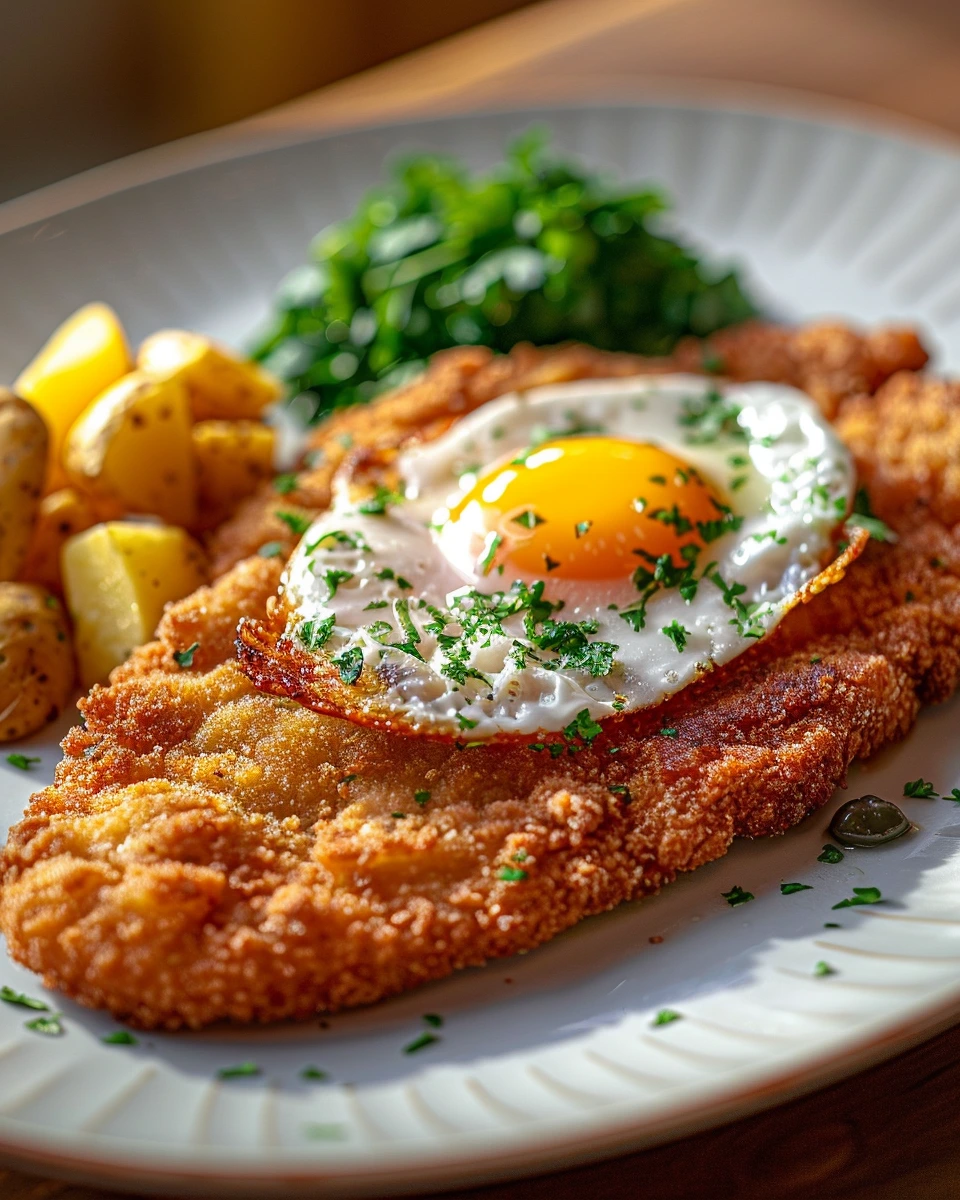
Schnitzel Holsteiner Art: the story on the plate
The dish is associated with nineteenth-century diplomat Friedrich von Holstein, who reputedly wanted a schnitzel and appetiser garnishes served together. It became a Berlin restaurant classic despite the Holstein name. It is more elaborate than a plain schnitzel: runny yolk enriches the crumb, while anchovy and capers provide concentrated salt and acidity. The cutlet must remain crisp beneath the garnish. Holsteiner Schnitzel represents the formal restaurant side of imperial-era German cooking and is now a nostalgic classic rather than everyday fare.
Historical background
The dish is associated with nineteenth-century diplomat Friedrich von Holstein, who reputedly wanted a schnitzel and appetiser garnishes served together. It became a Berlin restaurant classic despite the Holstein name.
Why it is famous
It is more elaborate than a plain schnitzel: runny yolk enriches the crumb, while anchovy and capers provide concentrated salt and acidity. The cutlet must remain crisp beneath the garnish.
Cultural significance
Holsteiner Schnitzel represents the formal restaurant side of imperial-era German cooking and is now a nostalgic classic rather than everyday fare.