Olivier Salad: the story on the plate
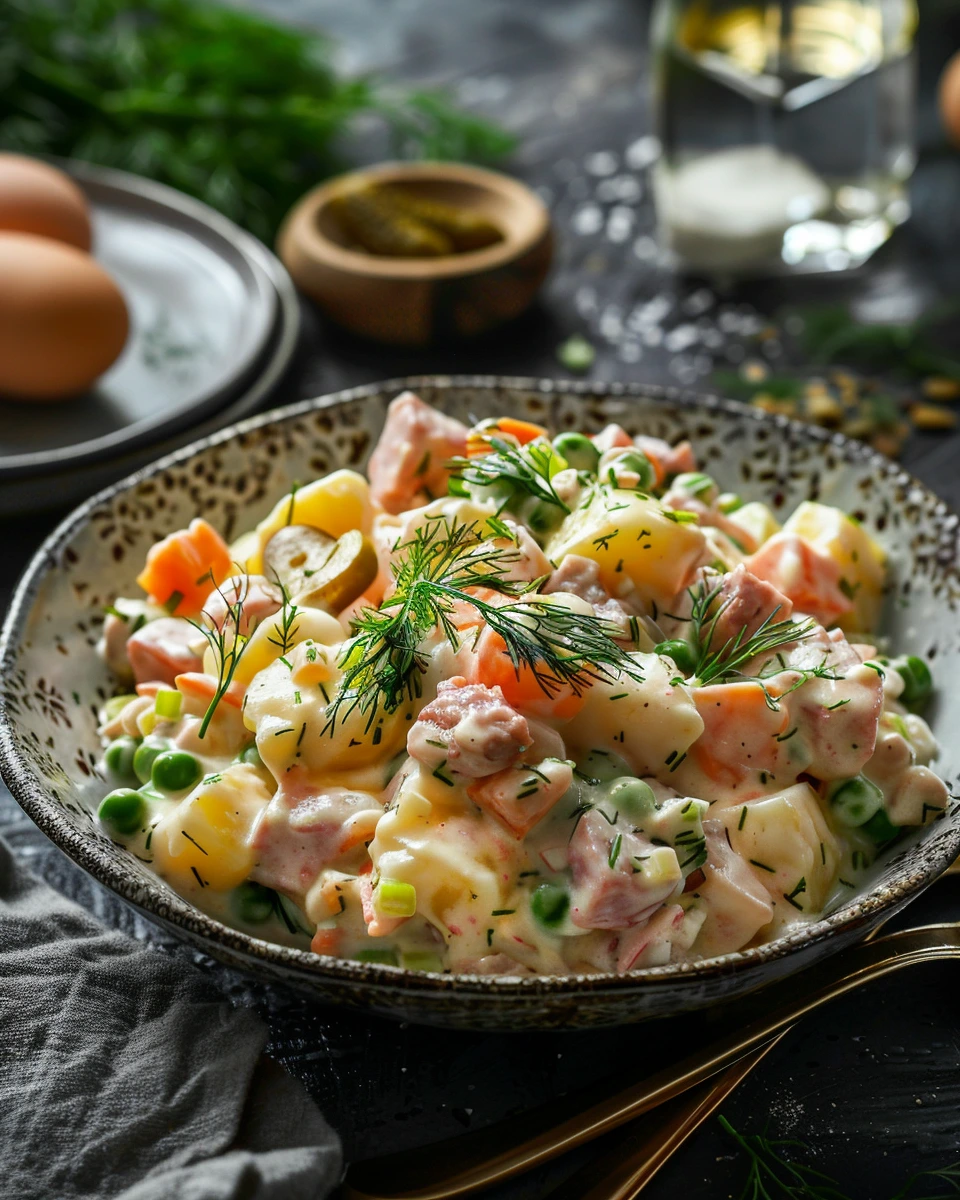
Olivier Salad was created in nineteenth-century Moscow by chef Lucien Olivier, although the original restaurant version was far more luxurious. Soviet-era households transformed it into the accessible potato-and-mayonnaise salad known today. The dish is recognised for diced potato, carrot, peas, pickles, egg and meat bound with mayonnaise. Its success depends on preserving the contrast between the principal ingredient, seasoning and finished texture rather than allowing one element to dominate. It is one of the defining dishes of New Year celebrations and large family tables across Russia and the wider former Soviet region.
Historical background
Olivier Salad was created in nineteenth-century Moscow by chef Lucien Olivier, although the original restaurant version was far more luxurious. Soviet-era households transformed it into the accessible potato-and-mayonnaise salad known today.
Why it is famous
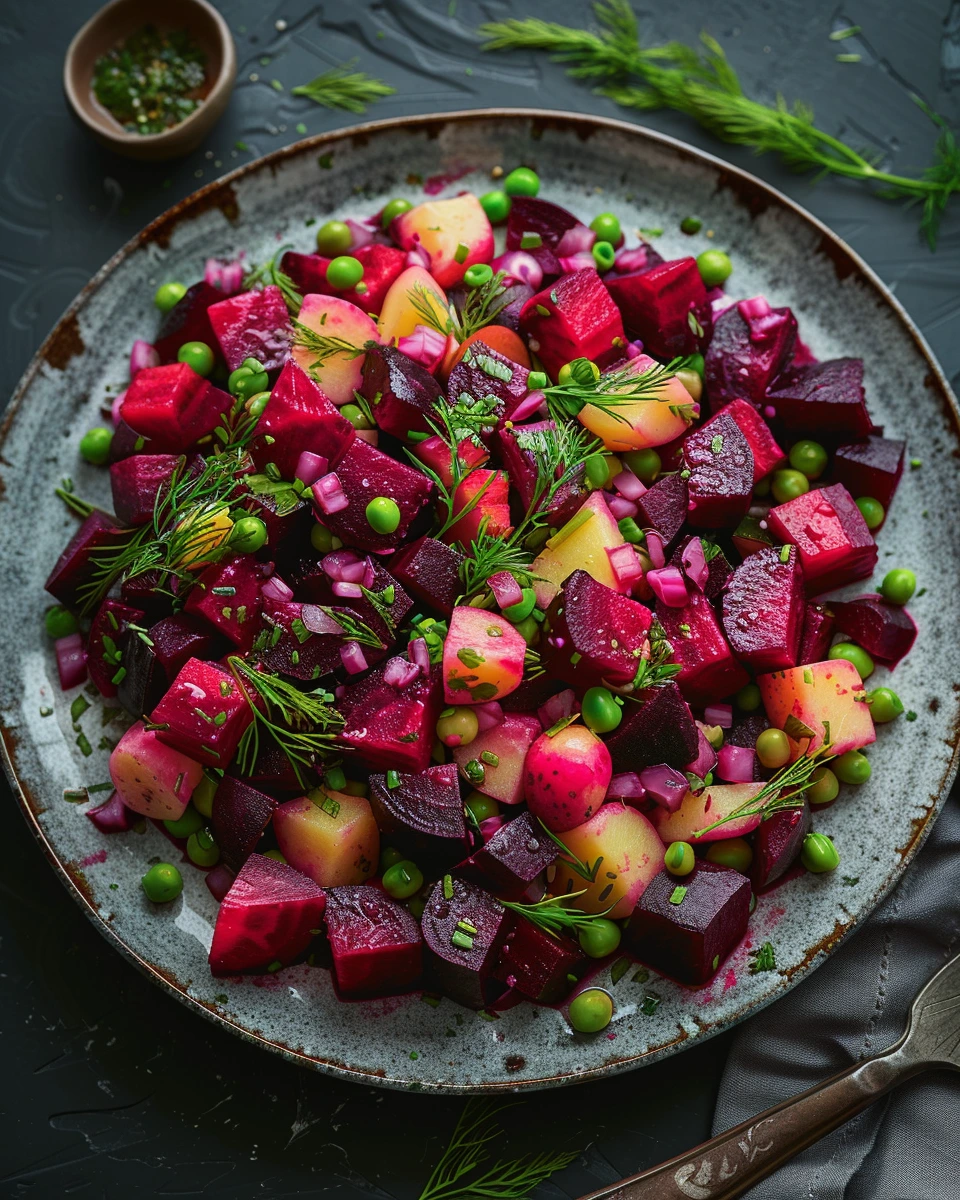
The dish is recognised for diced potato, carrot, peas, pickles, egg and meat bound with mayonnaise. Its success depends on preserving the contrast between the principal ingredient, seasoning and finished texture rather than allowing one element to dominate.
Cultural significance
It is one of the defining dishes of New Year celebrations and large family tables across Russia and the wider former Soviet region.