Herring Under a Fur Coat: the story on the plate
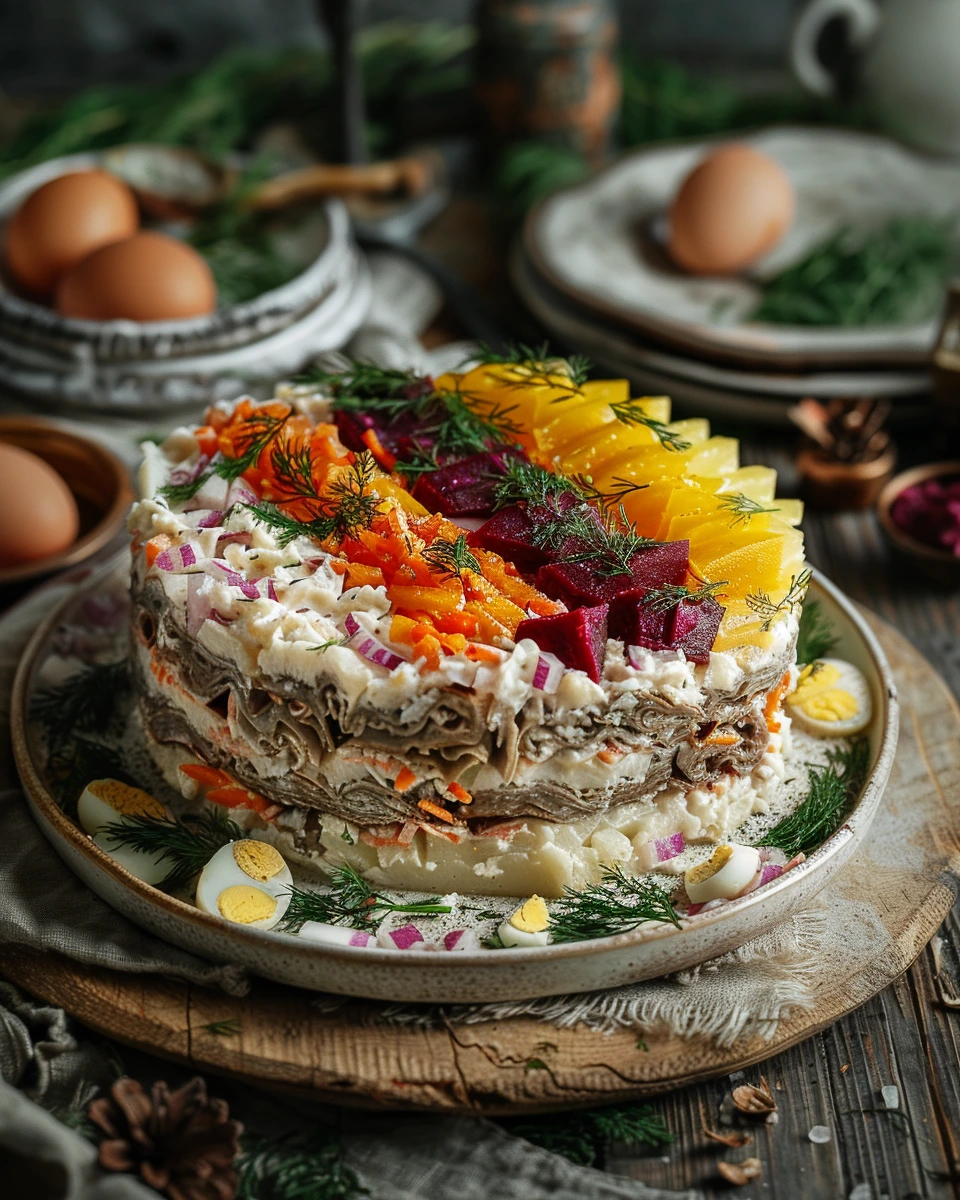
Herring Under a Fur Coat became widely popular in the Soviet period, when inexpensive preserved fish and root vegetables suited celebratory home cooking. Its dramatic beetroot top gives the dish its 'fur coat'. Its defining character comes from salted herring layered beneath potato, carrot, beetroot, egg and mayonnaise. The best versions taste focused: the main ingredient remains obvious while acidity, spice, sweetness or richness supports it. It is strongly associated with New Year's Eve and is assembled in advance so the layers can settle and meld.
Historical background
Herring Under a Fur Coat became widely popular in the Soviet period, when inexpensive preserved fish and root vegetables suited celebratory home cooking. Its dramatic beetroot top gives the dish its 'fur coat'.
Why it is famous
Its defining character comes from salted herring layered beneath potato, carrot, beetroot, egg and mayonnaise. The best versions taste focused: the main ingredient remains obvious while acidity, spice, sweetness or richness supports it.
Cultural significance
It is strongly associated with New Year's Eve and is assembled in advance so the layers can settle and meld.