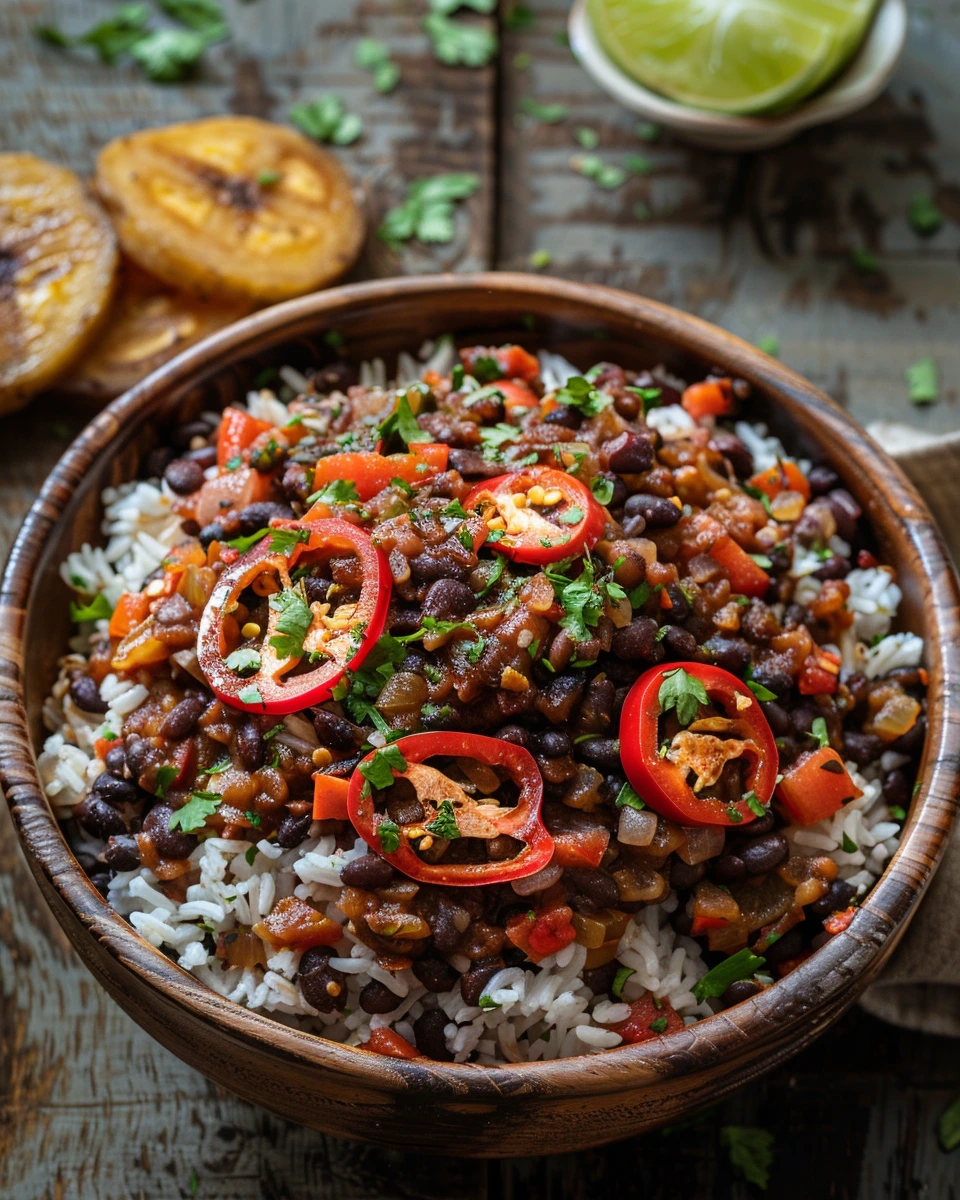
Moros y Cristianos: the story on the plate
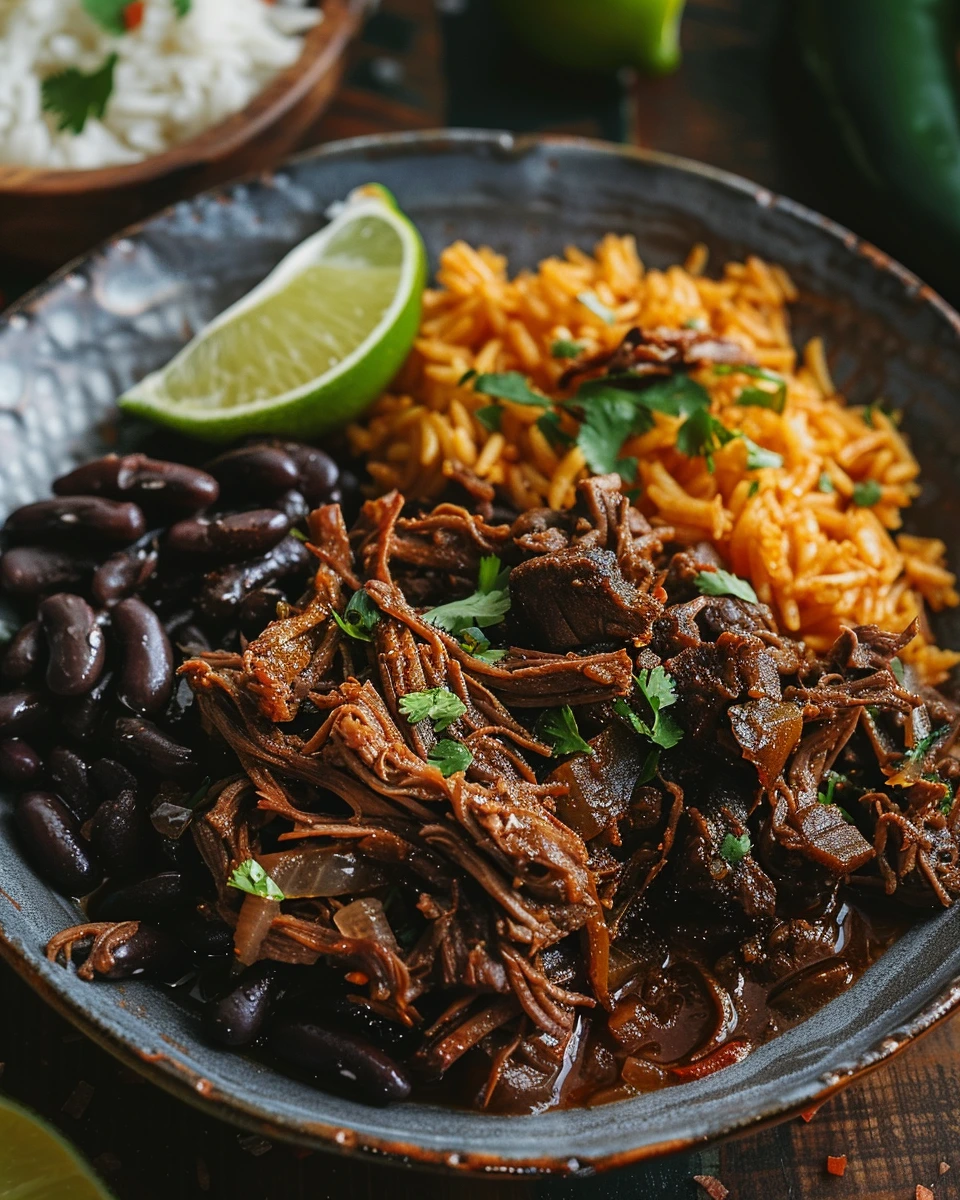
The dish belongs to a long Caribbean tradition of combining legumes and rice. Its historic name, referring to 'Moors and Christians', reflects older Spanish imagery, while the preparation itself is rooted in the meeting of African, Spanish and Caribbean foodways. Cooking the rice in black-bean liquor gives every grain colour and flavour, distinguishing it from black beans served beside plain rice. Good versions are separate-grained but moist, with sofrito and cumin supporting rather than dominating the beans. It is an everyday Cuban side served with roast pork, grilled meat, eggs or plantains. Because beans and rice form a nutritionally complete and affordable combination, the dish carries both practical and cultural importance.
Historical background
The dish belongs to a long Caribbean tradition of combining legumes and rice. Its historic name, referring to 'Moors and Christians', reflects older Spanish imagery, while the preparation itself is rooted in the meeting of African, Spanish and Caribbean foodways.
Why it is famous
Cooking the rice in black-bean liquor gives every grain colour and flavour, distinguishing it from black beans served beside plain rice. Good versions are separate-grained but moist, with sofrito and cumin supporting rather than dominating the beans.
Cultural significance
It is an everyday Cuban side served with roast pork, grilled meat, eggs or plantains. Because beans and rice form a nutritionally complete and affordable combination, the dish carries both practical and cultural importance.