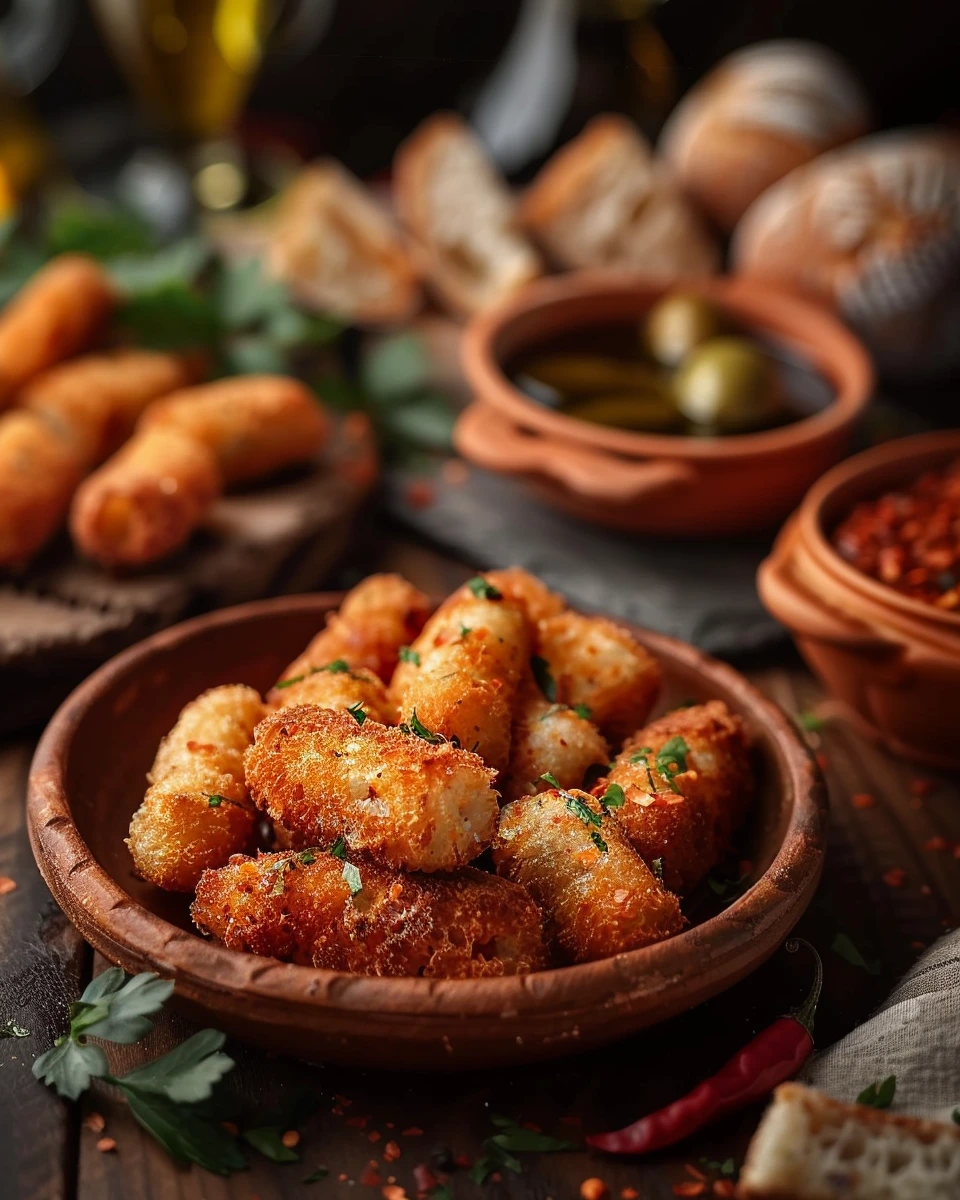
Croquetas de Jamón: the story on the plate
Spanish croquetas developed from the French croquette and béchamel traditions but became thoroughly integrated into Spanish home and bar cooking. They were an efficient way to stretch leftover ham, chicken, fish or stew into another meal. Jamón croquetas are prized for the contrast between a brittle fried shell and an almost flowing béchamel interior. The mixture must be firm enough to shape but soft enough to feel creamy once hot, making correct chilling and frying essential. They are served as tapas, family snacks and party food, and many households judge them by the recipe of a parent or grandparent. Their use of leftovers reflects domestic economy, while modern bars often treat them as a signature dish.
Historical background
Spanish croquetas developed from the French croquette and béchamel traditions but became thoroughly integrated into Spanish home and bar cooking. They were an efficient way to stretch leftover ham, chicken, fish or stew into another meal.
Why it is famous
Jamón croquetas are prized for the contrast between a brittle fried shell and an almost flowing béchamel interior. The mixture must be firm enough to shape but soft enough to feel creamy once hot, making correct chilling and frying essential.
Cultural significance
They are served as tapas, family snacks and party food, and many households judge them by the recipe of a parent or grandparent. Their use of leftovers reflects domestic economy, while modern bars often treat them as a signature dish.