Caponata Siciliana: the story on the plate
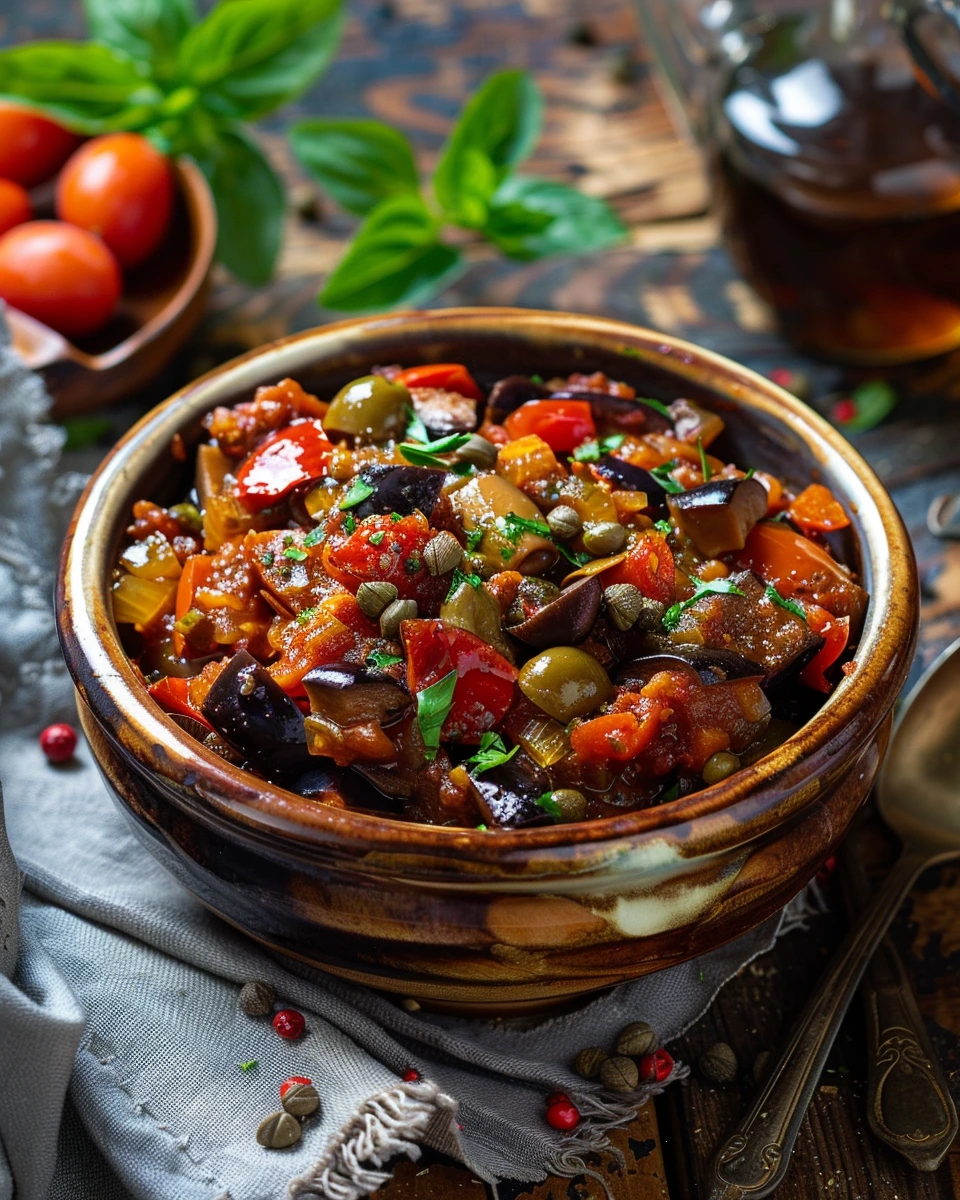
Caponata Siciliana is rooted in Sicily. Caponata is a Sicilian sweet-and-sour vegetable preparation centred on aubergine. Its many local versions reflect the island's layered food history and the agrodolce tradition of balancing vinegar and sugar, with additions such as celery, olives, capers, tomato and sometimes pine nuts or raisins. It is famous for complexity rather than freshness alone: fried or sautéed aubergine absorbs a sauce that is simultaneously savoury, acidic and gently sweet. Resting the dish allows the flavours to settle and often makes it better the next day. Caponata can be served as an antipasto, side dish or part of a larger spread and is strongly tied to Sicilian home cooking. The absence of one universally 'correct' recipe is itself culturally important, because families and towns maintain their own combinations.
Historical background
Caponata is a Sicilian sweet-and-sour vegetable preparation centred on aubergine. Its many local versions reflect the island's layered food history and the agrodolce tradition of balancing vinegar and sugar, with additions such as celery, olives, capers, tomato and sometimes pine nuts or raisins.
Why it is famous
It is famous for complexity rather than freshness alone: fried or sautéed aubergine absorbs a sauce that is simultaneously savoury, acidic and gently sweet. Resting the dish allows the flavours to settle and often makes it better the next day.
Cultural significance
Caponata can be served as an antipasto, side dish or part of a larger spread and is strongly tied to Sicilian home cooking. The absence of one universally 'correct' recipe is itself culturally important, because families and towns maintain their own combinations.