Wiener Schnitzel: the story on the plate
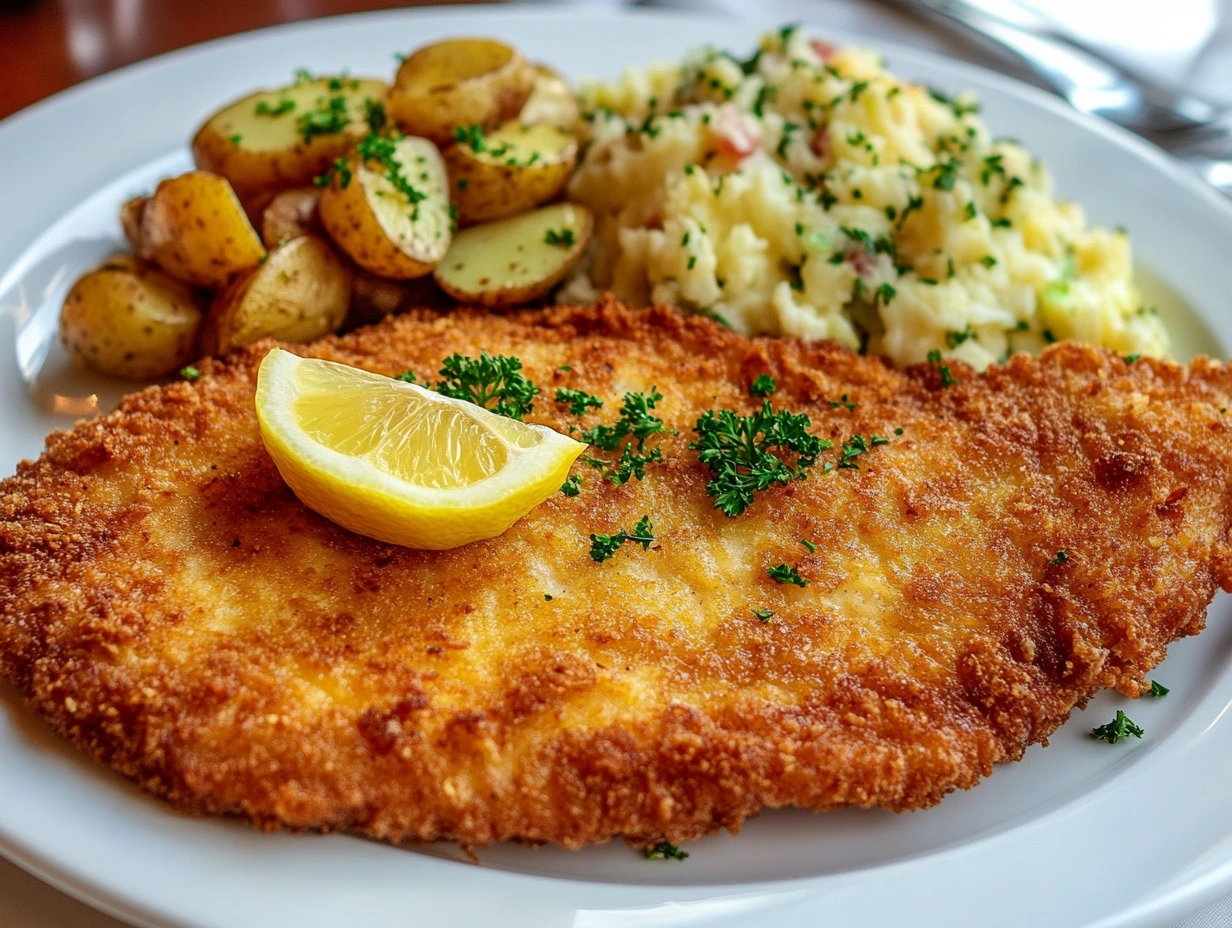
Wiener Schnitzel became closely associated with imperial Vienna in the nineteenth century, though breaded cutlets have wider European precedents. Austrian food law and convention distinguish true Wiener Schnitzel as veal. Its fame rests on a light, rippled crust that separates slightly from the meat. The cutlet should be thin, tender and fried in enough hot fat to move freely. It is Austria’s best-known restaurant dish and a benchmark of Viennese cooking, traditionally served with lemon and potato or lamb’s-lettuce salad.
Historical background
Wiener Schnitzel became closely associated with imperial Vienna in the nineteenth century, though breaded cutlets have wider European precedents. Austrian food law and convention distinguish true Wiener Schnitzel as veal.
Why it is famous
Its fame rests on a light, rippled crust that separates slightly from the meat. The cutlet should be thin, tender and fried in enough hot fat to move freely.
Cultural significance
It is Austria’s best-known restaurant dish and a benchmark of Viennese cooking, traditionally served with lemon and potato or lamb’s-lettuce salad.