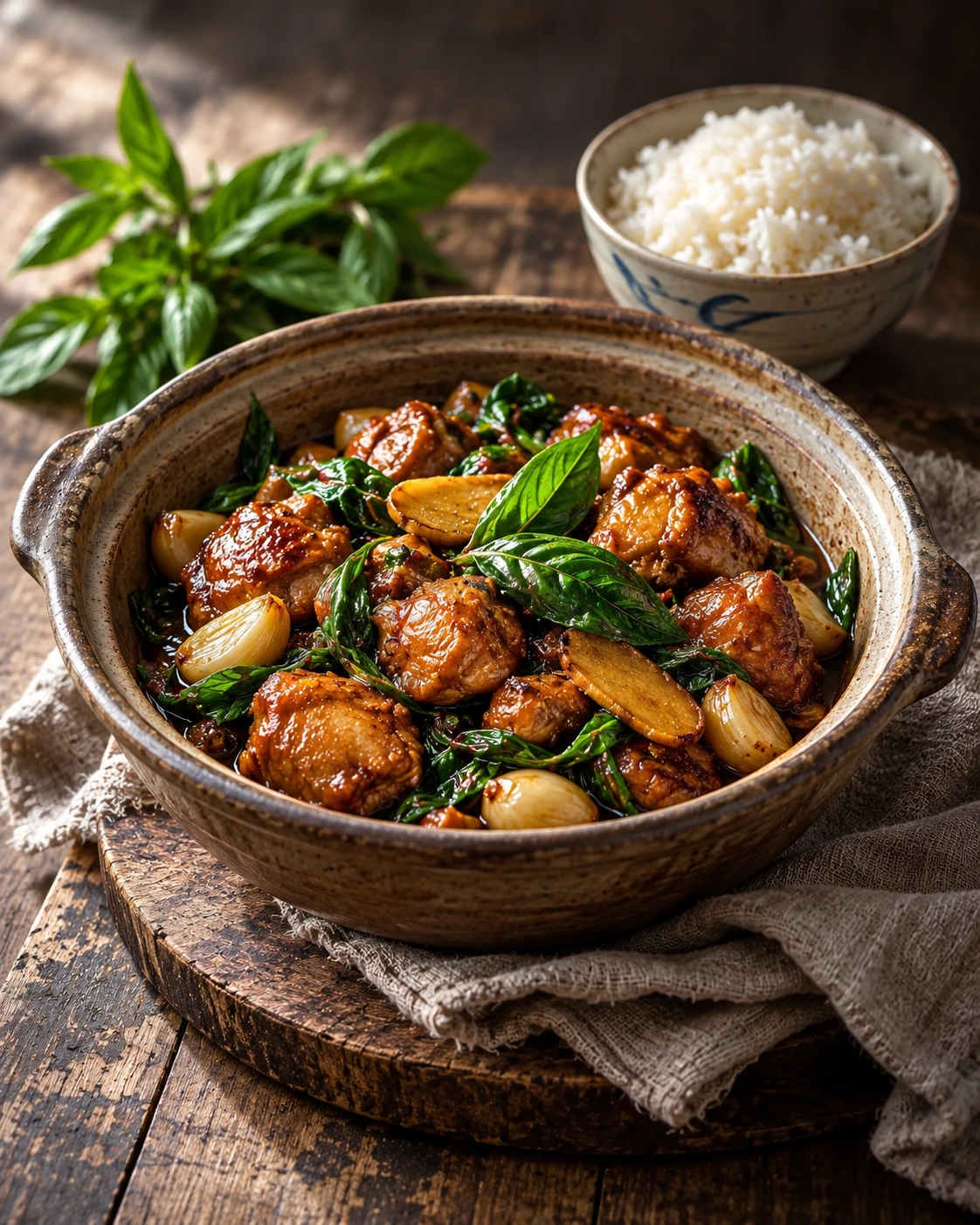
Taiwanese Three Cup Chicken: the story on the plate
San bei ji has roots beyond Taiwan, but the Taiwanese basil-rich version has become particularly recognisable. The name evokes sesame oil, soy sauce and rice wine rather than requiring three literal equal cups in a home recipe. Ginger and whole garlic mellow in the braise, while basil added at the end supplies the fresh fragrance that distinguishes the finished dish. A shared home or restaurant dish; this version balances the three liquids rather than using equal full cups.
Historical background
San bei ji has roots beyond Taiwan, but the Taiwanese basil-rich version has become particularly recognisable. The name evokes sesame oil, soy sauce and rice wine rather than requiring three literal equal cups in a home recipe. Ginger and whole garlic mellow in the braise, while basil added at the end supplies the fresh fragrance that distinguishes the finished dish.
Why it is famous
Its name recalls sesame oil, soy sauce and rice wine, not fixed modern cup quantities. The defining contrast is glossy chicken, reduced sticky sauce.
Cultural significance
A shared home or restaurant dish; this version balances the three liquids rather than using equal full cups. Treat this as one regional or household version; accompaniments and seasoning vary between cooks.