
Portuguese Main
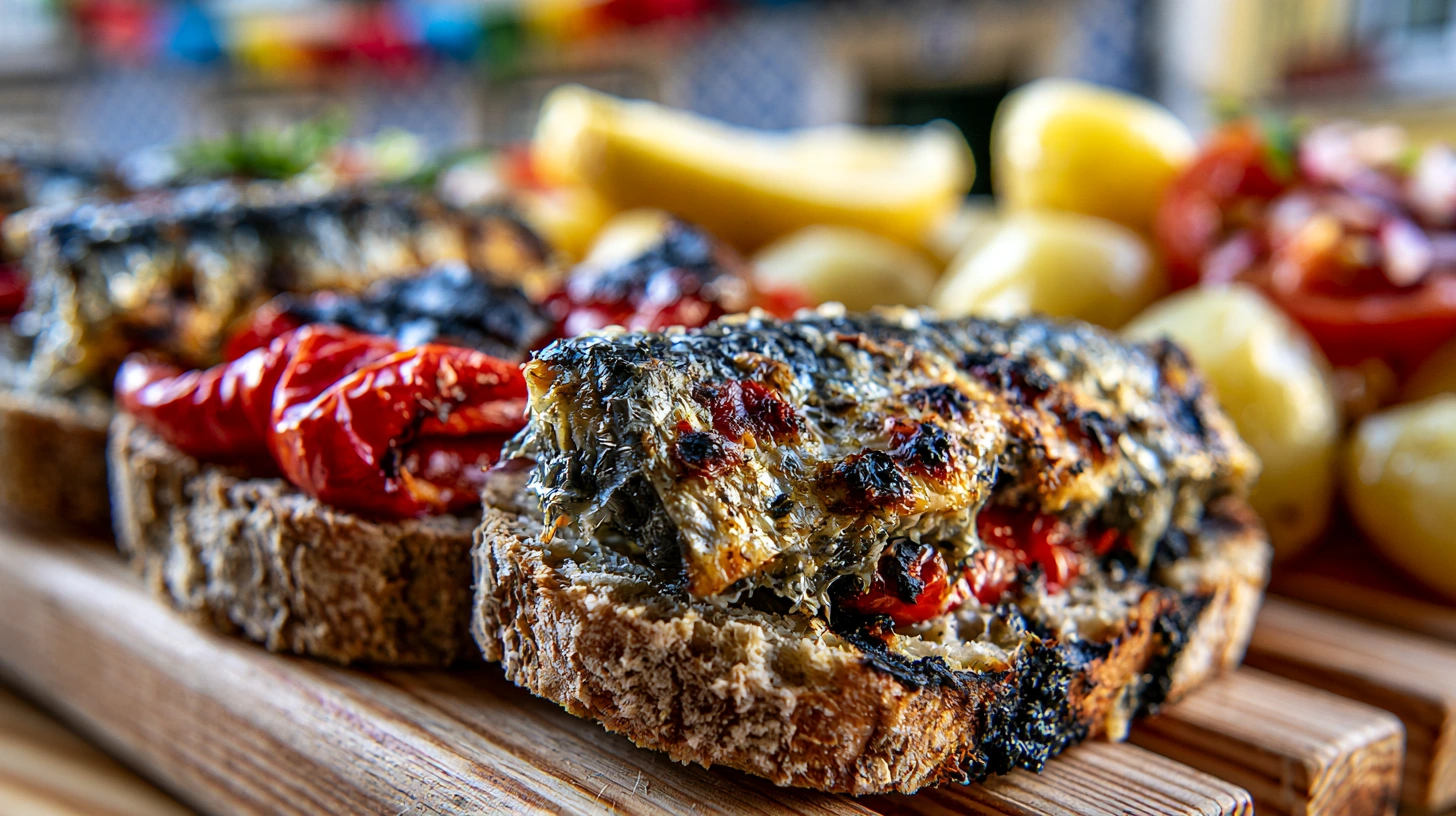
Sardinhas Assadas
Charcoal-grilled sardines with sea salt, lemon and roasted peppers.
15 minsPrep time
10 minsCook time
Serves 4Servings
EasyDifficulty
Nutrition
Estimated nutrition per serving
These figures are estimates per serving. Actual nutrition can vary with the brands and exact amounts you use, how much oil, dressing or sauce is absorbed, any substitutions or added extras, and the portion size served.A practical guide for comparing recipes and planning meals.
620Calories
35gProtein
48gCarbs
31gFat
Ingredients
What you need
- 12 whole sardines, scaled and gutted
- 25 coarse sea salt
- 2 lemon, wedges
- 30 olive oil
- 300 roasted peppers, strips
Method
Step-by-step method
Follow the recipe in order, tasting and adjusting seasoning where needed.
- Pat sardines completely dry. Salt generously 20 minutes before cooking, then brush off excess surface salt.
- Heat a charcoal grill or ridged griddle until very hot, around 230–250°C at the grate. Oil the bars lightly.
- Grill sardines for 3–4 minutes on the first side without moving until the skin releases naturally.
- Turn once and grill 2–3 minutes more until opaque at the backbone but still moist.
- Serve immediately with lemon, olive oil and roasted peppers.
Cook smarter
Tips, storage and serving advice
Shopping tips
Ingredient quality
Common mistakes
Chef’s tips
How to know it is cooked
Plating advice
Make ahead
Storage and reheating
Wine pairing
What to drink with Sardinhas Assadas
These are wine-style pairings, so you can choose any bottle in that style rather than needing one exact producer. Look for the grape, region or style name on the label.Pairings are chosen around the dish’s flavour, texture, richness, acidity and cooking style, not just the country it comes from.

#1
Excellent match
Red
Pinot Noir / Burgundy
Why it works:
- Flavour bridge: the wine's fruit, savoury notes and freshness create a natural bridge to the dish
- Acidity: Acidity keeps the pairing lively and food-focused
- Body: Body is matched to the overall weight of the dish
- Tannin: Tannin level is kept appropriate to the dish's protein and texture
- Sweetness: Dry unless the dish benefits from a touch of residual sweetness
- Best for: Dinner, entertaining or recipe pairing

#2
Great match
White
Dry Riesling
Why it works:
- Flavour bridge: the wine's fruit, savoury notes and freshness create a natural bridge to the dish
- Acidity: Acidity keeps the pairing lively and food-focused
- Body: Body is matched to the overall weight of the dish
- Tannin: Tannin level is kept appropriate to the dish's protein and texture
- Sweetness: Dry unless the dish benefits from a touch of residual sweetness
- Best for: Dinner, entertaining or recipe pairing

#3
Interesting match
White
Chardonnay
Why it works:
- Flavour bridge: the wine's fruit, savoury notes and freshness create a natural bridge to the dish
- Acidity: Acidity keeps the pairing lively and food-focused
- Body: Body is matched to the overall weight of the dish
- Tannin: Tannin level is kept appropriate to the dish's protein and texture
- Sweetness: Dry unless the dish benefits from a touch of residual sweetness
- Best for: Dinner, entertaining or recipe pairing
Cook next
View cuisine More Portuguese recipes
Keep exploring the country’s food story through related starters, mains and desserts.

Açorda à Alentejana
Açorda à Alentejana is a classic Portuguese main course built around comforting flavour, cultural h…

Bacalhau à Brás
Bacalhau à Brás is a classic Portuguese main course built around comforting flavour, cultural herit…

Francesinha
Francesinha is a classic Portuguese main course built around comforting flavour, cultural heritage…

Arroz de Marisco
Arroz de Marisco is a classic Portuguese main course built around comforting flavour, cultural heri…