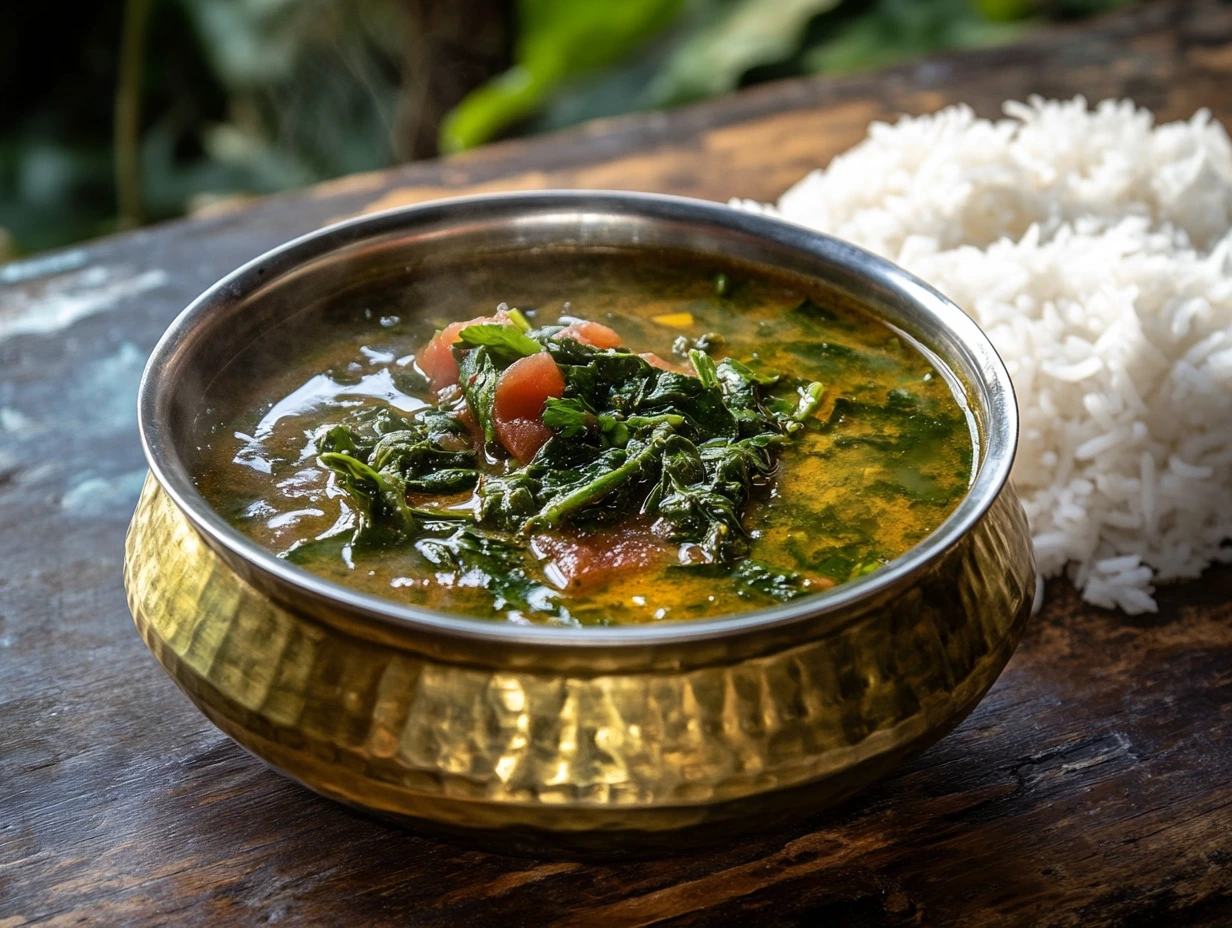
Gundruk ko Jhol: the story on the plate
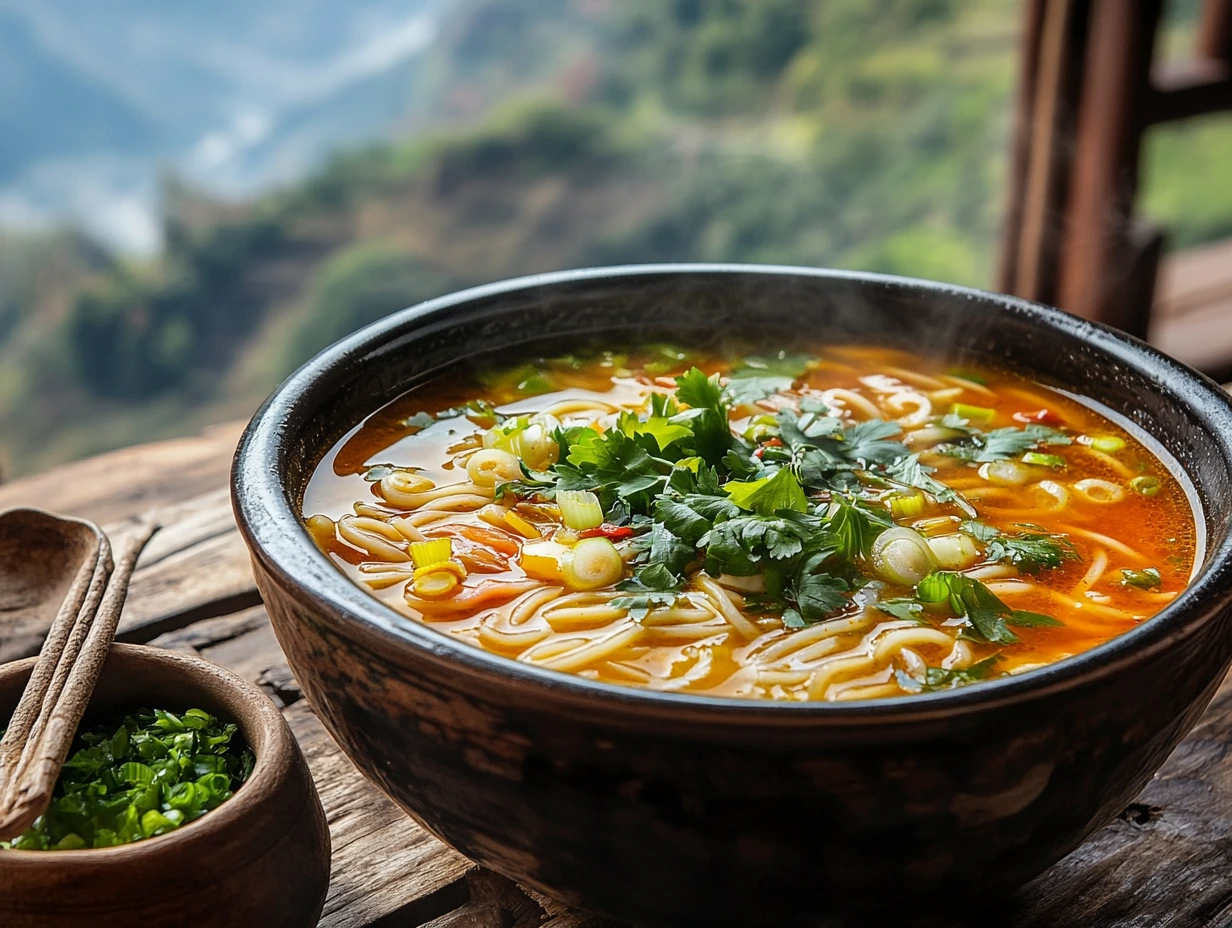
Gundruk developed as a practical way to preserve mustard, radish or cauliflower leaves after harvest. Fermentation and drying allowed greens to remain available through leaner seasons in Nepal's hill communities. The dish is recognised for a tangy soup made from fermented leafy greens, tomato and warming spices. Its success depends on preserving the contrast between the principal ingredient, seasoning and finished texture rather than allowing one element to dominate. Its sour depth evokes home cooking and agricultural self-sufficiency, and it is commonly eaten with rice, dhido or other simple staples.
Historical background
Gundruk developed as a practical way to preserve mustard, radish or cauliflower leaves after harvest. Fermentation and drying allowed greens to remain available through leaner seasons in Nepal's hill communities.
Why it is famous
The dish is recognised for a tangy soup made from fermented leafy greens, tomato and warming spices. Its success depends on preserving the contrast between the principal ingredient, seasoning and finished texture rather than allowing one element to dominate.
Cultural significance
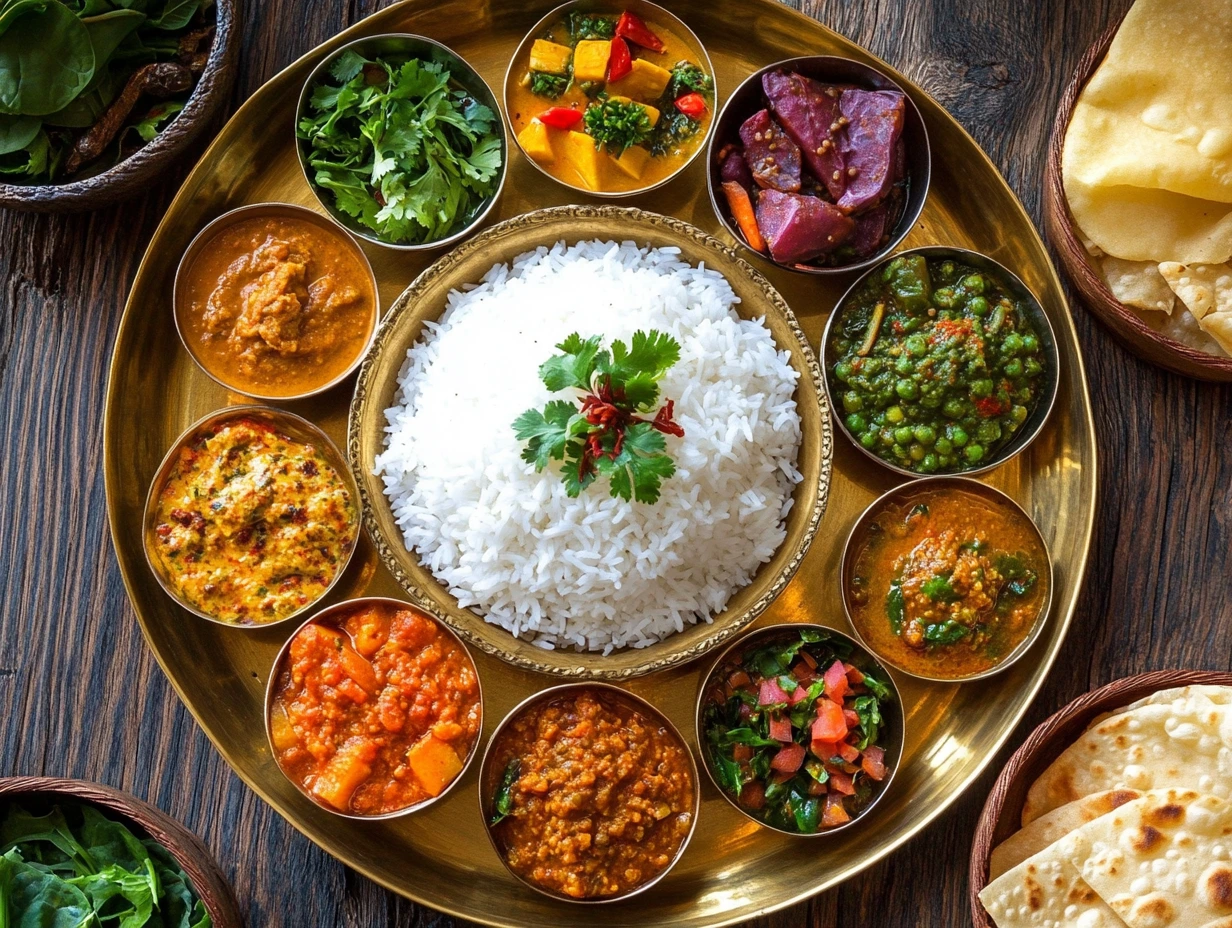
Its sour depth evokes home cooking and agricultural self-sufficiency, and it is commonly eaten with rice, dhido or other simple staples.