Lomo a lo Pobre: the story on the plate
The dish emerged from a food culture in which economy, seasonality and regional taste mattered more than elaborate presentation. It reflects Chile’s long north-to-south geography, where Pacific seafood, Central Valley produce, Indigenous crops and European influences meet in domestic cooking. Its reputation rests on steak with fried potatoes, caramelised onions and eggs. The dish is immediately recognisable when the key ingredient and finishing texture are handled correctly. Lomo a lo Pobre matters culturally because it is tied to a recognisable way of eating rather than existing only as a written recipe. It is served in homes, picadas, markets, coastal restaurants or at national and family celebrations.
Historical background
The dish emerged from a food culture in which economy, seasonality and regional taste mattered more than elaborate presentation. It reflects Chile’s long north-to-south geography, where Pacific seafood, Central Valley produce, Indigenous crops and European influences meet in domestic cooking.
Why it is famous
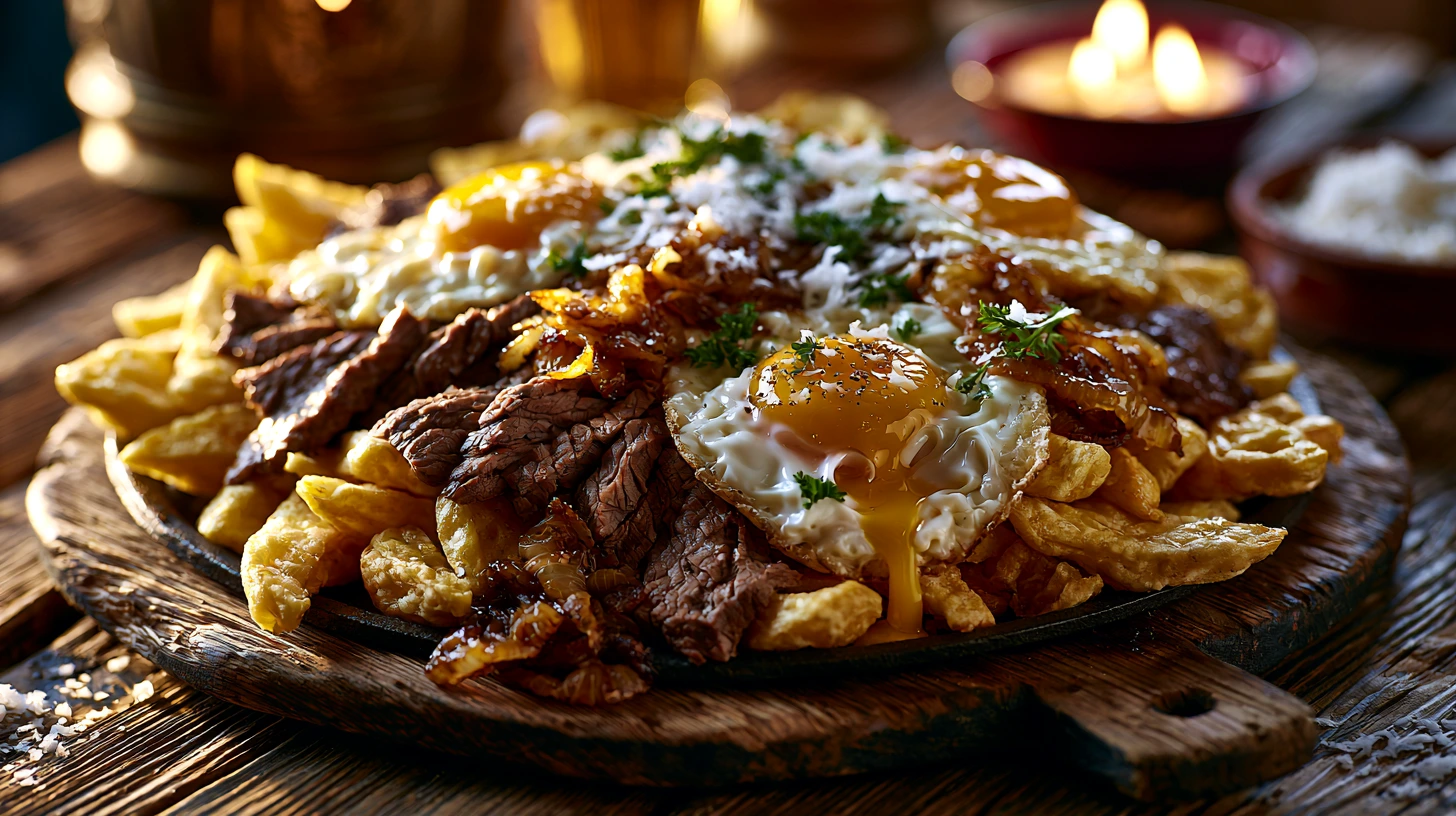
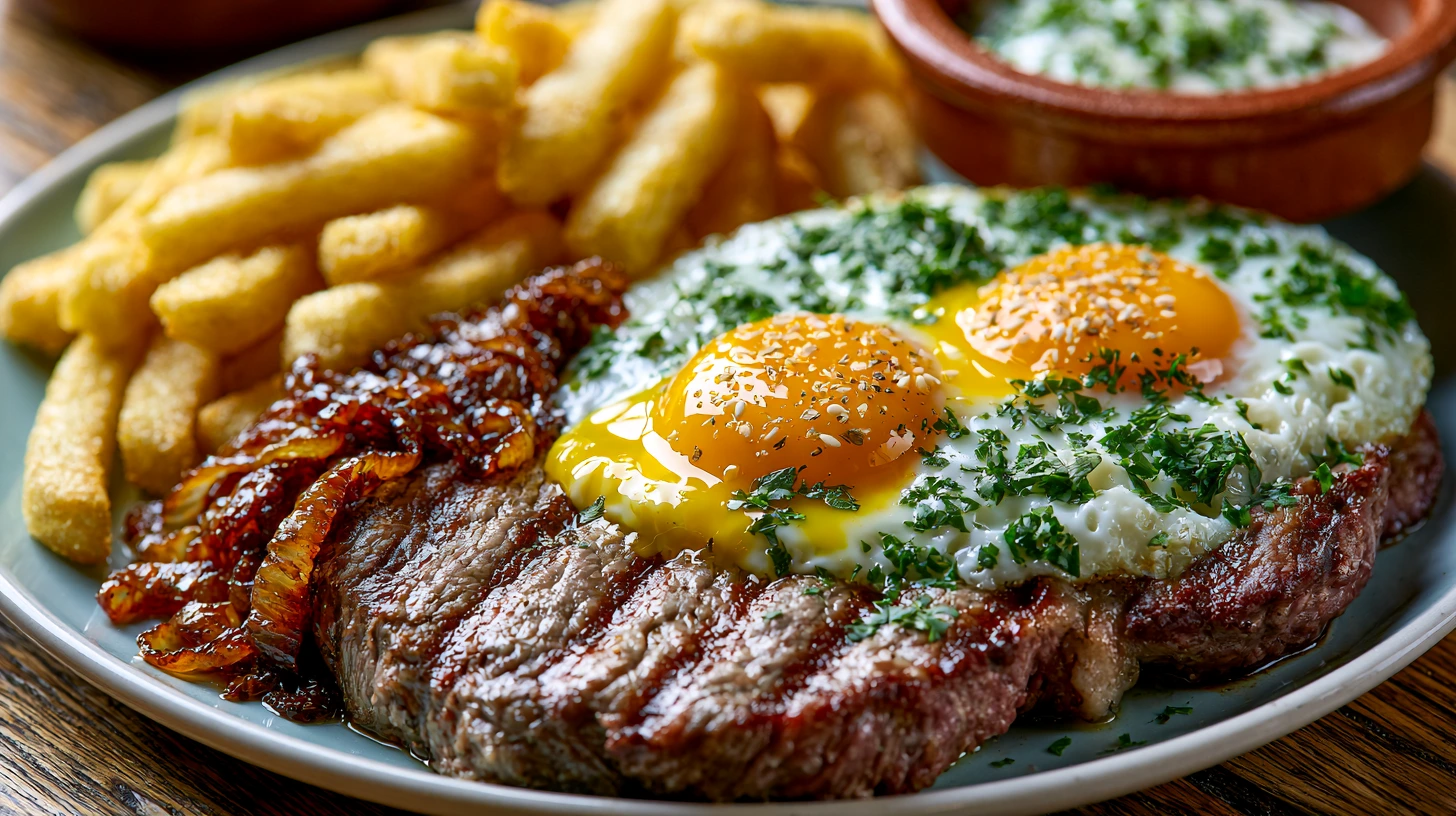
Its reputation rests on steak with fried potatoes, caramelised onions and eggs. The dish is immediately recognisable when the key ingredient and finishing texture are handled correctly.
Cultural significance
Lomo a lo Pobre matters culturally because it is tied to a recognisable way of eating rather than existing only as a written recipe. It is served in homes, picadas, markets, coastal restaurants or at national and family celebrations.