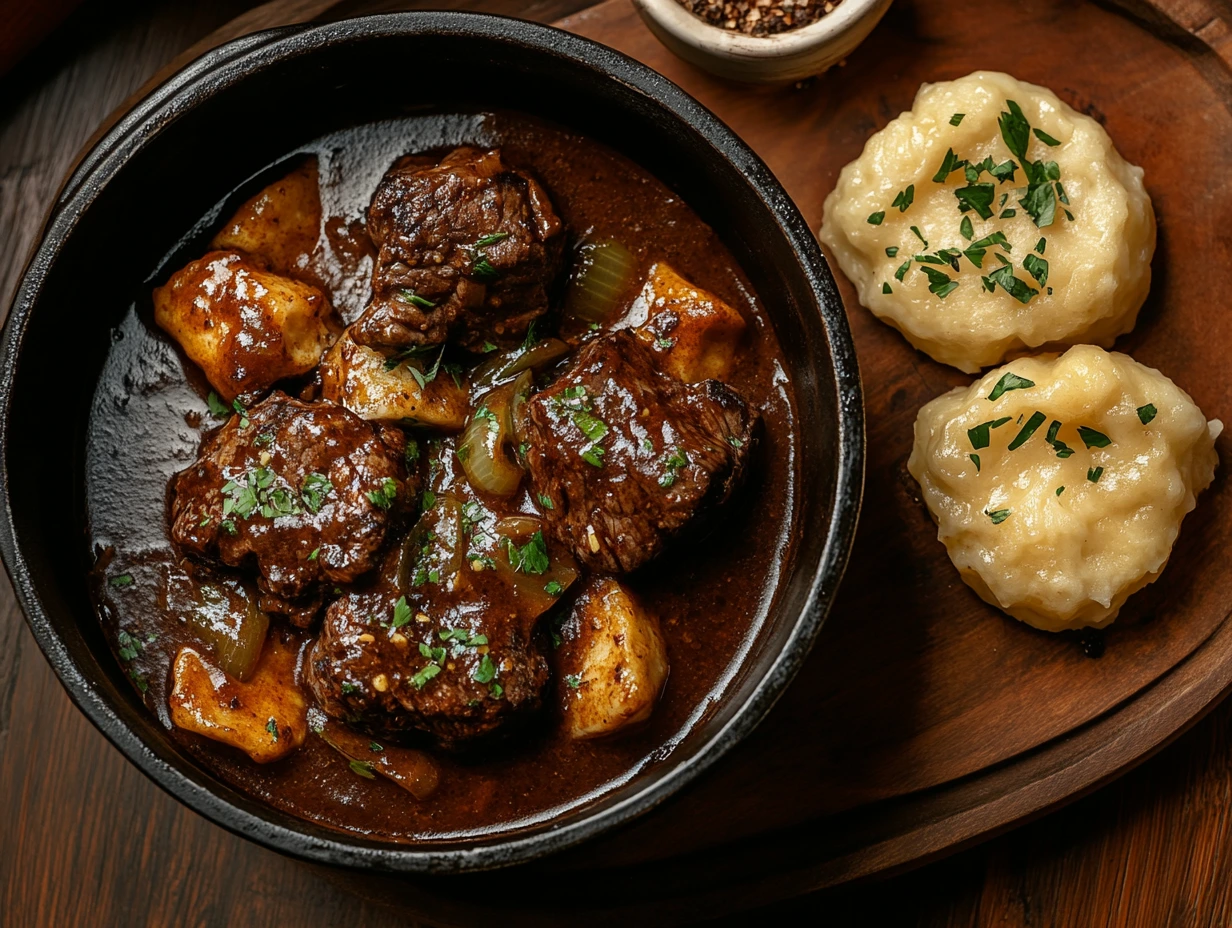
Gulas with Bread Dumplings: the story on the plate
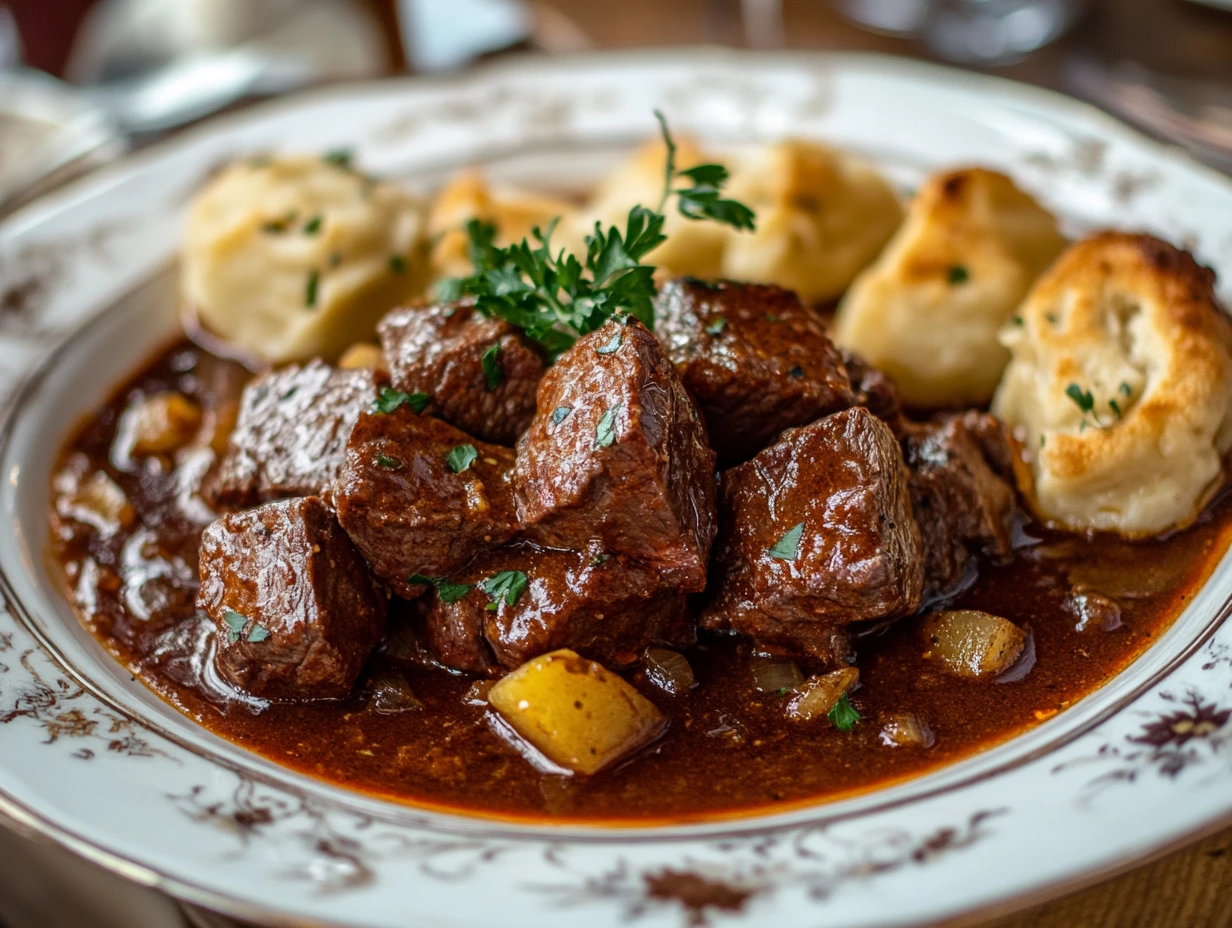
Goulash originated in Hungary but became thoroughly integrated into Czech cooking during the Austro-Hungarian period. Czech versions usually use less liquid than soup-like Hungarian forms and are designed to be eaten with dumplings. Long-cooked onions give the sauce body, paprika brings colour and warmth, and beef becomes spoon-tender. The dumplings are not incidental: they are the vehicle for the concentrated gravy. Guláš is a cornerstone of pubs, canteens and home kitchens and is closely associated with beer. It demonstrates how a borrowed dish can become locally distinctive through texture and accompaniment.
Historical background
Goulash originated in Hungary but became thoroughly integrated into Czech cooking during the Austro-Hungarian period. Czech versions usually use less liquid than soup-like Hungarian forms and are designed to be eaten with dumplings.
Why it is famous
Long-cooked onions give the sauce body, paprika brings colour and warmth, and beef becomes spoon-tender. The dumplings are not incidental: they are the vehicle for the concentrated gravy.
Cultural significance
Guláš is a cornerstone of pubs, canteens and home kitchens and is closely associated with beer. It demonstrates how a borrowed dish can become locally distinctive through texture and accompaniment.