Barszcz with Uszka: the story on the plate
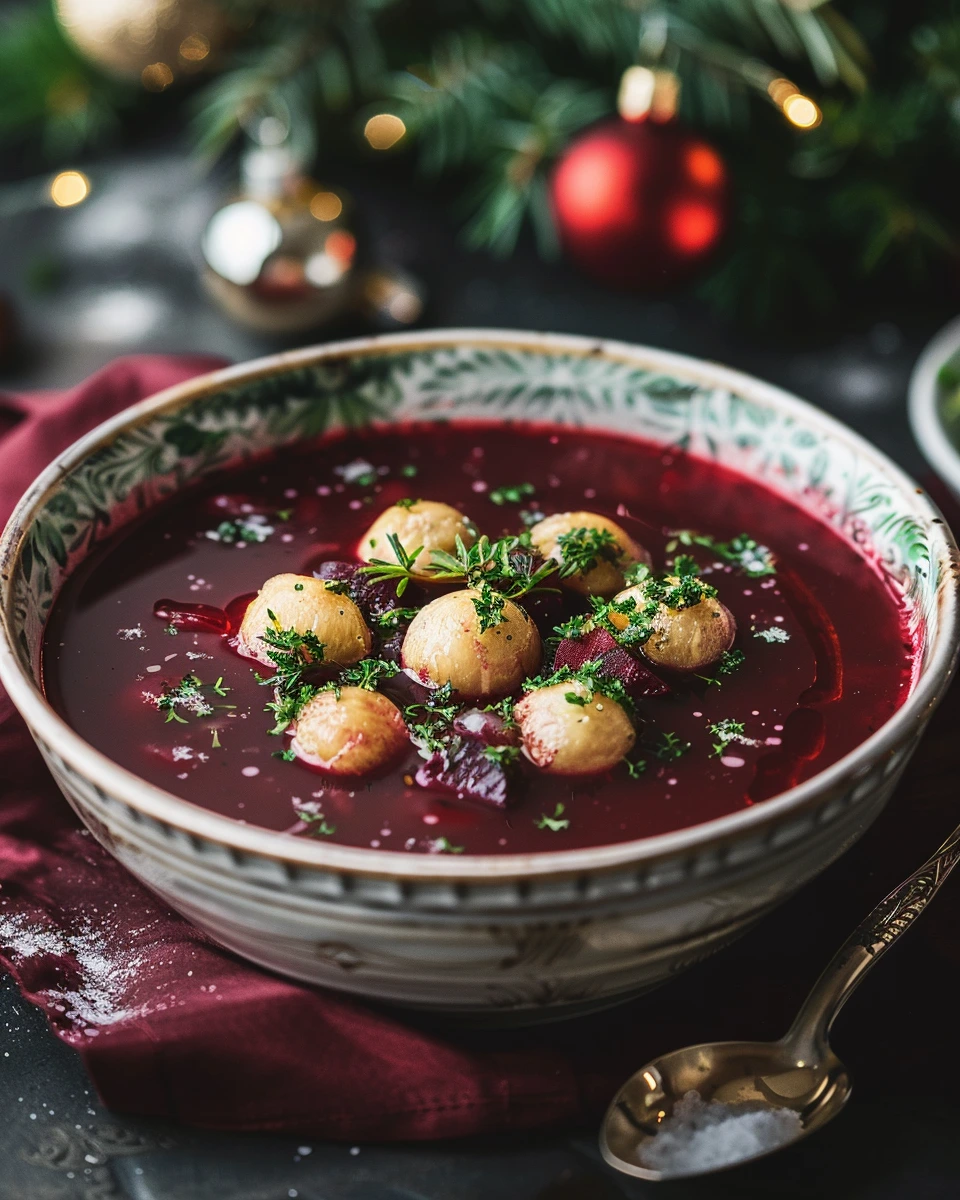
Polish barszcz developed around beet fermentation and later fresh beetroot broths, prized for clarity and sweet-sour balance. Uszka, meaning 'little ears', add a delicate forest-mushroom filling. The dish is recognised for clear beetroot broth served with tiny mushroom-filled dumplings. Its success depends on preserving the contrast between the principal ingredient, seasoning and finished texture rather than allowing one element to dominate. This combination is a central meatless course of the Christmas Eve Wigilia meal in many Polish households.
Historical background
Polish barszcz developed around beet fermentation and later fresh beetroot broths, prized for clarity and sweet-sour balance. Uszka, meaning 'little ears', add a delicate forest-mushroom filling.
Why it is famous
The dish is recognised for clear beetroot broth served with tiny mushroom-filled dumplings. Its success depends on preserving the contrast between the principal ingredient, seasoning and finished texture rather than allowing one element to dominate.
Cultural significance
This combination is a central meatless course of the Christmas Eve Wigilia meal in many Polish households.