Pizza Bases, Sauces and Toppings

How to make Stuffed Crust Pizza Base

A homemade stuffed crust pizza with cheese sealed inside the rim.

What it is

Stuffed Crust Pizza Base in the kitchen

A pizza base where the edge is wrapped around mozzarella sticks or grated cheese before topping and baking.

Why make it

Make this when you want a pizza option with a clear purpose: a homemade stuffed crust pizza with cheese sealed inside the rim. It helps your pizza section cover traditional, artisan, family, meat-heavy, vegetarian and shortcut cooking needs.

Best with

Family pizzas, pepperoni, barbecue chicken and cheese-heavy toppings.

Method

Step-by-step

  1. Step 1

    Mix the flour and salt in a wide bowl, then stir the yeast into the water. Pour the water into the flour and mix until no dry patches remain.

    Look for: The dough should look shaggy and slightly sticky, not smooth yet. Tip: Use a dough scraper or wet hand if it sticks. Avoid: Do not add lots of extra flour at this stage; sticky dough becomes softer after resting.
  2. Step 2

    Rest the rough dough for 10 minutes, then knead for 8–10 minutes until smoother and elastic.

    Look for: It should stretch a few centimetres before tearing. Tip: A 10-minute rest halfway through kneading makes the dough easier to handle. Avoid: Do not rush the knead if the dough feels tight or lumpy.
  3. Step 3

    Place in a lightly oiled bowl, cover and prove until doubled, usually 60–90 minutes at room temperature.

    Look for: The dough should look puffy and hold a finger dent for a moment. Tip: For better flavour, refrigerate overnight after the first 30 minutes. Avoid: Avoid proving in a very hot place; it can overproof and taste yeasty.
  4. Step 4

    Stretch the dough 3–4 cm larger than usual, place cheese around the edge, then fold the dough over and pinch firmly to seal.

    Look for: The rim should be sealed with no cheese exposed. Tip: Brush the sealed rim lightly with garlic oil before baking. Avoid: Exposed cheese leaks and burns before the pizza finishes.
  5. Step 5

    Divide into dough balls, cover and rest for 20 minutes before stretching.

    Look for: The dough should relax and spread gently when pressed. Tip: Stretch from the centre outwards and leave the edge slightly thicker. Avoid: Do not roll hard if you want an airy rim.
  6. Step 6

    Heat the oven as high as it will go with a tray, steel or stone inside. Top lightly and bake until the base is browned and the cheese is bubbling.

    Look for: Look for a golden underside and small blisters on the rim. Tip: Preheat for at least 30 minutes if using a stone or steel. Avoid: Overloading the centre makes the base steam instead of crisp.
Variations

Other ways to make it

Use these variations to match the dish, season, occasion or texture you want.

Tomato classic

Tomato classic

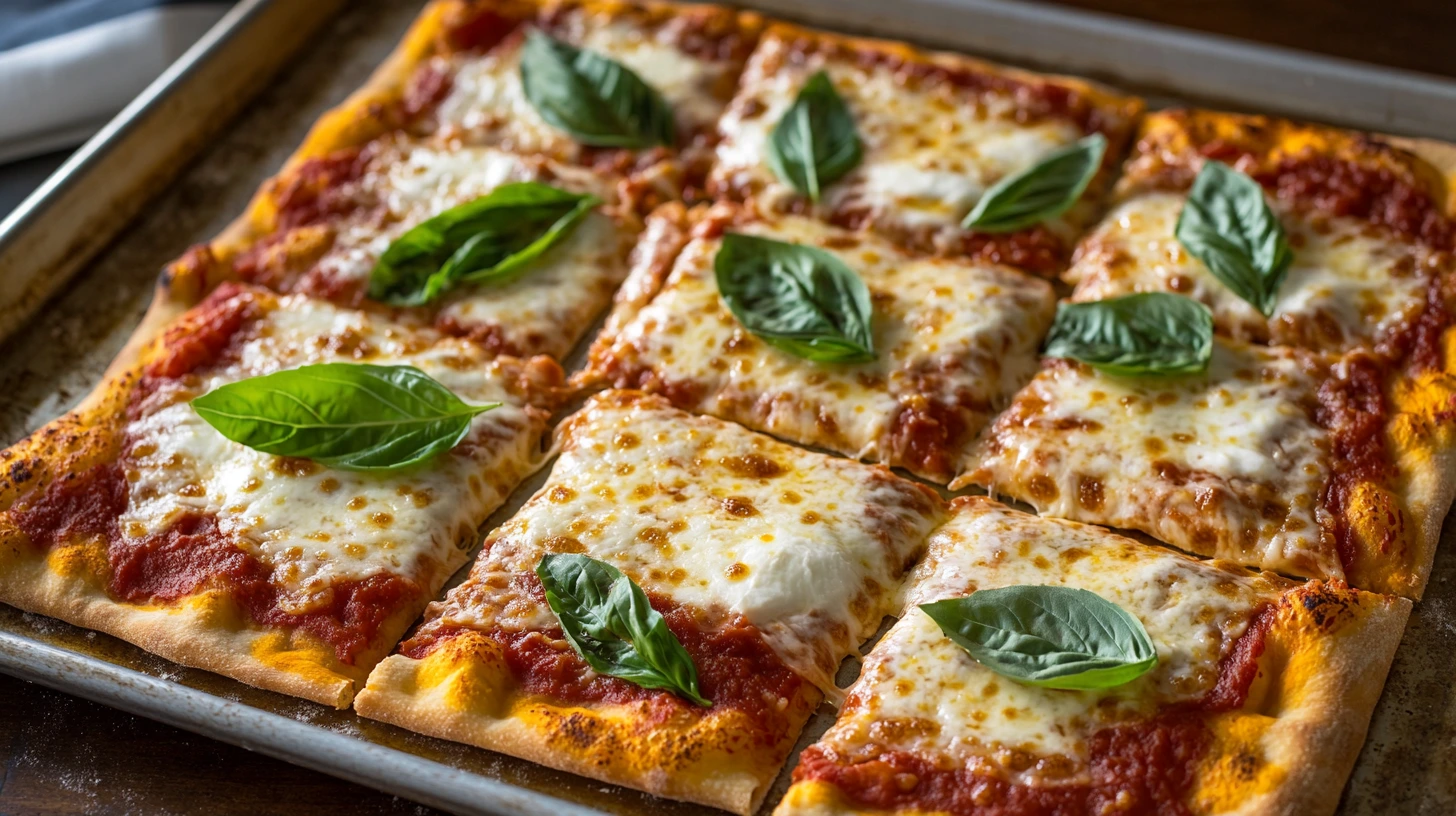
Use classic tomato sauce, mozzarella and basil for a simple benchmark pizza.

White artisan

White artisan

Use white sauce, mushrooms, herbs and parmesan for a richer restaurant-style build.

Meat-heavy

Meat-heavy

Use a sturdier bake with pepperoni, sausage, bacon or nduja, keeping toppings thin.

Vegetarian

Vegetarian

Use roasted vegetables, pesto, goats cheese, olives, herbs or lemon after baking.

Storage

Make ahead and storage

Storage

Cooked pizza is best eaten hot, but leftovers can be cooled quickly, covered and refrigerated for up to 2 days. Reheat on a dry tray or skillet until the base crisps again.

Make ahead

Doughs can usually be made the day before and refrigerated after the first rise. Sauces can be made 2-3 days ahead. Toppings should be sliced shortly before baking if they release water.

Freezing

Most plain dough balls freeze well for up to 2 months after the first rise. Freeze individually, thaw overnight in the fridge and bring to room temperature before stretching.